





Your dog sits beautifully in the kitchen. They come when called in the backyard. They even hold a perfect stay while you walk across the living room. You’re feeling pretty confident about their training. Then you take them somewhere with other dogs, unfamiliar people and interesting distractions. Suddenly, it’s as though they’ve forgotten everything you’ve taught them.
Sound familiar?
This is one of the most common frustrations dog owners experience, and it’s also one of the biggest reasons group obedience classes are such a valuable part of successful dog training.
At K9 Principles Dog Training, we believe obedience goes far beyond teaching a dog to sit, stay or walk nicely on a lead. It’s about developing communication, building confidence, establishing expectations and helping dogs make better decisions in everyday situations.
Group classes offer something that’s difficult to recreate at home: a structured learning environment where dogs practise around real distractions while their owners receive guidance from experienced professional trainers.
Whether you’re raising a puppy or working with an adult dog, the benefits extend well beyond the classroom.
Training at Home Is Easy. The Real World Is a Different Story.
One of the most common things we hear from owners is, “My dog knows how to do this at home, but they won’t listen anywhere else.”
There’s a very good reason for that.
Dogs don’t automatically understand that a command learned in one environment applies everywhere. A dog that has mastered sitting in the kitchen hasn’t necessarily learned to sit when another dog walks past or someone approaches carrying an interesting bag of treats.
These are entirely different levels of difficulty.
Think about learning to drive. You might feel comfortable practising in an empty car park, but that doesn’t mean you’re immediately ready to navigate rush-hour traffic.
Dog training works much the same way.
When dogs first learn a behaviour, we establish a clear understanding of what’s expected. Once they understand, we gradually introduce distractions and increase the difficulty.
Group obedience classes provide an excellent opportunity to make that transition.
Instead of practising in the same predictable environment, dogs learn to respond while other dogs are moving, people are talking and unfamiliar activities are happening around them.
This process, known as generalisation, is essential for developing reliable obedience.
At K9 Principles, our approach to dog training in Hamilton focuses on helping dogs understand that expectations don’t disappear simply because their surroundings change.
The goal isn’t a dog that only listens when everything is quiet. It’s a dog that can listen when life gets busy.
Socialisation Is About Much More Than Meeting Other Dogs
When people hear the word socialisation, they often imagine puppies running together, greeting every dog they encounter and making as many new friends as possible.
However, successful socialisation involves much more than social interaction.
One of the most valuable skills a dog can develop is the ability to remain calm, comfortable and focused when other dogs and people are nearby.
A well-socialised dog doesn’t need to greet every dog it sees. It needs to learn that other dogs can exist in the same environment without requiring a reaction.
This distinction is incredibly important.
Dogs that are repeatedly encouraged to interact with every dog they encounter may develop an expectation that seeing another dog automatically means playtime.
When that expectation isn’t met, some become frustrated, overexcited, vocal or difficult to control.
Others may feel overwhelmed or uncomfortable when unfamiliar dogs approach.
Structured group obedience classes help establish healthier expectations.
Dogs learn that they can work alongside other dogs without being required to interact with them. They practise focusing on their owners, settling when appropriate and maintaining comfortable distances.
For puppies, carefully managed experiences can contribute to positive social development during an important learning period.
For adolescent and adult dogs, structured exposure can reinforce calm behaviour and develop better self-control.
Of course, socialisation must always consider the individual dog. A fearful or overwhelmed dog shouldn’t simply be placed in a busy environment and expected to get used to it.
The goal is positive, appropriate exposure, not forced interaction.
This is one reason experienced professional supervision matters so much when choosing puppy obedience classes or group dog training in Hamilton.
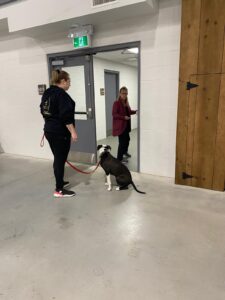
Learning to Focus When Distractions Are Everywhere
Imagine trying to concentrate on an important conversation while people are laughing, music is playing and something interesting is happening across the room.
Now imagine being a young dog surrounded by unfamiliar smells, exciting movements and other dogs.
It’s hardly surprising that maintaining focus can be challenging.
Attention and engagement are skills that need to be taught and developed, just like sitting, staying or walking on a loose lead.
Group classes create opportunities to practise those skills in an environment where distractions are present but manageable.
Dogs may need to maintain a sit while another dog walks past, remain in a down position while nearby students practise or respond to a recall despite activity happening around them.
These exercises teach dogs that paying attention to their owners remains worthwhile, even when something else seems more interesting.
The important part is progressing at an appropriate pace.
A dog that struggles to maintain focus for ten seconds might not be ready for a lengthy stay surrounded by other dogs. Instead, the trainer can help the owner reduce the difficulty and build success gradually.
Over time, these experiences can produce meaningful improvements in everyday situations.
Walking past another dog becomes easier. Waiting calmly becomes more achievable. Responding to commands in unfamiliar places becomes more reliable.
This is where structured Hamilton dog training can make a genuine difference in daily life.
The Value of Having an Experienced Trainer Watching
There is no shortage of dog training information available online.
You can watch videos demonstrating loose-lead walking, recalls, impulse control, jumping prevention and almost every other behaviour imaginable.
But there’s one thing those videos cannot do.
They cannot watch your dog and tell you what you’re missing.
This is one of the greatest benefits of attending professionally instructed dog obedience classes.
Experienced trainers notice details that owners frequently overlook.
Perhaps you’re delivering a reward too late, accidentally reinforcing the wrong behaviour or repeating a command before giving your dog enough time to respond.
Maybe your dog doesn’t fully understand the exercise, the environment is too distracting or your expectations have increased faster than their ability.
Sometimes the problem isn’t the dog at all. It’s a small handling mistake creating confusion.
A knowledgeable trainer can recognise these situations and provide immediate, practical feedback.
Instead of spending weeks repeating an exercise incorrectly, you can learn how to make an adjustment during the lesson.
At K9 Principles, we bring over 30 years of professional dog training experience to our instruction. We understand that dogs learn differently, and effective teaching requires more than demonstrating the same exercise to every student.
Our role is to explain what we’re teaching, why we’re teaching it and how to apply those lessons successfully.
That individual insight within a group environment can be incredibly valuable.
It’s also one of the reasons choosing experienced instructors matters when researching dog training in Hamilton and surrounding communities.
Every Dog Hits Training Barriers. You Don’t Have to Figure Them Out Alone.
Dog training rarely follows a perfectly straight path.
A puppy that was progressing beautifully may suddenly become distracted. An adolescent dog might begin challenging established expectations. An older dog may struggle with a behaviour that seemed easy only a few weeks earlier.
These moments can be discouraging, particularly when owners are genuinely putting in the effort.
Unfortunately, many people respond by practising the same exercise repeatedly, hoping that enough repetition will eventually solve the problem.
But repetition alone isn’t always the answer.
Sometimes a dog needs clearer communication. Sometimes an exercise needs to be broken into smaller steps. Sometimes distractions need to be reduced, rewards need to change or the owner’s timing needs adjustment.
This is where professional trainer insight becomes particularly important.
Consider a dog that repeatedly breaks its stay during class.
The owner might assume the dog is being stubborn or deliberately ignoring instructions.
An experienced trainer may recognise that the dog hasn’t developed the duration, confidence or understanding needed for that particular level of distraction.
Rather than continuing to repeat the command, the trainer can help the owner adjust the exercise and rebuild success.
The same principle applies to recalls, leash manners, greetings and impulse control.
A professional trainer can help identify whether the barrier involves understanding, motivation, excitement, fear, frustration or inconsistent handling.
Most importantly, the trainer can explain what to do next.
Sometimes the difference between struggling and succeeding isn’t more practice. It’s knowing what needs to change.
This is one of the reasons investing in professional Hamilton dog training can be so worthwhile.
Owners aren’t simply learning exercises. They’re learning how to recognise problems, make adjustments and become more effective handlers.

Building Confidence at Both Ends of the Lead
Group obedience classes don’t just develop confident dogs. They can help create confident owners.
Many people arrive at their first class feeling nervous.
They’re worried their puppy will bark, their dog won’t listen or everyone else’s dog will behave better than theirs.
Some owners even feel embarrassed when their dog struggles.
But here’s something worth remembering: people enrol in dog obedience classes because they’re there to learn.
Nobody should be expected to arrive with a perfectly trained dog.
A supportive learning environment allows owners to ask questions, make mistakes and improve their handling without feeling judged.
As owners begin understanding their dog’s behaviour, their confidence often grows.
They learn how to give clearer instructions, recognise when their dog is becoming distracted and respond more effectively when something goes wrong.
This confidence carries over into daily life.
An owner who understands how to manage greetings is more comfortable welcoming visitors.
Someone who knows how to practise loose-lead walking feels better prepared for neighbourhood walks.
Confidence also helps owners remain consistent.
Dogs benefit when expectations are clear, instructions are understandable and the person holding the lead knows what they’re trying to achieve.
At K9 Principles, we don’t simply want dogs to succeed during class. We want owners leaving with the knowledge and confidence to continue making progress independently.
Learning to Be Calm Is Just as Important as Learning Commands
Many owners measure obedience success by how quickly their dog sits, how long they stay or how accurately they perform an exercise.
Those are important skills, but there’s another ability that deserves just as much attention.
Learning to do nothing.
For some dogs, remaining relaxed while another dog walks across the room is a greater achievement than performing a perfect sit.
Excitable dogs often believe every new person, movement or activity requires their involvement.
They want to investigate, greet, chase, bark or participate.
Structured obedience classes help teach them that they don’t need to react to everything happening around them.
They can watch another dog work without joining in. They can wait while their owner listens to an instructor. They can settle even when interesting things are happening nearby.
These are valuable lessons in patience, impulse control and emotional regulation.
They also translate directly into real life.
Think about waiting at the vet’s office, sitting on a patio, visiting family or standing in line at a pet-friendly shop.
In each situation, a dog that can remain calm is generally easier and more enjoyable to handle.
Calm behaviour shouldn’t be confused with forcing a frightened dog to remain still while distressed. Dogs need appropriate guidance, manageable expectations and opportunities to develop genuine comfort.
Helping dogs become comfortable around everyday activity is an important part of our approach to dog training.
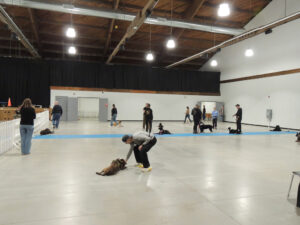
Other Dogs Become Valuable Training Partners
One of the most interesting benefits of group obedience classes is that the other dogs become part of the learning experience.
They don’t even need to interact directly to provide value.
A dog walking past creates an opportunity to practise focus. Another dog moving into a down position creates a distraction during a stay. A nearby recall provides an opportunity to practise remaining settled.
Every class introduces naturally occurring distractions that would be difficult to reproduce consistently at home.
This creates an environment where skills can be strengthened through controlled, repeated experiences.
However, successful group training isn’t about creating the most difficult environment possible.
Dogs should be given enough space and appropriate challenges to remain capable of learning.
An experienced instructor can recognise when a dog needs more distance, a simpler exercise or a different approach.
This allows the group environment to become a productive training tool rather than an overwhelming experience.
For dogs that are ready for group learning, these opportunities can be extremely beneficial.
You Learn From Other Owners, Too
Another frequently overlooked advantage of group obedience classes is the opportunity to learn by watching others.
You may be working on loose-lead walking while another student is struggling with jumping.
The instructor explains why the jumping is happening, demonstrates an adjustment and suddenly you’ve learned something that could help your own dog.
Perhaps your dog already performs a reliable sit, but watching another owner work through difficulty helps you better understand how behaviours are taught.
Different dogs bring different personalities, learning styles and challenges into the classroom.
This creates opportunities for everyone to develop a broader understanding of dog behaviour.
You also discover that many of the challenges you’re experiencing are remarkably common.
Other owners are dealing with excited greetings, inconsistent recalls, pulling, distractions and adolescent behaviour.
Seeing how these problems are addressed can provide reassurance, practical ideas and greater confidence.
Group classes create a shared learning environment where an instructor’s guidance can benefit more than one student at a time.
Weekly Classes Create Structure, Accountability and Better Training Habits
One of the biggest obstacles to successful dog training is inconsistency.
Life gets busy. Work, family responsibilities and everyday commitments can make regular practice difficult.
It’s easy to put training aside, particularly when your dog seems to be doing reasonably well.
Weekly obedience classes provide structure and encourage owners to remain engaged in their dog’s education.
Each lesson introduces or builds on important skills, giving students clear exercises to practise between sessions.
The following class provides an opportunity to demonstrate progress, ask questions and receive guidance where needed.
This ongoing cycle helps create better training habits.
However, there’s one point we always want owners to understand.
The real progress doesn’t come from attending one class each week. It comes from consistently applying what you’ve learned between classes.
Even short, focused training sessions throughout the week can make a meaningful difference.
Consistency also helps owners recognise improvement that might otherwise go unnoticed.
A dog that struggled to focus during the first class may begin responding more readily by the third week. A puppy that constantly pulled towards other dogs may gradually learn to remain closer to its owner.
These improvements build confidence and encourage owners to keep going.
At K9 Principles, our Level 1 and Level 2 classes also include weekly lesson videos to support practice at home.
Professional instruction provides the foundation, while consistent practice helps transform new skills into lasting habits.
Are Group Obedience Classes Right for Every Dog?
Although group obedience classes offer tremendous benefits, they aren’t necessarily the best starting point for every dog.
Some dogs struggle with significant fear, severe reactivity, aggression or extreme overstimulation.
For these dogs, being surrounded by unfamiliar dogs and people may create more stress than productive learning.
A dog that is constantly frightened or reacting intensely may have difficulty processing instructions or developing new skills.
In these situations, our In-Home Private Training may be a more appropriate first step.
Individual lessons allow a trainer to assess the dog’s behaviour, identify challenges and develop a training plan without the additional pressure of a busy group environment.
As the dog develops the necessary foundation, carefully managed exposure to other dogs may become part of the progression.
The important thing is matching the training environment to the dog’s current abilities.
At K9 Principles, we provide group obedience classes alongside private dog training in Hamilton, Burlington, Caledonia and surrounding communities.
We believe individualised guidance is essential because what works for one dog may not be appropriate for another.
Our goal isn’t simply to enrol every dog in a group class.
It’s to help owners choose the training approach that gives their dog the best opportunity to succeed.
If your dog struggles with reactivity, aggression or significant anxiety, explore our In-Home Private Training to learn how we can help.
Why Choose K9 Principles for Group Dog Obedience Classes in Hamilton?
Choosing the right obedience class involves more than finding the closest location or the most convenient schedule.
The experience, knowledge and teaching ability of the instructor can make a significant difference.
At K9 Principles Dog Training, we bring over 30 years of professional dog training experience to the families we work with.
We’re proud to be the trusted dog trainers for the Hamilton/Burlington SPCA and Hamilton Animal Services.
Our group programs are designed to teach practical obedience skills while helping owners understand their dogs and develop stronger communication.
Our Level 1 obedience classes establish important foundations, including focus, basic obedience, leash manners, recalls, stays and appropriate everyday behaviour.
Our Level 2 obedience classes build on those foundations with more challenging exercises, increased distractions, stronger impulse control and improved reliability.
Throughout our classes, we place significant emphasis on helping owners understand how to practise successfully outside the classroom.
We recognise that every dog brings different strengths, challenges and experiences.
A highly energetic adolescent dog may need a different approach than a cautious puppy or a mature dog learning new expectations.
Our instructors work to recognise these differences and provide practical guidance that supports each dog’s progress.
We don’t believe owners should simply follow instructions without understanding the reasoning behind them.
We want students to know what they’re teaching, why it matters, and how to recognise when adjustments are necessary.
With group training opportunities in Caledonia and through our Hamilton/Burlington SPCA partnership, we help families across the Greater Hamilton Area develop the skills needed for everyday success.
That’s what we believe quality Hamilton dog training should provide.
The Real Goal Is a Dog You Can Enjoy Living With
Think about why you wanted to train your dog in the first place.
Was it because you dreamed of having a dog that could perform a perfect sit in your kitchen?
Probably not.
Chances are, you wanted a dog you could enjoy taking for walks, bringing along on family outings, welcoming around visitors and including in everyday activities.
You wanted a dog that could listen when it mattered.
That’s the bigger purpose behind group obedience classes.
Every exercise is an opportunity to develop communication, consistency and reliability.
Learning to walk beside other dogs can help prepare your dog for neighbourhood outings. Practising stays around distractions can support calmer behaviour in public places. Developing reliable recalls can contribute to greater freedom when conditions are safe and appropriate.
And perhaps most importantly, learning how to overcome training obstacles helps owners develop skills they’ll continue using long after graduation.
Group classes aren’t simply about teaching your dog what to do.
They’re about teaching you how to guide your dog through the challenges of everyday life.

Conclusion: Invest in More Than Obedience. Invest in Understanding Your Dog.
Group obedience classes provide far more than a collection of commands.
They offer structured socialisation, opportunities to practise around real distractions, professional feedback, improved owner confidence and a supportive environment for continued learning.
They also provide something that cannot be replaced by watching online tutorials: an experienced trainer who can observe your individual dog, recognise obstacles and help you find solutions.
At K9 Principles Dog Training, we believe lasting progress begins when owners understand not only how to teach their dogs, but also why certain approaches work and what to do when challenges arise.
Your dog doesn’t need another training video. They need an owner who knows how to help them succeed, even when things get difficult.
Whether you’re starting with a new puppy or looking to improve your adult dog’s obedience, the right training environment can make a meaningful difference.
Ready to build a dog that listens beyond the living room?
Discover why families across Hamilton, Burlington, Caledonia and surrounding communities trust K9 Principles for professional dog training in Hamilton and the Greater Hamilton Area.
Explore our Level 1 and Level 2 group obedience classes and take the first step towards stronger communication, greater confidence and a dog you can truly enjoy living with.
Contact us for more information:
- Name: K9 Principles
- Address: Haldimand County, Greater Hamilton Area, Burlington, and Most of Norfolk County
- Phone: 289 880-3382
- Email: k9principlesinc@gmail.com
- Website: www.k9principles.ca
FAQs
-
A1. Puppies can begin appropriate group training at a 12 week old, provided they meet the program’s health and vaccination requirements and their veterinarian considers participation suitable. At K9 Principles, our Level 1 program accepts puppies from 12 weeks of age, subject to vaccination requirements. Early training helps establish communication, basic manners and positive experiences around other dogs and people.
