





Dog daycare has become an increasingly popular option for busy dog owners. Whether you’re working long hours, trying to provide more exercise, or hoping to improve your dog’s social skills, daycare can seem like the perfect solution. Drop your dog off in the morning, let them play with other dogs all day, and pick up a happy, exhausted dog in the evening. Sounds wonderful, doesn’t it?
But here’s something many dog owners never consider. Just because your dog comes home exhausted doesn’t mean they’ve had a good day.
Not all dog daycares operate the same way, and the differences can have a significant impact on your dog’s physical safety, emotional well-being, and long-term behaviour. Some facilities provide excellent care, structured activities, and positive social experiences. Others place large groups of dogs together with little structure, inadequate supervision, and few opportunities to rest.
At K9 Principles Dog Training, we believe dog owners deserve to understand both the benefits and potential risks before deciding whether daycare is appropriate for their dog. The goal isn’t to discourage daycare altogether. It’s to help you recognise what quality daycare looks like, understand the warning signs, and make informed decisions that genuinely benefit your dog.
Free-for-All vs Structured Dog Daycare: Understanding the Difference
One of the most important things to understand is that there are two very different approaches to dog daycare: free-for-all and structured.
Free-for-all daycare typically involves placing numerous dogs together in an open area where they can run, chase, wrestle, and interact throughout much of the day. While staff may supervise the group, there is often limited direction, few organised activities, and little emphasis on teaching appropriate behaviour. Dogs are largely left to manage their own interactions, with employees stepping in when problems become obvious.
For certain dogs, short periods of carefully supervised group play can be enjoyable. However, when large groups are allowed to interact for extended periods without proper management, the environment can quickly become overwhelming.
Structured daycare takes a different approach. Dogs are assessed for compatibility and placed into smaller, carefully selected groups. Play sessions are supervised and balanced with rest periods, enrichment, and activities designed to encourage appropriate behaviour. Staff actively monitor body language, redirect unwanted interactions, and recognise when individual dogs need a break.
The goal isn’t simply to tire dogs out. It’s to provide an enjoyable, safe, and balanced experience.
Of course, a daycare calling itself “structured” doesn’t automatically make it better. What matters is how the facility operates, how knowledgeable the staff are, and whether the dogs’ individual needs are being met.
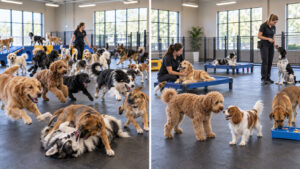
Why Staff-to-Dog Ratios Can Make or Break a Daycare
If there’s one thing every dog owner should investigate before choosing a daycare, it’s the number of dogs being supervised by each staff member.
Imagine walking into a facility with 25 dogs running around together. They’re chasing, barking, wrestling, and constantly moving. Now imagine learning that only one employee is responsible for supervising the entire group.
Would you feel comfortable leaving your dog there?
We wouldn’t.
Dogs communicate constantly through body language, movement, facial expressions, and subtle changes in behaviour. An experienced professional may recognise that one dog is becoming uncomfortable, another is getting overly excited, and a third is beginning to show signs of frustration.
These interactions can change in seconds.
A dog that was playing appropriately moments earlier may suddenly become overwhelmed. A disagreement over space can escalate. One dog may begin chasing another that is desperately trying to escape the interaction.
With too many dogs and too few employees, these early warning signs are easily missed.
Consider what happens if two dogs begin fighting. The employee must attempt to manage the incident safely while the remaining dogs continue moving around the facility. Some may become excited by the commotion, while others may become frightened or attempt to join the conflict.
Who is supervising those dogs while the employee deals with the emergency?
What happens if a dog requires immediate veterinary attention? Who manages the group while assistance is arranged?
Our position at K9 Principles is simple: We would never recommend a group-play daycare where one person is the only staff member responsible for supervising multiple interacting dogs.
There should be enough trained employees available to manage emergencies without leaving the remaining dogs inadequately supervised.
The appropriate staff-to-dog ratio depends on several factors, including group size, temperament, ages, play styles, staff experience, and the facility’s layout. There isn’t one number that guarantees safety in every situation. However, a daycare operating with large groups and extremely high dog-to-staff ratios should raise serious concerns.
We would like to see smaller playgroups and recommend having at least two caregivers providing direct supervision, allowing one person to manage an incident while another continues supervising the other dogs.
A daycare’s responsibility goes far beyond opening a door and letting dogs play. Proper supervision means preventing problems, not simply reacting after something has gone wrong.
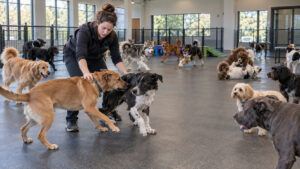
Can Dog Daycare Actually Create Behaviour Problems?
One of the biggest misconceptions about dog daycare is that spending more time around other dogs automatically produces a better-socialised dog.
Unfortunately, this isn’t always true.
Dogs are constantly learning from their experiences, whether we’re intentionally training them or not. Every time they practise a behaviour, that behaviour has another opportunity to become established.
Think about a dog that attends an uncontrolled daycare several days a week. Throughout the day, they practise running towards other dogs, becoming highly excited, chasing movement, wrestling, and engaging in constant social interactions.
Now imagine taking that same dog for a walk and expecting them to calmly pass another dog without approaching it.
For some dogs, that’s a difficult expectation.
They’ve spent hours rehearsing excitement around other dogs, yet suddenly they’re expected to remain calm and focused on their owner.
This doesn’t mean daycare will automatically cause leash reactivity or poor impulse control. However, repeated uncontrolled interactions can contribute to frustration, excessive excitement, and difficulty disengaging from other dogs.
Poorly managed daycare may also allow unwanted behaviours such as mounting, persistent chasing, body slamming, bullying, and ignoring another dog’s attempts to move away.
Even more concerning, dogs that repeatedly experience uncomfortable or frightening interactions may begin developing negative associations with other dogs.
A previously confident dog may become fearful, defensive, or reactive following repeated stressful experiences.
These are issues we regularly address through our in-home private dog training in Hamilton, and they highlight why the quality of a dog’s social experiences matters far more than the quantity.
Your dog doesn’t stop learning when you drop them off at daycare. The question is, what are they learning while they’re there?
Socialisation Doesn’t Mean Your Dog Needs to Play With Every Dog
Many owners choose daycare because they want their dog to become more social. It’s an understandable goal, but we need to recognise the difference between socialisation and constant social interaction.
A well-socialised dog isn’t necessarily one that runs towards every dog they see or wants to play with every unfamiliar dog.
A well-socialised dog is comfortable and confident in different environments. They can observe other dogs without becoming overwhelmed, respect boundaries, disengage from interactions, and remain responsive to their owner.
Sometimes the best social skill a dog can learn is that another dog can be nearby without anything needing to happen.
This is particularly important for puppies and adolescent dogs, whose experiences can influence their developing behaviour.
Allowing a puppy to participate in appropriately managed play with compatible dogs can be valuable. However, repeatedly exposing that puppy to overwhelming groups, rough interactions, or situations they cannot escape may produce the opposite of the intended result.
It’s equally important to understand that not all dogs enjoy group play.
Some prefer a small circle of familiar dogs. Others enjoy brief interactions but become uncomfortable when play continues too long. Certain dogs simply prefer spending time with people.
There’s absolutely nothing wrong with that.
Through our Hamilton dog training programs, we regularly emphasise teaching dogs to remain calm and comfortable around distractions rather than expecting them to interact with everything around them.
A dog that can peacefully ignore another dog has learned an incredibly valuable social skill.
When Dog Daycare Is Done Right, There Can Be Real Benefits
Despite the potential problems, dog daycare isn’t something we believe owners should automatically avoid.
In fact, a well-managed daycare can be an excellent resource for the right dog.
For owners working long hours, quality daycare can provide companionship, physical exercise, bathroom opportunities, and mental enrichment during the day.
Dogs that genuinely enjoy interacting with compatible playmates may benefit from supervised social opportunities. A good daycare can also provide variety, appropriate physical activity, and an enjoyable break from their normal routine.
The key is finding a facility that prioritises each dog’s welfare rather than simply accommodating as many dogs as possible.
Responsible daycare operators carefully assess dogs before placing them into groups. They recognise differences in temperament, play style, energy levels, and social confidence. They know when to interrupt an interaction, when to separate dogs, and when an individual needs quiet time.
Most importantly, they understand that daycare isn’t appropriate for every dog.
A reputable facility should be willing to tell an owner when their dog isn’t enjoying the experience or when another care arrangement would be more suitable.
That honesty is something to respect.
A great daycare doesn’t measure success by how many dogs attend. It measures success by the quality of care each dog receives.

Why Constant Play and Exhaustion Aren’t Always Good Things
One of the most common comments owners make after picking up their dog from daycare is, “He must have had an amazing day. He’s absolutely exhausted!”
While physical activity is important, exhaustion alone isn’t a reliable indicator of a positive experience.
Dogs need rest just as much as they need exercise, and spending hours in an exciting environment can be physically and mentally demanding.
In a busy free-for-all daycare, dogs may have limited opportunities to disengage from activity. Constant barking, running, chasing, and social interaction can maintain high levels of excitement throughout the day.
Some dogs cope well with this for short periods. Others become increasingly tired, frustrated, or overstimulated.
As fatigue increases, a dog’s ability to manage social interactions may also decline. Minor disagreements that might normally be avoided can become more difficult to navigate.
Structured daycare recognises that rest is a necessary part of the day.
Dogs should have access to comfortable, quiet areas where they can relax without being disturbed. Play sessions should be balanced with breaks, individual attention, and appropriate enrichment activities.
A dog doesn’t need eight consecutive hours of entertainment to have a fulfilling day.
In fact, learning to relax and switch off is an important life skill that we emphasise throughout our dog training programs.
Owners should also pay attention to how their dog behaves after daycare. Occasionally being tired after an active day is normal. However, repeated difficulty settling, unusual irritability, reluctance to attend, changes in appetite, or new behavioural concerns may indicate that the environment isn’t meeting their needs.
An exhausted dog isn’t always a happy dog. Sometimes they’re simply overwhelmed.
What Every Dog Owner Should Look for Before Choosing a Daycare
Before enrolling your dog in daycare, take the time to visit the facility and ask detailed questions.
Start by asking how many dogs attend on a typical day, how many are present during peak periods, and how many employees are actively supervising them.
Be particularly cautious if the entire group is ever left under the supervision of one person.
Ask how dogs are assessed before being accepted. A responsible daycare should evaluate temperament, comfort around other dogs, play style, and suitability for group activities rather than accepting every dog without consideration.
Find out how the dogs are grouped. Size matters, but so do personality, age, confidence, energy level, and preferred play style. Two dogs being similar in size doesn’t necessarily mean they’ll be compatible.
Ask about rest periods. Are dogs expected to interact all day, or are there designated times and areas where they can relax without interruption?
Find out what qualifications and experience the employees have. Do they understand canine body language? Can they recognise early signs of stress or conflict? Are they trained in safe handling, dog first aid, and emergency procedures?
Ask how incidents are managed and reported. If your dog becomes injured, frightened, or involved in a disagreement, you should expect clear communication about what happened.
You should also ask about vaccination requirements, cleaning procedures, illness prevention, and the facility’s emergency veterinary plan.
Whenever possible, observe the dogs in the facility. Look beyond the excitement. Are some dogs repeatedly trying to escape interactions? Are staff actively supervising or simply standing around?
Do dogs have opportunities to move away from play without being followed or harassed?
A transparent, professional daycare should welcome reasonable questions and be willing to explain its procedures.
If a facility dismisses your concerns, refuses to discuss staffing levels, or can’t clearly explain how it keeps dogs safe, consider looking elsewhere.
Better Alternatives to Dog Daycare That May Suit Your Dog
Not every dog needs daycare, and for many dogs, alternative arrangements may provide a healthier balance of exercise, enrichment, companionship, and rest.
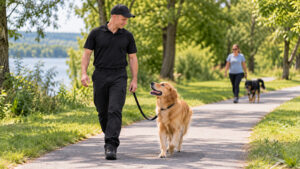
A professional dog walker can be an excellent solution for owners who work during the day. A well-planned midday walk provides physical exercise, mental stimulation, a bathroom opportunity, and a break from being home alone without requiring hours of group interaction.
Private dog walking can be particularly beneficial for dogs that become overwhelmed around unfamiliar dogs or struggle in highly stimulating environments.
Another option is arranging occasional playdates with one or two compatible dogs. Carefully managed interactions with familiar playmates can provide enjoyable social experiences without the unpredictability of a large group.
For dogs needing more guidance, professional dog training in Hamilton can be a valuable alternative. Rather than spending the day practising uncontrolled play, dogs can learn skills that improve everyday life, including loose-leash walking, recall, impulse control, and calm behaviour around distractions.
Our approach to dog training in Hamilton focuses on building a strong foundation, helping dogs understand expectations, and teaching owners how to maintain those skills in everyday situations.
In-home pet sitting may also be appropriate, particularly for dogs that prefer familiar surroundings or need more individualised attention.
And here’s something that might surprise some owners: For many dogs, spending part of the day relaxing at home is perfectly healthy.
Dogs don’t need constant entertainment. With appropriate exercise, enrichment, bathroom opportunities, companionship, and a routine suited to their needs, many dogs are entirely comfortable resting at home while their owners work.
Of course, puppies, dogs with medical needs, and dogs experiencing separation-related distress may require additional care or support. The goal is to create an arrangement that meets the individual dog’s needs rather than assuming one solution is right for everyone.
Conclusion: Choose What’s Best for Your Dog, Not What’s Most Convenient
Dog daycare can be a wonderful experience when the facility is properly managed, the employees understand canine behaviour, and the dogs receive appropriate supervision, structure, and rest.
But not all daycare environments meet those expectations.
Large, uncontrolled playgroups, inadequate staffing, and a lack of individual attention can create unnecessary risks. No dog owner should assume their dog is safe simply because a business offers daycare services.
We are particularly concerned about facilities where one employee is left responsible for supervising an entire group of interacting dogs. When an emergency occurs, one person cannot adequately manage the incident while maintaining effective supervision of every other dog.
At K9 Principles Dog Training, with over 30 years of professional dog training experience, we encourage owners to look beyond convenience, attractive facilities, and promises of a tired dog at the end of the day.
Ask questions. Observe the environment. Learn to recognise whether your dog is genuinely enjoying their experiences or simply coping with them.
And remember that daycare is only one way to meet your dog’s needs. Sometimes a quieter routine, individual exercise, carefully managed social interactions, and proper training will provide far greater long-term benefits.
If you’re noticing increased excitement, leash reactivity, difficulty settling, or unwanted behaviours around other dogs, professional guidance can help you understand what’s happening and develop a plan to improve those behaviours.
K9 Principles provides professional Hamilton dog training, including private in-home lessons and group obedience programs throughout Hamilton, Burlington, Caledonia, and surrounding communities.
Visit www.k9principles.ca to learn how we can help you build a calmer, more confident, and better-behaved dog.
Contact us for more information:
- Name: K9 Principles
- Address: Haldimand County, Greater Hamilton Area, Burlington, and Most of Norfolk County
- Phone: 289 880-3382
- Email: k9principlesinc@gmail.com
- Website: www.k9principles.ca
FAQs
-
A1. Dog daycare can be beneficial when dogs are carefully assessed, supervised by knowledgeable staff, and given appropriate opportunities for play, enrichment, and rest. However, large uncontrolled groups, inadequate supervision, and excessive stimulation can negatively affect some dogs. The quality of the facility and the individual dog’s temperament are important factors.
