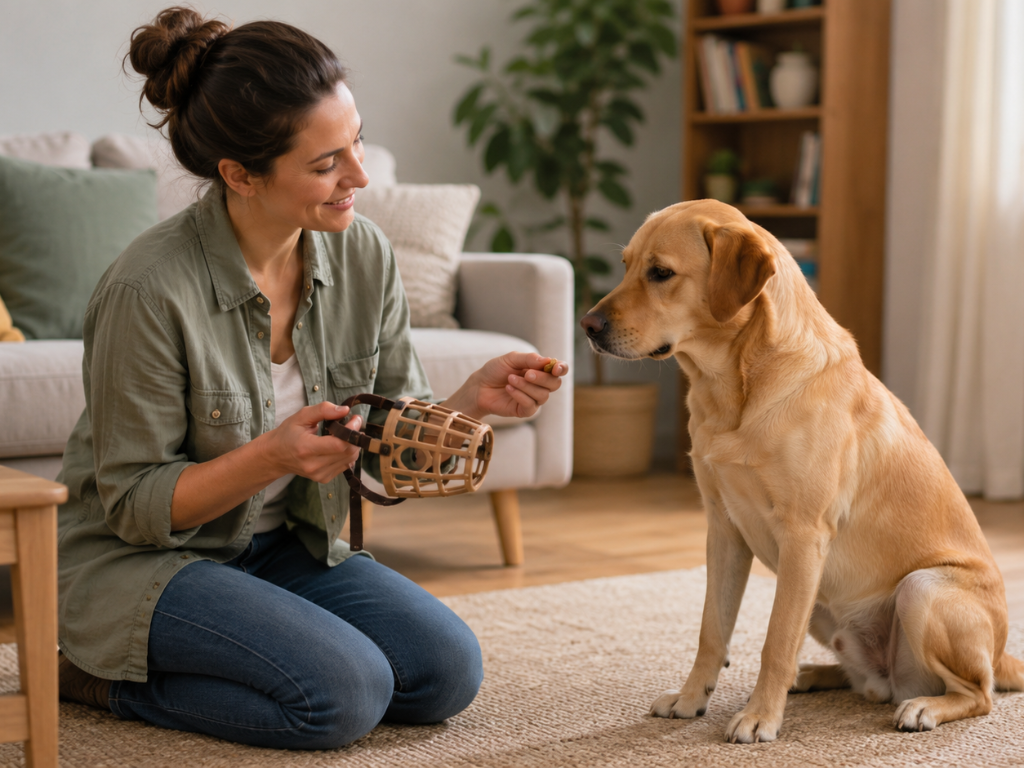





Muzzle training is one of the most misunderstood parts of dog training. Many owners hear the word “muzzle” and immediately think it means something has gone wrong. They worry people will judge their dog. They worry it makes their dog look dangerous. They may even feel guilty for considering it. At K9 Principles, we look at muzzle training very differently. A muzzle is not a punishment. It is not a failure. It is a safety tool, and when it is introduced properly, it can help a dog feel calmer, safer, and more prepared for real life.
The biggest mistake owners make is waiting until they need a muzzle before they train their dog to wear one. By then, the dog may already be stressed, injured, frightened, overwhelmed, or in a situation where everyone is under pressure. That is not the right time to introduce something new. Muzzle training should be done long before it is ever needed, because a comfortable, confident dog is far more likely to handle stressful situations well.
Even the nicest dogs can make poor choices when they are scared, hurt, cornered, or pushed past their limit. Stress can cause dogs to react in ways their owners never expected. A dog that has never bitten may snap at the vet when injured. A dog that is usually social may react badly when another dog rushes into their space. A dog that is gentle at home may panic during grooming, nail trims, or emergency handling. Muzzle training helps prepare for those moments before they happen.
A Muzzle Is Not a Sign Your Dog Is Bad
A properly introduced muzzle does not mean your dog is aggressive, dangerous, or broken. It means you are being responsible. Just like crate training, leash training, recall training, and place training, muzzle training gives your dog another life skill. It is something we can teach calmly, positively, and fairly.
There is a big difference between forcing a muzzle onto a stressed dog and teaching a dog that the muzzle predicts good things. When done correctly, the muzzle becomes normal equipment. It should not create fear. It should not create panic. It should not be used to punish barking, growling, lunging, or frustration.
The goal is not to silence the dog. The goal is to keep everyone safe while we work on the real issue. That is why muzzle training fits so well into responsible dog training. It gives the owner more control, gives the dog more support, and helps reduce risk during situations that may otherwise become unsafe.
Why We Believe Every Dog Should Learn Muzzle Comfort
Many owners think, “My dog would never need that.” We understand why people feel that way, but real life does not always give us warning. Dogs are animals, and animals can make sudden decisions when they are stressed. That does not make them bad. It makes them normal.
A dog may need a muzzle during an emergency vet visit. A dog may need one after an injury. A dog may need one during painful handling, a medical procedure, or grooming. A dog may need one if they start eating dangerous items on walks. A dog may need one if they are nervous around strange dogs, unfamiliar people, or busy environments.
The point is not that every dog will become a bite risk. The point is that every dog benefits from preparation. If your dog is already comfortable wearing a muzzle, you have one more safety tool ready if life ever throws you a curveball.
This is the same reason we teach dogs to relax on a mat, walk on a loose lead, come when called, and handle distractions. We are not training for the perfect day. We are training for the day when things do not go perfectly.
Stress Can Change Behaviour Quickly
Owners often know their dogs extremely well, but even a great owner cannot predict every reaction. Stress changes behaviour. Pain changes behaviour. Fear changes behaviour. Pressure changes behaviour. A dog that is usually patient may react differently when they feel trapped or frightened.
This is why we never want to wait until a dog is already struggling before we introduce the muzzle. If the dog’s first experience with a muzzle happens during a crisis, the muzzle can quickly become part of the stress. The dog may fight it, paw at it, freeze, panic, or shut down.
When we teach muzzle comfort ahead of time, we remove that surprise. The muzzle becomes something the dog understands. Instead of adding pressure, it can become part of a familiar routine. That matters because dogs cope better when they understand what is happening.
This is especially important for nervous dogs, reactive dogs, rescue dogs, adolescent dogs, dogs with handling sensitivity, and dogs with unknown history. It is also valuable for stable, friendly dogs, because no owner can guarantee their dog will never be scared, sore, or overwhelmed.
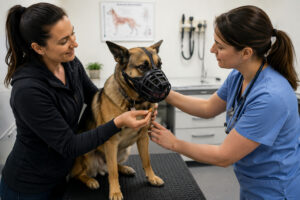
Muzzle Training Should Be Proactive, Not Reactive
Good muzzle training should happen when the dog is calm, relaxed, and able to learn. It should not begin in the middle of a vet emergency, after a bite, during a grooming struggle, or when the dog is already over threshold.
When we train proactively, we can go slowly. We can reward the dog for looking at the muzzle. We can reward them for moving towards it. We can teach them to place their nose inside willingly. We can build duration, comfort, and confidence before we ever need the muzzle in a real situation.
This is the same foundation-first approach we use in dog training in Hamilton and surrounding areas. We do not wait for chaos and then try to fix everything under pressure. We build the skill first, then apply it when needed.
A proactive owner is not overreacting. They are preparing. That preparation can prevent panic, reduce risk, and help the dog feel more in control when something stressful happens later.
The Right Muzzle Matters
Not every muzzle is right for training. For most dogs, a properly fitted basket muzzle is the best choice because it allows the dog to breathe, pant, drink water, and take treats. This is very important. A dog wearing a muzzle still needs to regulate their body temperature, especially during walks, training sessions, vet visits, or warm weather.
Soft fabric muzzles are often too restrictive for longer use. They may be useful in very specific short-term situations, such as brief handling at a clinic, but they are usually not the best option for proper muzzle training. If the dog cannot pant comfortably, it is not suitable for normal training or real-world use.
A good muzzle should give the dog enough room to open their mouth naturally. It should not rub the nose, press into the eyes, or sit too tightly against the face. Fit matters because discomfort can ruin the training process. If the muzzle hurts, pinches, or restricts the dog, the dog has a good reason to dislike it.
How to Introduce the Muzzle Properly

The first step is simple: do not force it. Let your dog investigate the muzzle at their own pace. Put the muzzle on the floor or hold it calmly and reward your dog for showing interest. If they sniff it, mark and reward. If they move closer to it, mark and reward. We want the dog to believe the muzzle is a good thing from the very beginning.
Next, place food near the opening of the muzzle so your dog chooses to move towards it. Over time, you can place the food slightly deeper so the dog starts putting their nose inside. The important part is choice. The dog should be moving into the muzzle, not having the muzzle pushed onto them.
Once your dog is happily placing their nose inside, you can start building duration. Feed through the muzzle while their nose is in place. Keep it short. Keep it easy. End before the dog becomes frustrated.
Only after the dog is comfortable should you begin touching the straps. Then you can briefly fasten the muzzle, reward, and remove it. The goal is not to rush. The goal is to create a dog who willingly participates.
Do Not Trick Your Dog Into Wearing It
Some owners try to sneak the muzzle on quickly while the dog is distracted. That usually backfires. Dogs are smart. If they feel tricked, they may become suspicious of the muzzle, suspicious of food, or suspicious of the owner’s hands.
Good training is not about fooling the dog. It is about building trust. The dog should understand the process and feel safe with it. This is especially important for dogs who already struggle with fear, reactivity, or handling.
At K9 Principles, we want dogs to be active learners. We do not want them feeling trapped, confused, or ambushed. When the dog chooses to put their nose into the muzzle, we are creating cooperation. That cooperation is much stronger than force.
This is one of the reasons professional dog training can make such a difference. Small mistakes in timing, pressure, or handling can create bigger problems later. A calm, structured plan helps the dog succeed without creating a fight.
Food Is Not Bribery During Muzzle Training
Food is one of the best tools for muzzle training because it helps create a positive emotional response. We are not bribing the dog. We are teaching them that the muzzle predicts something good.
For many dogs, food also helps lower stress and gives them something clear to focus on. Instead of worrying about the equipment, they learn a simple pattern: nose in the muzzle, reward appears. That pattern builds confidence.
Over time, the food can become more random, but in the early stages, we want to pay the dog well. If we want the dog to accept something unusual on their face, we should make the experience worth it.
This is no different than rewarding a young dog for leash walking, recall, place work, or calm behaviour around distractions. Rewards help the dog understand what we want. Once the dog understands, we can build reliability.
Muzzle Training Can Create More Freedom
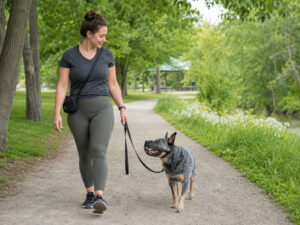
Many people think a muzzle takes freedom away, but the opposite can be true. A dog who is safely muzzle trained may be able to do more, not less. They may be able to attend vet appointments with less risk. They may be able to work around triggers more safely. They may be able to practise behaviour modification in real-world settings with better management.
For dogs who scavenge dangerous items, a muzzle may allow safer walks while training is being built. For dogs with reactivity, it may help the owner feel calmer, which can also help the dog. For dogs with a bite history, it may make controlled training setups safer for everyone involved.
A muzzle does not replace training, but it can support training. It gives us a safety layer while we work on the actual behaviour. That may include fear, frustration, resource guarding, handling issues, leash reactivity, or poor impulse control.
This is why muzzle training belongs in the conversation around Hamilton dog training. It is not only about stopping a bite. It is about giving owners and dogs a safer path forward.
A Muzzle Does Not Fix the Underlying Problem
A muzzle is a tool, not a complete training plan. It can prevent injury, but it does not teach the dog to feel differently. It does not solve fear. It does not fix reactivity. It does not remove resource guarding. It does not teach a dog to enjoy grooming or vet handling.
That is why the reason behind the behaviour still matters. If a dog is reacting because they are scared, we need to address the fear. If a dog is guarding food or toys, we need to address the guarding. If a dog is snapping during nail trims, we need to work on handling comfort. If a dog is lunging on leash, we need to build better focus, distance, and coping skills.
The muzzle helps create safety while that work is happening. It should never be used as an excuse to push the dog too far. A muzzled dog can still be stressed. A muzzled dog can still be overwhelmed. A muzzled dog still needs space, training, and fair handling.
When Muzzle Training Is Especially Important
Muzzle training is valuable for every dog, but some dogs need it sooner than others. Dogs with a bite history should be muzzle trained. Dogs who have snapped during handling should be muzzle trained. Dogs who become extremely nervous at the vet should be muzzle trained. Dogs who eat dangerous items on walks should be muzzle trained. Dogs who guard food, toys, bones, spaces, or people may also benefit from muzzle training as part of a larger behaviour plan.
It can also be very useful for rescue dogs with unknown history. Many rescue dogs are wonderful, but we may not know everything they have experienced. Teaching muzzle comfort gives the owner another layer of safety while they learn who the dog is and what the dog needs.
This does not mean the dog is bad. It means the owner is thinking ahead. In our view, that is responsible ownership.
Do Not Let Embarrassment Stop You
One of the biggest reasons owners avoid muzzle training is embarrassment. They worry about what other people will think. They worry someone will assume their dog is aggressive. They worry they will look like they have failed.
The truth is, a muzzle often shows the opposite. It shows that the owner is aware, prepared, and responsible. It shows that they are not ignoring risk. It shows that they are willing to do what is best for their dog, even if other people do not fully understand it.
We need to remove the shame around muzzles. A dog in a muzzle is not automatically a dangerous dog. Sometimes it is a dog learning to feel safe. Sometimes it is a dog recovering from an injury. Sometimes it is a dog who eats things they should not. Sometimes it is a dog whose owner is doing the smart thing before a problem happens.
At K9 Principles, we would much rather see an owner prepare early than wait until something goes wrong.
How K9 Principles Can Help

Muzzle training should be calm, fair, and step-by-step. If your dog is already nervous, reactive, pushy, fearful, or sensitive to handling, professional guidance can make the process much smoother.
At K9 Principles, we help owners introduce muzzle training in a way that builds trust instead of conflict. We also look at why the muzzle may be needed in the first place. For some dogs, the bigger issue may be reactivity. For others, it may be resource guarding, vet handling, grooming stress, anxiety, scavenging, or poor impulse control.
Our goal is not just to put equipment on the dog. Our goal is to help the dog and owner build better communication, stronger skills, and safer habits. That is what effective dog training should do.
If you are looking for dog training in Hamilton, or support with behaviour concerns in the surrounding area, muzzle training may be one important part of the plan. Done properly, it can help your dog feel more confident and help you feel more prepared.
Conclusion: Muzzle Training Is Preparation, Not Punishment
Muzzle training done right is one of the most valuable skills a dog can learn. It is not only for dogs with bite histories. It is not only for aggressive dogs. It is not something owners should wait to teach until they are desperate.
Every dog can experience stress. Every dog can become frightened, sore, overwhelmed, or defensive. Even good dogs can make unexpected choices when pressure gets too high. Teaching your dog to feel comfortable in a muzzle before it is ever needed is a smart, kind, and responsible decision.
A muzzle should not take away trust. When introduced properly, it can build trust. It can make vet visits safer, grooming easier, walks more manageable, and behaviour training more controlled. Most importantly, it gives you one more way to protect your dog and the people around them.
At K9 Principles, we believe preparation is always better than panic. Muzzle training is not about expecting the worst from your dog. It is about giving your dog the skills they need if life ever becomes stressful, unpredictable, or difficult.
Contact us for more information:
- Name: K9 Principles
- Address: Haldimand County, Greater Hamilton Area, Burlington, and Most of Norfolk County
- Phone: 289 880-3382
- Email: k9principlesinc@gmail.com
- Website: www.k9principles.ca
FAQs
-
A1. No. Muzzle training is not cruel when it is done properly with the right equipment and positive training. A muzzle should never be used as punishment. The dog should be taught to wear it gradually and comfortably.