







Few things test a dog owner’s patience faster than coming home to chewed shoes, damaged furniture, shredded pillows, torn-up beds, or bite marks along the baseboards. It can feel personal, frustrating, expensive, and completely overwhelming. Many owners look at the mess and think their dog is being stubborn, spiteful, or deliberately difficult. The truth is usually much simpler. Dogs chew because chewing is a natural behaviour, but destructive chewing happens when that behaviour is not properly managed, redirected, or understood. At K9 Principles, we help families through dog training in Hamilton, Caledonia, and the surrounding areas by looking at the reason behind the behaviour, not just the damage left behind. When we understand why a dog is chewing, we can build a plan that actually works.
Chewing Is Normal, Destructive Chewing Is Not
Every dog needs to chew. Puppies chew while they are teething, exploring, and learning about the world. Adult dogs chew to relieve stress, burn energy, entertain themselves, or satisfy a natural instinct. Chewing becomes a problem when the dog is choosing furniture, shoes, door frames, children’s toys, blankets, remotes, walls, or other household items instead of appropriate chew options. This is where owners often get stuck. They try to stop the chewing without giving the dog a better outlet. That usually creates more frustration for everyone. Good dog training does not remove a dog’s need to chew. It teaches the dog what is allowed, creates structure around the behaviour, and prevents the dog from practising habits that damage the home.
Why Dogs Chew Things They Shouldn’t
Dogs chew for many reasons, and the reason matters. A puppy chewing table legs may be dealing with teething and lack of supervision. A young adolescent dog destroying pillows may be bored, full of energy, and under-managed. A dog chewing door frames when left alone may be anxious or frustrated. A dog stealing shoes may have learned that grabbing forbidden items gets attention. The chewing itself is only the symptom. The real issue may be freedom too soon, lack of mental stimulation, too much unsupervised time, not enough appropriate chew items, stress, anxiety, poor household structure, or a habit that has been allowed to grow. This is why Hamilton dog training should always look beyond the obvious behaviour. If we only react to the mess, we miss the reason the behaviour keeps happening.
Puppy Chewing vs Adult Dog Chewing
Puppy chewing is expected, but that does not mean it should be ignored. Puppies need guidance from the start. They do not automatically know the difference between a chew toy, a slipper, a table leg, and a child’s stuffed animal. They learn through repetition, supervision, redirection, and reward. Adult dog chewing can be different because the behaviour may already be rehearsed. If a dog has spent months chewing household items, the habit has become rewarding. The dog may enjoy the texture, the attention, the activity, or the stress relief that chewing provides. This is why early dog training is so valuable. Whether we are working with a puppy or an adult dog, the goal is the same: prevent the wrong choices, reward the right choices, and give the dog a clear structure they can understand.

The Biggest Mistake Owners Make With Destructive Chewing
The biggest mistake is giving a dog too much freedom before they have earned it. Many owners allow their dog to roam the house because they want the dog to feel included. The problem is that freedom without training often leads to bad habits. A dog left loose in the house with access to shoes, garbage, children’s toys, furniture, laundry, and food smells is being set up to fail. Then, when the dog chews something, the owner becomes frustrated. From the dog’s point of view, the opportunity was there and the behaviour was rewarding. Freedom should be earned in stages. A dog should have more access to the home as they prove they can make good choices. Until then, supervision, crates, gates, pens, leashes in the house, and structured downtime are not punishments. They are smart management tools.
Why Punishing After the Fact Does Not Work
Many owners scold their dog when they find the damage, but this rarely solves destructive chewing. If the dog chewed the item ten minutes, thirty minutes, or two hours earlier, they are unlikely to connect the correction to the behaviour. They may look guilty, but that usually means they are responding to the owner’s tone, body language, and frustration. Punishment after the fact does not teach the dog what to do instead. It can also create stress, and stress can make destructive behaviours worse. A better plan is to prevent access, interrupt calmly when caught in the moment, redirect the dog to an appropriate item, and reward them for making the right choice. Proper dog training focuses on teaching, not simply reacting.
Management Is Not Cheating, It Is Training
Management is one of the most overlooked parts of fixing destructive chewing. Owners often want the dog to stop chewing, but they continue leaving tempting items within reach. That is like asking a toddler not to touch sweets left on the floor. If we want better behaviour, we need a better setup. Shoes should be put away. Laundry should be out of reach. Garbage should be secured. Dogs should not have unsupervised access to rooms where they are likely to chew. Puppies and young dogs should be crated, gated, or placed in a safe area when they cannot be watched. Every time a dog practises destructive chewing, the habit becomes stronger. Every time we prevent it and guide the dog toward a better choice, we move closer to success.
Give Your Dog the Right Things to Chew
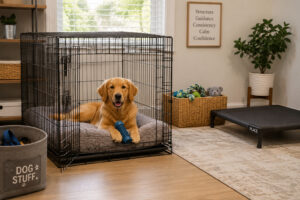
If we take away the couch, shoes, and baseboards, we still need to give the dog something appropriate to chew. Dogs need safe outlets. This may include durable chew toys, food-stuffed toys, puppy-safe chews, supervised chew sessions, lick mats, puzzle feeders, and rotating options so the dog does not become bored. The right choice depends on the dog’s age, size, chewing strength, and safety needs. Some dogs are gentle chewers. Others can destroy toys quickly and need close supervision. The goal is not to fill the house with random toys. The goal is to teach the dog that their own items are rewarding, available, and worth choosing. When the dog picks up the correct chew, praise them. When they settle with it, reward that calm choice. This is how we build better habits.
Teach Leave It and Drop It Properly
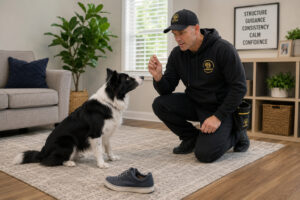
Two of the most useful cues for destructive chewing are “leave it” and “drop it”. Leave it means the dog does not take the item in the first place. Drop it means the dog releases something they already have. These cues are not magic words. They need to be taught step by step before the dog is in a real-life situation with something valuable. If a dog has already stolen a shoe and is running through the house, that is not the best time to start teaching drop it. We need to practise with lower-value items first, reward the release, and build the dog’s understanding. In our dog training programmes, we focus on these foundation skills because they help with much more than chewing. They also support better manners, impulse control, safety, and household structure.
Exercise Helps, But It Is Not the Whole Answer
A dog with too much energy may chew because they are looking for something to do. Regular walks, training sessions, play, scent games, and structured activities can help reduce destructive chewing. However, exercise alone is not the answer. A tired dog is not automatically a trained dog. Some dogs can go for a long walk and still come home ready to chew the furniture because they have not learned how to settle. Mental stimulation and calm training matter just as much as physical exercise. Place work, obedience, structured downtime, and enrichment all teach the dog how to live calmly in the home. This is one of the reasons dog training in Hamilton with K9 Principles focuses on real-life behaviour, not just commands.
When Chewing May Be Linked to Anxiety
Some chewing problems are not caused by boredom or lack of rules. Some dogs chew because they are anxious, especially when left alone. Chewing around doors, windows, crates, or exit points can be a sign that the dog is struggling when separated from their owner. Other signs may include barking, whining, pacing, drooling, trying to escape, or becoming destructive shortly after the owner leaves. If the chewing is linked to anxiety, simply buying stronger toys or using a tougher crate will not solve the real issue. The dog needs a plan that addresses confidence, independence, calm routines, and emotional pressure. This is where professional help becomes very important. Anxiety-based chewing should be handled with patience and a proper training plan.
Why Dogs Chew Baseboards, Walls, and Door Frames
Chewing household structures can be especially concerning because it can be dangerous and costly. Dogs may chew baseboards, drywall, stairs, doors, or window frames because of stress, frustration, teething, boredom, confinement issues, or repeated access to the same area. This type of chewing should not be ignored. Splinters, paint, drywall, and swallowed materials can create health risks. If a dog is chewing parts of the home, the first step is to block access and increase supervision. The next step is to figure out why it is happening. Is the dog left alone too long? Are they anxious? Are they under-stimulated? Are they being given too much freedom? Are they teething? Good Hamilton dog training looks at the pattern so the plan fits the dog.
How K9 Principles Helps With Destructive Chewing
At K9 Principles, we do not just tell owners to buy more chew toys and hope for the best. We help build a practical plan that fits the dog, the home, and the family. For some dogs, the answer may be better supervision, crate training, place work, and clearer routines. For others, the dog may need stronger obedience foundations, better impulse control, more mental stimulation, or help with anxiety. We work with owners through our In-Home Private lessons, puppy training, obedience programmes, and behaviour-focused dog training to address the reason behind the chewing. Our goal is to make life calmer, safer, and easier for both the dog and the owner. If you are looking for dog training in Hamilton, Caledonia, or the surrounding area, K9 Principles can help you stop guessing and start building a plan that works.
A Simple First Step Plan for Owners
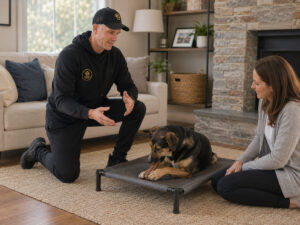
The first step is to stop giving the dog access to things they are likely to destroy. Put shoes away, secure garbage, close bedroom doors, move laundry, and limit freedom when the dog cannot be supervised. Next, provide appropriate chew options and make those items valuable. Praise the dog when they choose the right item. Use a crate, pen, gate, or safe area when you cannot watch them. Add short training sessions throughout the day to work on leave it, drop it, place, and calm behaviour. Increase mental stimulation with structured activities rather than just free play. Most importantly, do not wait until the behaviour becomes dangerous or deeply rehearsed. The sooner you create structure, the easier it is to change the habit.
When to Call a Professional Dog Trainer
It is time to call a professional if the chewing is getting worse, the dog is swallowing items, the dog is damaging walls or door frames, the dog is chewing when left alone, or the owner feels frustrated and unsure what to do next. It is also wise to get help if the dog guards stolen items, runs away when approached, or becomes anxious when confined. Destructive chewing can often be fixed, but the plan needs to match the cause. Professional dog training gives owners the structure, timing, and clarity needed to change the behaviour properly. At K9 Principles, we help owners understand what their dog needs, what needs to change in the home, and how to teach better habits without creating more stress.
Conclusion:
Destructive chewing can make life with a dog feel chaotic, but it does not mean the dog is bad. It means the dog needs clearer direction, better management, appropriate outlets, and consistent training. Chewing is natural. Destroying the home does not have to be. With the right plan, dogs can learn what to chew, what to leave alone, and how to settle calmly in the house. If your dog is chewing furniture, shoes, baseboards, or household items, K9 Principles Dog Training can help. Through practical, real-life dog training in Hamilton, Caledonia, Haldimand County, and the surrounding area, we help families build better habits, protect their homes, and create a calmer life with their dogs.
Contact us for more information:
- Name: K9 Principles
- Address: Haldimand County, Greater Hamilton Area, Burlington, and Most of Norfolk County
- Phone: 289 880-3382
- Email: k9principlesinc@gmail.com
- Website: www.k9principles.ca
FAQs
-
A1. A dog may suddenly start chewing because of boredom, stress, teething, lack of supervision, changes in routine, too much freedom, or anxiety. The first step is to look at when the chewing happens and what the dog is chewing. Once we understand the pattern, we can build a better training and management plan.
