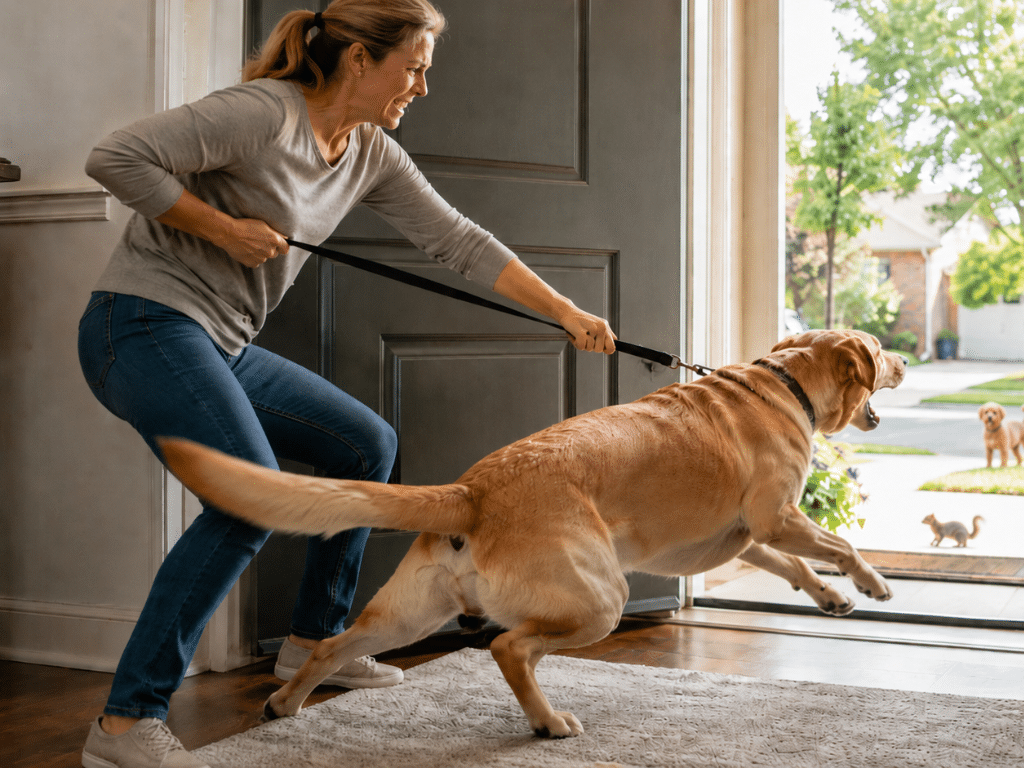





Door dashing is one of those dog behaviours that can go from annoying to terrifying in seconds. One moment, you are opening the front door to bring in groceries, greet a visitor, or let someone out. The next moment, your dog has launched past you and is running across the lawn, down the driveway, towards the road, or straight at another person or dog. At K9 Principles, we see this problem all the time, and we want owners to understand something important. Door dashing is not just a manners issue. It is a safety issue. A dog that cannot control themselves at doorways is a dog that can put themselves in danger very quickly. The good news is that door dashing can be fixed with structure, consistency, clear expectations, and proper dog training. When we work with owners through our dog training in Hamilton and the surrounding areas, doorway manners are often one of the most important everyday skills we teach because they affect daily life every single day. Your dog does not need to blast through doors, crowd visitors, knock into people, or make every entrance and exit stressful. They can learn to pause, think, wait, and move only when given permission. That skill can change everything.
Why Door Dashing Happens
Dogs dash through doors because the other side of the door usually means something exciting. The front door may lead to people, dogs, smells, walks, the car, the yard, freedom, or pure adventure. The back door may lead to squirrels, birds, toys, or a favourite place to run. Even a car door can create the same problem because the dog has learned that movement through that opening leads to something valuable. From the dog’s point of view, rushing works. If they push forward and get outside, the behaviour has been rewarded. Even if the owner yells, panics, or gets upset afterwards, the dog still got what they wanted. That is why door dashing often gets worse over time. The dog is not thinking about traffic, safety, visitors, or how stressful the situation is for the owner. They are thinking about access. They see an opening, they want what is on the other side, and they move before the owner can stop them. This is why proper Hamilton dog training focuses on teaching the dog what to do before the door opens, not trying to correct the chaos after the dog has already escaped.
The Door Should Never Be Controlled by the Dog
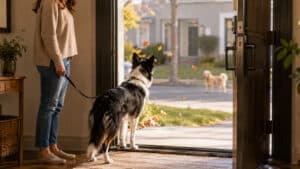
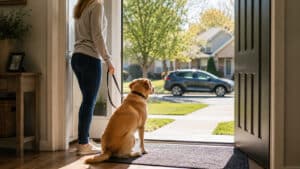
One of the biggest changes owners need to make is simple but powerful. The dog should not decide when the door opens, when they move through it, or when they explode into the next environment. That decision should belong to the owner. This does not mean being harsh. It means being clear. Doors are important boundaries. They separate safe spaces from unknown spaces. They separate the house from the road, the yard from the neighbourhood, and the car from a busy parking lot. When a dog believes every open door is an invitation to rush forward, they are making a decision they are not ready to make. At K9 Principles, we teach dogs that doorways come with rules. The dog can approach the door calmly. The dog can wait. The dog can look to the owner for direction. The dog can move through only when released. That type of dog training creates safety and respect without fear or confusion. It also gives owners more confidence because they no longer feel like every door is a disaster waiting to happen.
Why Yelling Does Not Fix Door Dashing
Many owners try to stop door dashing by yelling the dog’s name, shouting “stay”, grabbing at the collar, blocking the doorway, or chasing the dog once they get out. We understand why it happens. In the moment, the owner is scared and reacting fast. The problem is that yelling usually happens too late. By the time the dog is already moving through the door, the behaviour is already in motion. If the dog gets outside, the reward has already happened. In some cases, yelling can even add more excitement to the situation. The dog hears panic, sees movement, and the whole event becomes more intense. Chasing can make it worse because some dogs turn it into a game, while others become harder to catch because they feel pressure. Good dog training does not rely on panic. It relies on preparation. Instead of waiting until the dog is flying through the door, we teach the dog that calm behaviour is what makes the door open in the first place. That is the difference between reacting to the problem and actually solving it.
Door Dashing Is an Impulse Control Problem
Door dashing is not only about the door. It is about impulse control. A dog with poor impulse control often struggles to pause when something exciting appears. They may jump on guests, pull towards other dogs, grab food, bark at windows, rush out of crates, or explode out of the car. Door dashing is one version of a bigger pattern. The dog sees something they want, and their body moves before their brain checks in with the owner. This is why we do not treat door dashing as an isolated trick at K9 Principles. We look at the whole dog. We want to know whether the dog understands how to wait, how to relax, how to respond around distractions, how to follow direction when excited, and how to accept that not every opportunity belongs to them immediately. This is where structured dog training in Hamilton becomes so valuable. We are not just teaching the dog to sit at a door. We are teaching the dog how to think through excitement, which carries into many parts of everyday life.
The Release Cue Is the Missing Piece
A reliable release cue is one of the most important parts of doorway training. Many dogs are told to sit or wait, but they are never clearly taught when they are allowed to move. This creates confusion. Some dogs guess. Some dogs break position as soon as the door opens. Some dogs wait for a second and then launch because they think the open door is the release. That is where the owner needs to become clearer. A release cue tells the dog, “Now you may move.” Until that cue is given, the dog should understand that the doorway is not theirs to rush through. The release cue should be simple, consistent, and used the same way by everyone in the home. It should not be repeated over and over. It should have meaning. At K9 Principles, we teach owners how to make the release cue valuable, clear, and practical so the dog understands that waiting does not mean they never get access. Waiting means access happens in a controlled way. That is a huge difference.
Start With Easier Doors Before Training at the Front Door
One of the biggest mistakes owners make is starting with the hardest doorway in the house. For most dogs, the front door is the most exciting and dangerous door. It leads to visitors, walks, delivery people, smells, the street, and the outside world. If a dog has a long history of bolting through that door, it may be too difficult as the first training location. We usually want to start where the dog has a better chance of success. That may be an interior door, a bedroom door, a low-value back door, or another doorway that does not create as much excitement. Once the dog understands the pattern, we can slowly increase the challenge. This is how good dog training works. We do not throw the dog into the hardest version of the problem and hope they figure it out. We teach the skill in a controlled way, build understanding, and then move towards real-life situations. When owners follow this process, the dog learns faster and the training feels much less frustrating.
How to Teach Better Doorway Manners
The foundation of doorway training is simple, but the details matter. The dog should be on leash during the early stages so they cannot rehearse bolting. The owner approaches the door with the dog under control and asks for calm behaviour. This could be a sit, a stand, or simply a controlled position beside the owner, depending on the dog and the situation. The door begins to open only if the dog remains calm. If the dog pushes forward, the door closes. The owner does not need to yell or get emotional. The consequence is simple: rushing makes the opportunity disappear. Calm behaviour makes the opportunity continue. Over time, the dog learns that self-control is the key that opens the door. Once the dog is successful, the owner uses a clear release cue and moves through the doorway in a controlled way. This process should be repeated many times in short, fair sessions. The goal is not to trap the dog in a stay forever. The goal is to teach the dog that doorways require permission, not panic.
Why Management Matters While Training
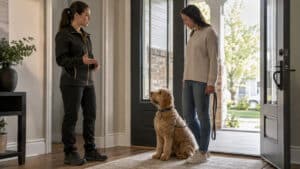
Management is not the same as training, but it protects the dog while training is happening. If your dog has a history of door dashing, you cannot rely on hope while you work on the behaviour. The dog should be on leash when doors are being opened. Baby gates can be used to create a second barrier. Visitors can be asked to wait before entering. Children in the home should be taught not to open exterior doors unless the dog is secure. The dog can be sent to a place bed, crate, or another room when deliveries arrive. These steps are not permanent failures. They are smart safety measures. Every time a dog successfully bolts through the door, the habit becomes stronger. Management helps prevent the dog from practising the wrong behaviour while proper dog training teaches the right one. At K9 Principles, we always want owners to understand that safety comes first. Training builds the future behaviour, but management protects the dog today.
Everyone in the Home Must Follow the Same Rules
Door dashing often continues because different people in the home have different rules. One person may make the dog wait at the door. Another person may let the dog push past because they are in a hurry. Someone else may open the door while the dog is loose because they think it is not a big deal. To the dog, this creates confusion and opportunity. Dogs are very good at learning which person has rules and which person does not. If the dog is sometimes allowed to bolt and sometimes not allowed to bolt, the behaviour will continue. Consistency matters. Every person in the home needs to understand the doorway routine. The dog waits. The door opens only when the dog is controlled. The dog moves through only when released. This is not about being strict for the sake of being strict. It is about making the rules clear enough that the dog can succeed. In our Hamilton dog training programs, we often remind owners that the dog will improve faster when the humans become consistent first.
Door Dashing and Visitor Excitement Often Go Together
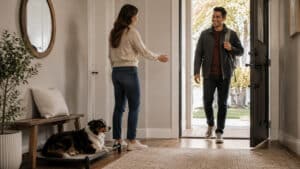
Many dogs that dash through doors also struggle when visitors arrive. The doorbell rings, the dog barks, rushes forward, jumps, spins, pushes into the entryway, and creates chaos before the guest even steps inside. This is not a separate problem. It is often connected to the same lack of impulse control and doorway structure. The dog has learned that the front door is an exciting place where big things happen. If the dog is allowed to rehearse overexcitement at the door, visitor greetings usually become harder too. The solution is to create a routine before the door opens. The dog may need to be on leash, behind a gate, on a place bed, or in a controlled position away from the entrance. The dog should not be allowed to crowd the doorway, rush the guest, or make the greeting decision on their own. Calm behaviour should create access. Overexcitement should create distance. This type of dog training helps create better greetings and safer door behaviour at the same time.
Doorway Manners Should Apply Everywhere
The front door is only one piece of the picture. Dogs can dash through back doors, yard gates, garage doors, crate doors, vehicle doors, training facility doors, and even camper or trailer doors. The rule should be the same everywhere. Thresholds require permission. This becomes especially important for active families, travelling dog owners, and people who take their dogs into public spaces. A dog that bolts out of a vehicle in a parking lot can be in serious danger. A dog that blasts through a campsite door can run into another dog’s space. A dog that pushes through a gate can disappear before anyone notices. Doorway manners should become a lifestyle skill, not a front-door trick. At K9 Principles, our goal is always to help owners build practical obedience that works in real life. That means the dog learns the same expectations across many different environments, not only in one perfect training setup.
When Door Dashing Has Already Become Dangerous
If your dog has already escaped through the door, run towards the road, chased someone, rushed another dog, or disappeared from your property, the problem needs to be taken seriously. This is not something to ignore and hope it improves on its own. A dog with a strong door dashing habit needs immediate management and a structured training plan. The first step is to stop giving the dog chances to practise the behaviour. That may mean using a leash at all exterior doors, adding barriers, changing how visitors enter, and making sure the dog is secure before doors open. The next step is teaching the dog a clear doorway routine, a reliable release cue, stronger impulse control, and better recall. This is where professional dog training in Hamilton can make a major difference. At K9 Principles, we help owners identify why the behaviour is happening, where the weak points are, and how to rebuild the dog’s understanding in a way that is fair, practical, and safe.
How K9 Principles Helps With Door Dashing
At K9 Principles, we do not look at door dashing as a simple “bad habit”. We look at the full picture. We want to know what the dog is trying to access, how often the behaviour has worked, what rules exist in the home, how the dog handles excitement, how reliable their recall is, and how much impulse control they have in daily life. From there, we build a plan that makes sense for the dog and the owner. Some dogs need help with basic manners. Some need better structure at home. Some need recall work. Some need visitor greeting routines. Some need private in-home training because the behaviour happens right at the front door, in the driveway, or at the gate. That is why our approach to Hamilton dog training is so effective. We are not handing owners a generic script and hoping it works. We are teaching real-life skills in the places where owners actually need them. Doorway manners are one of those skills that can make the home calmer, safer, and easier to manage every single day.
Doorway Manners Create More Freedom, Not Less
Some owners worry that teaching doorway rules will make their dog feel restricted, but the opposite is true. A dog with better control earns more freedom because the owner can trust them in more situations. A dog that waits at the door can be included more often. A dog that does not bolt from the car is safer to travel with. A dog that can pause at gates is easier to manage outside. A dog that can hold themselves together when visitors arrive is more enjoyable to live with. Structure does not take freedom away. Structure makes freedom safer. This is one of the most important lessons in dog training. We are not trying to control dogs just for the sake of control. We are trying to teach them how to live safely in a human world filled with roads, doors, visitors, distractions, and unexpected moments. When a dog learns to pause and wait for direction, the owner gains confidence and the dog gains opportunity.
Conclusion:
Door dashing is one of the most common behaviours owners struggle with, but it is also one of the behaviours that should never be ignored. A dog that bolts through doors is not just being rude or stubborn. They have learned that rushing works, and every successful escape makes the habit stronger. The answer is not yelling, chasing, or hoping the dog grows out of it. The answer is clear structure, consistent rules, smart management, a reliable release cue, and proper dog training. At K9 Principles, we help owners build the kind of everyday obedience that actually matters in real life. Doorway manners are not just about having a dog that looks trained. They are about having a dog that is safer, calmer, easier to manage, and more connected to their owner. If your dog struggles with door dashing, visitor excitement, recall, impulse control, or general manners, our dog training in Hamilton can help you create a plan that works where you need it most. A safer dog starts with small moments of control, and one of the best places to begin is right at the door.
Contact us for more information:
- Name: K9 Principles
- Address: Haldimand County, Greater Hamilton Area, Burlington, and Most of Norfolk County
- Phone: 289 880-3382
- Email: k9principlesinc@gmail.com
- Website: www.k9principles.ca
FAQs
-
A1. Your dog likely keeps running out the door because they have learned that the doorway leads to something valuable. That could be the yard, a walk, people, smells, freedom, or excitement. If rushing has worked before, your dog will keep trying it. Proper dog training teaches your dog that calm behaviour, not bolting, is what creates access.