



If your dog turns every walk into a full-body workout, you are not alone. One of the most common reasons people contact us at K9 Principles for dog training in Hamilton is because their dog pulls on the lead, drags them towards smells, lunges towards other dogs, zigzags across the pavement, or completely forgets they exist the second they step outside. It can be frustrating, embarrassing, and sometimes even dangerous, especially if you have a strong dog, a young dog, a reactive dog, or a dog who has learned that pulling is the fastest way to get what they want.
Loose lead walking is one of those skills that sounds simple until you try to teach it in the real world. The idea is straightforward. Your dog walks with you without constant tension on the lead. They do not need to stare at you the whole time. They do not need to perform a perfect competition heel. They simply need to understand that a relaxed lead, calm movement, and awareness of the person holding the lead are what make the walk continue.
The problem is that most dogs are never actually taught this. They are clipped to a lead, taken outside, and expected to magically understand human walking rules. Then, when they pull, the owner pulls back, the dog pulls harder, and the walk becomes a battle of strength instead of a conversation. At K9 Principles, we want owners to understand that loose lead walking is not just about stopping pulling. It is about teaching your dog how to think, how to control their body, how to stay connected to you, and how to move through the environment without letting every distraction make the decision for them.
What Loose Lead Walking Actually Means
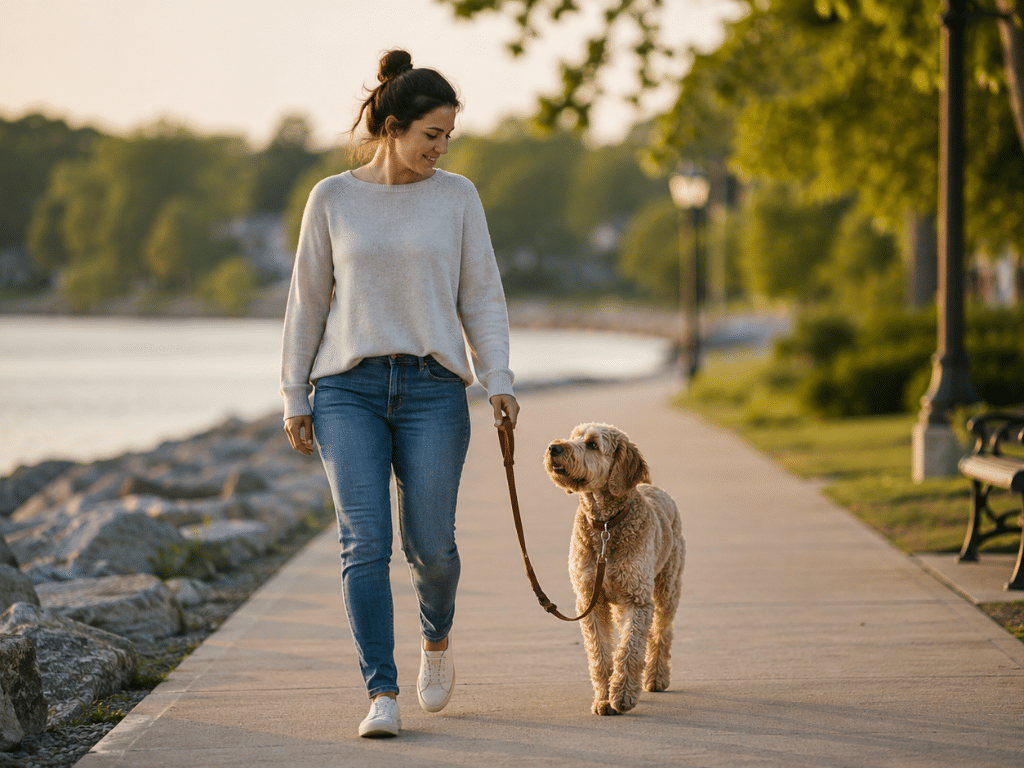
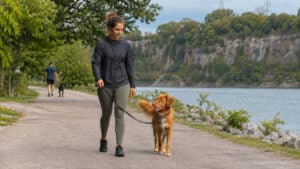
Loose lead walking means your dog can walk with you while keeping slack in the lead. The lead should look relaxed, not tight like a tow rope. Your dog may be slightly ahead, beside you, or slightly behind depending on what you allow, but they should not be dragging you, hitting the end of the lead, switching sides constantly, or pulling towards every dog, person, tree, post, smell, or squirrel they notice.
This is different from a formal heel. Heel usually means the dog is in a very specific position, often beside the handler’s left leg, with a high level of focus and precision. Loose lead walking is more practical for everyday life. It is what most owners need for neighbourhood walks, vet visits, pet-friendly stores, parks, trails, and public outings. Your dog can still enjoy the walk. They can still sniff when given permission. They can still look around. The difference is that they are not taking over the walk.
A good loose lead walk should feel controlled but not robotic. The dog understands that the handler matters. The dog responds when the handler changes direction, slows down, stops, or asks for attention. The lead becomes a guide, not a restraint. This is one of the reasons proper dog training matters so much. When owners only use the lead to physically stop the dog, the dog never learns the actual skill. They only learn to push harder against pressure.
Why Dogs Pull on the Lead
Dogs pull because pulling works. That is the simplest and most important answer. If your dog pulls towards a tree and you follow, pulling worked. If your dog drags you across the pavement to greet another dog and they get closer, pulling worked. If your dog leans into the lead and still gets to continue forward, pulling worked. Dogs repeat behaviour that improves their situation, and for many dogs, pulling has been rewarded over and over again without the owner realizing it.
Dogs also pull because they naturally move faster than we do. Their world is full of scent, movement, sound, and opportunity. A walk is not just exercise to a dog. It is information. Every patch of grass, every tyre, every lamp post, and every breeze carries something interesting. Without training, the dog’s instinct is to move towards what interests them. The human at the other end of the lead becomes an anchor slowing them down.
Some dogs pull because they are excited. Some pull because they are frustrated. Some pull because they are nervous and want to escape. Some pull because they are trying to get to another dog. Some pull because they have never learned how to regulate themselves outside. This is why Hamilton dog training should never treat every pulling dog the same way. A happy, bouncy adolescent Labrador pulling towards people needs a different approach than a fearful rescue dog pulling away from traffic or a reactive dog lunging towards another dog.
The Biggest Mistake Owners Make With Leash Pulling
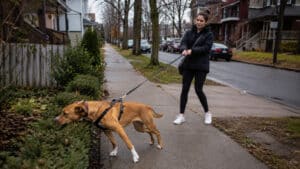
The biggest mistake owners make is letting the walk continue while the dog is pulling. This teaches the dog that tension on the lead means forward movement. The dog hits the end of the lead, the owner keeps walking, and the dog learns that pulling is simply part of how walks work. Over time, the behaviour becomes stronger because it has a long history of success.
Another common mistake is trying to fix pulling by pulling back. The owner tightens the lead, the dog leans harder, and now both sides are creating resistance. Many dogs respond to leash tension by increasing pressure. They brace, lower their body, dig in, or surge forward. The walk becomes a physical contest, and in many cases, the dog is stronger, more determined, and more motivated than the person holding the lead.
Owners also often wait too long before helping the dog. They wait until the dog is already at the end of the lead, already locked onto a distraction, or already over-aroused before trying to correct the problem. By that point, the dog is not learning loose lead walking. They are rehearsing failure. Good dog training is proactive. We want to teach the dog what to do before they hit the end of the lead, before they explode towards the distraction, and before the walk falls apart.
The Walk Starts Before You Leave the House
Many owners think loose lead walking starts on the pavement, but the walk actually begins before the front door opens. If your dog is spinning, barking, jumping, grabbing the lead, charging through the doorway, and exploding into the world, you are already starting the walk with too much excitement. Once that arousal is high, the lead becomes harder to manage and the dog is less able to think.
The pre-walk routine matters. Your dog should learn that calm behaviour makes the walk begin. This does not mean the dog has to be perfect. It means they should not be rewarded for chaos. If the dog jumps all over you while you clip the lead on, then bursts through the door and drags you down the steps, the first lesson of the walk is that excitement controls the outcome. That is the opposite of what we want.
At K9 Principles, we often help owners look at the whole picture. Doorway manners, lead clipping, waiting calmly, checking in, and exiting the home with control all affect the quality of the walk. This is especially important for puppies, adolescent dogs, strong dogs, and dogs who struggle with over-arousal. If we want better walks outside, we need to create a better starting point inside.
Engagement Is the Missing Piece in Loose Lead Walking
A dog who never checks in with you is going to struggle with loose lead walking. Engagement does not mean your dog stares at you for the entire walk. It means your dog understands that you are relevant. They notice your movement. They respond when you change direction. They care when you stop. They are aware that access to the environment comes through cooperation with you, not by dragging you around.
This is where many loose lead walking plans fall apart. Owners focus only on stopping pulling, but they do not build engagement. They correct the dog for getting ahead, but they do not teach the dog that being near the handler has value. They shorten the lead, hold tight, and try to control every step, but the dog’s brain is still everywhere else. The lead may be shorter, but the dog is not more connected.
Good dog training builds value near the owner. That means rewarding the dog for being in the right place, checking in with the handler, responding to movement, and making good choices. The more your dog learns that staying connected to you leads to rewards, movement, sniffing, praise, and access, the less they need to fight the lead. This is one of the biggest reasons professional dog training in Hamilton can make such a difference. A skilled trainer can see whether the problem is truly leash mechanics, lack of engagement, poor reinforcement timing, over-arousal, or a combination of all of it.
Reward Placement Can Make or Break Your Walk
Reward placement is one of the most overlooked parts of loose lead walking. Where you reward your dog affects where your dog wants to be. If your dog gets food while they are out in front of you, you may accidentally build value for being ahead. If your dog gets rewarded beside your leg, they begin to see that position as valuable. This small detail can make a huge difference.
The goal is to reward the behaviour you want to see again. If you want your dog walking close to you with a relaxed lead, then that is where the reward should happen. This does not mean you need to feed constantly forever. It means that during the learning phase, your dog needs clear information. They need to know what earns the reward, where they should be, and how to stay successful as the environment becomes harder.
Owners sometimes worry that using food means they are bribing the dog. That is not what proper reinforcement is. A bribe is shown before the behaviour to convince the dog to do something. A reward is delivered after the behaviour to strengthen it. In loose lead walking, well-timed rewards help the dog understand the rules. Over time, real-life rewards such as sniffing, moving forward, greeting appropriately, exploring, and continuing the walk can become part of the reinforcement system.
Why “Just Stop When They Pull” Is Not Enough
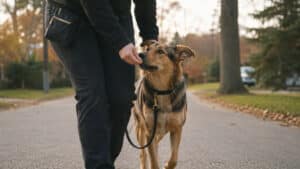
One of the most common pieces of advice owners hear is to stop walking when the dog pulls. There is some value in this idea because it prevents the dog from being rewarded by moving forward on a tight lead. The problem is that stopping alone does not always teach the dog what to do instead.
Many dogs hit the end of the lead, stop for a second, then pull again the moment the walk resumes.
If stopping is not paired with clear teaching, the dog may become frustrated. They may bounce, bark, swing around, grab the lead, or simply learn a pattern of pull, stop, reset, pull again. The owner gets annoyed because the walk takes forever, and the dog still has no real understanding of how to keep the lead loose for more than a few steps.
A better approach is to stop the reward for pulling while actively rewarding the behaviour you want. That may mean changing direction before the dog gets to the end of the lead. It may mean rewarding the dog beside you. It may mean slowing the environment down. It may mean starting in a boring location where the dog can actually succeed. It may also mean teaching the dog that checking back in with you causes the walk to continue. The key is that the dog needs information, not just interruption.
How to Build Loose Lead Walking Step by Step
Loose lead walking should be built in layers. The first layer is teaching the dog that being near you pays. This should start somewhere easy, such as your driveway, hallway, yard, or a quiet street. If your dog cannot walk calmly in a low-distraction area, they are not ready to practise beside busy roads, parks, other dogs, or exciting smells. Starting too hard is one of the fastest ways to make owners feel like training is not working.
The second layer is movement. Once your dog understands that being near you has value, begin walking short distances while rewarding the dog for staying connected. Do not wait until the dog is ten feet ahead and pulling before you respond. Help the dog earlier. Change direction before they get fully committed to moving away from you. Reward them when they come with you. Make your movement matter.
The third layer is gradually adding distractions. This is where many owners rush. A dog might walk beautifully in the driveway and then fall apart at Bayfront Park, Gage Park, or a busy Hamilton neighbourhood street. That does not mean the dog is stubborn. It means the environment became too difficult too quickly. Dog training has to be proofed. Skills need to be practised in different locations, around different distractions, and at different levels of excitement before they become reliable.
The fourth layer is using real-life rewards. If your dog wants to sniff, use that. Ask for a few steps of loose lead walking, then release them to sniff. If your dog wants to move forward, use forward movement as a reward. If your dog wants access to a safe area, use that access strategically. The walk itself can become part of the training instead of something you are constantly fighting against.
Should Dogs Be Allowed to Sniff on Walks?
Yes, dogs should be allowed to sniff on walks, but sniffing should not mean dragging you wherever they want. Sniffing is valuable for dogs. It provides mental stimulation, helps them gather information, and can make walks more fulfilling. The problem is not sniffing itself. The problem is when the dog believes they can pull towards every smell without permission or awareness of the person holding the lead.
A good walk can include both structure and freedom. There can be times when your dog is expected to walk with you on a loose lead, and there can be times when they are released to sniff and explore safely. This gives the dog clarity. They learn that pulling does not earn sniffing, but walking politely can. That is a powerful shift.
This is especially helpful for dogs who are highly scent-driven. Instead of fighting the dog’s desire to sniff, we can use it as a reward. Walk nicely for a short distance, then go sniff. Check in with the handler, then go investigate. Keep the lead loose, then access the grass. This turns the environment into part of your reinforcement plan. That is smart dog training, and it is far more effective than simply trying to overpower the dog.
Loose Lead Walking With Puppies and Adolescent Dogs
Puppies should learn loose lead walking early, but owners need to keep expectations fair. A puppy is still learning how to move, focus, regulate excitement, and understand the world. They may bounce, bite the lead, sit down, surge forward, or become distracted every few steps. That does not mean the puppy is bad. It means they are a puppy. The goal is to create good habits before pulling becomes deeply rehearsed.
Short, successful sessions are better than long, messy walks. Puppies do not need to walk for miles to learn leash skills. They need clear, positive, consistent practice. Reward them for being near you. Teach them to follow your movement. Let them explore in a controlled way. Show them that the lead is not something to fight, chew, or ignore.
Adolescent dogs are often more difficult because they are stronger, faster, more confident, and more interested in the environment. Many owners say their dog “used to walk nicely” and then suddenly started pulling during adolescence. This is common. It does not mean the training is ruined. It means the dog needs consistency, proofing, and clearer expectations as their confidence and drive increase. This is one reason Hamilton dog training can be so valuable during adolescence. It helps owners tighten up the structure before pulling becomes the dog’s normal way of walking.
Loose Lead Walking With Strong, Excited, or Reactive Dogs
Loose lead walking becomes more serious when the dog is strong, highly excited, reactive, fearful, or difficult to physically control. In these cases, pulling is not just annoying. It can become unsafe. A powerful dog who lunges towards another dog, bolts after wildlife, or drags their owner across ice or pavement needs more than casual leash advice.
Reactive dogs often struggle with loose lead walking because their emotional state is too high. They may not be pulling simply because they want to get somewhere. They may be pulling because they are worried, frustrated, defensive, overstimulated, or unable to process the environment calmly. In those cases, loose lead walking has to be connected to threshold work, engagement, distance management, and better emotional regulation.
Strong and excited dogs also need clear structure. They need to learn that forward motion, greetings, sniffing, and access do not happen through force. They happen through cooperation. This is where professional dog training in Hamilton can save owners a lot of frustration. At K9 Principles, we look at the whole dog, not just the tight lead. We want to know what is driving the behaviour, what the dog has been practising, what equipment is being used, what the owner is doing, and what the dog needs in order to succeed safely.
Equipment Can Help, But Equipment Is Not the Training
The right equipment can make walks safer and more manageable, but equipment does not replace training. Harnesses, collars, head halters, and long lines all have different purposes, and the best choice depends on the dog, the owner, and the behaviour being addressed. However, no piece of equipment magically teaches a dog how to walk on a loose lead.
This is where many owners get stuck. They buy a new harness, it helps for a few days, and then the dog learns to pull in that too. They switch tools again, hoping the next one will solve the problem. Tools can give you better control, but the dog still needs to learn the rule. A relaxed lead moves forward. A tight lead does not. Checking in matters. Position matters. Handler movement matters.
Good equipment should support the training plan. It should not become the whole plan. If the dog is still rehearsing pulling every day, the equipment is only managing the symptom. Proper dog training teaches the dog what behaviour earns access to the world. That is what creates lasting change.
How K9 Principles Helps Build Better Walks in the Real World
At K9 Principles, we know that owners do not just want their dog to walk nicely in the kitchen. They want a dog they can actually live with. They want calmer neighbourhood walks, safer vet visits, better control in public, and less stress when another dog appears down the street. That is why our approach to dog training focuses on real-life results, not just polished exercises in easy environments.
When we help owners with loose lead walking, we look at the full picture. We look at how the dog starts the walk, how the owner handles the lead, where rewards are being delivered, how the dog responds to distractions, whether the dog understands pressure, whether engagement has been built, and whether the dog is emotionally capable of working in that environment. We also look at the owner’s timing, consistency, and expectations because those details matter.
For owners looking for dog training in Hamilton, loose lead walking is often one of the most valuable skills to improve. Hamilton has busy neighbourhoods, parks, trails, waterfront paths, pet-friendly areas, and plenty of real-world distractions. Your dog does not need to be perfect, but they do need to be manageable. Whether you have a puppy learning from the beginning, an adolescent dog testing the rules, a rescue dog building confidence, or an adult dog with years of pulling behind them, proper Hamilton dog training can help you build a clearer, calmer walking system.
Conclusion: Better Walks Start With Better Communication
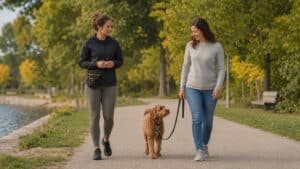
Loose lead walking is not about having a perfect dog. It is about having a dog who understands how to move with you instead of against you. It is about replacing tension, frustration, and chaos with communication, clarity, and consistency. When your dog learns that a relaxed lead makes good things happen, the walk begins to change.
The most important thing to remember is that pulling is learned, but so is loose lead walking. Your dog is not born understanding how to match a human pace, ignore distractions, respond to lead guidance, and stay connected outside. Those skills need to be taught. They need to be rewarded. They need to be practised in the right order. They need to be proofed in real environments.
If your walks are stressful, you do not have to keep living that way. With the right dog training, better timing, clearer rules, and a plan that fits your dog, loose lead walking can become one of the most rewarding skills you build together. At K9 Principles, we help owners turn the daily walk from a battle into a better conversation.
Contact us for more information:
- Name: K9 Principles
- Address: Haldimand County, Greater Hamilton Area, Burlington, and Most of Norfolk County
- Phone: 289 880-3382
- Email: k9principlesinc@gmail.com
- Website: www.k9principles.ca
FAQs
-
A1. Most dogs pull because pulling has worked for them. If pulling gets them closer to smells, people, dogs, grass, or forward movement, the behaviour becomes stronger. Some dogs also pull because they are excited, frustrated, nervous, or overstimulated. Good dog training looks at both the learned behaviour and the emotion behind it.