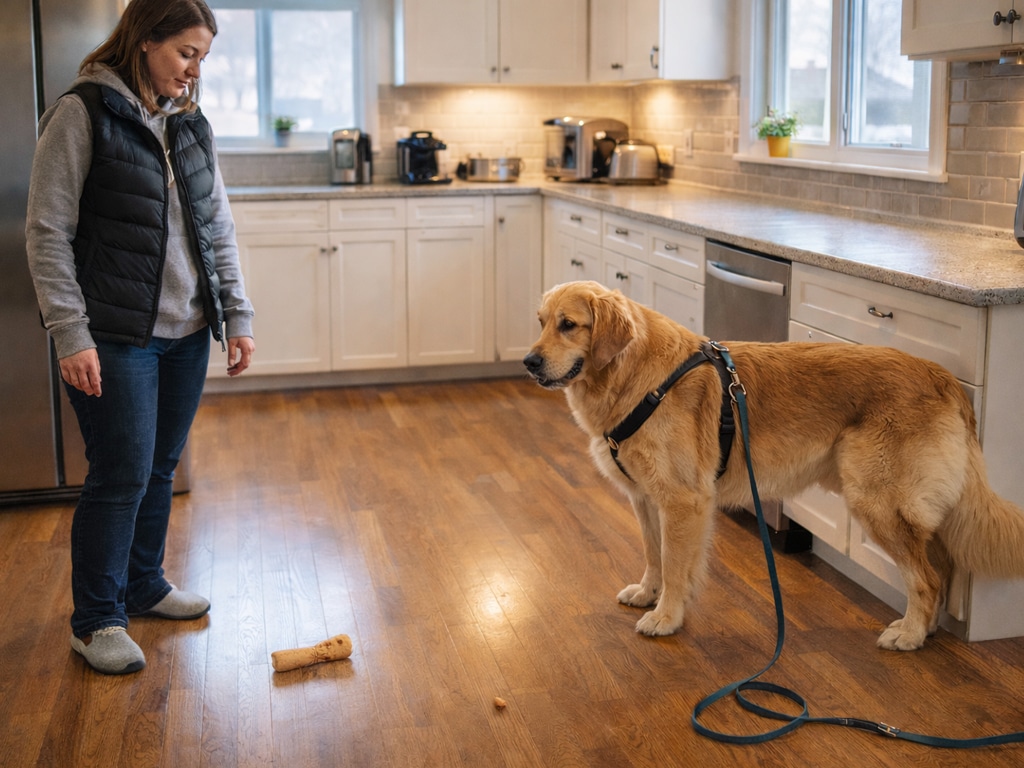




Bringing home a rescue dog is exciting, and it can also come with surprises you did not see coming. One of the scariest is resource guarding, because it can feel like it comes out of nowhere. One minute your dog is chewing a bone, the next minute you are seeing a hard stare, a freeze, a growl, or a snap when someone gets too close.
If you are dealing with this in your home in Hamilton or the surrounding area, you are not alone, and you are not “failing.” Resource guarding is a behaviour with a reason behind it, and when you handle it properly, you can make real progress. At K9 Principles, we help families through this with hands-on support, and we do it in a way that focuses on safety, trust, and changing how the dog feels, not just shutting the warning signs down. That is what good dog training looks like, and it is a huge part of quality Hamilton dog training for rescue dogs.
What Resource Guarding Actually Is (And What It Is Not)
Resource guarding is when a dog uses body language or behaviour to keep something they value from being taken away. That “something” might be food, a chew, a toy, a stolen sock, a spot on the couch, a dog bed, a doorway, or even a person. Resource guarding can look quiet at first, like freezing, hovering, eating faster, turning away, or giving a sharp side-eye. It can also look louder, like growling, snarling, snapping, or biting.
Here is the part that matters most. Resource guarding is not your dog being “bad” or “dominant.” It is your dog trying to feel safe about something that matters to them. Think of it like someone clenching their phone when they are walking in a sketchy parking lot at night. It is not a moral failing, it is a safety strategy.
That does not mean you ignore it. It means you treat it like useful information. Your dog is telling you, “I do not feel safe with you close to this right now.” When you listen to that message and respond correctly, you stop escalation and you create change faster.
Why Rescue Dogs Resource Guard in the First Place
Rescue dogs often come with history you cannot fully see. Maybe they experienced real scarcity, like competing for food. Maybe humans grabbed things from them roughly. Maybe they were punished for growling, so they learned to skip the warning and go straight to a snap. Sometimes they guarded in a shelter environment just because stress was high and everything was unpredictable.
Resource guarding can also be genetic. Some dogs simply have a stronger instinct to protect valuables, and stress makes it louder. Add in a new home, new rules, new people, and new expectations, and it makes sense that some dogs clamp down on the few things that feel “theirs.”
At K9 Principles, we look at the full picture, including routines, stress, sleep, exercise, the home layout, and how people interact with the dog. Great dog training is rarely about one trick. It is about creating a whole environment where the dog does not feel the need to guard.
Common Resource Guarding Triggers in a Normal Home
Most families think resource guarding is only about the food bowl. It can be, but it is often broader than that. Chews, bones, lick mats, and stuffed Kongs are frequent triggers because the dog is deeply invested in them and they last a long time. Stolen items are also a classic, because the dog has learned that humans approaching usually means the “fun thing” disappears.
Space guarding is another common one, especially with rescue dogs that finally find a comfy place to rest. A dog may guard a bed, the couch, a corner, or even the hallway. It can look like growling when someone walks past, or snapping if someone reaches to pet them while they are settled.
And then there is people-guarding, where a dog becomes tense when someone approaches a particular family member. This is not the dog being “protective” in a noble way. It is usually insecurity plus control, and it needs a careful plan because it can escalate fast if people handle it emotionally. This is where experienced Hamilton dog training matters a lot.
The Biggest Mistake Owners Make Right Away
The most common mistake is trying to “show the dog who is boss” by taking the item. It is tempting, especially if you are worried your dog will become dangerous. But grabbing the chew, prying the mouth open, cornering the dog, or marching straight in teaches one lesson: humans approaching means threat.
That lesson does not reduce guarding. It strengthens it. Your dog learns they have to guard harder, sooner, and more seriously next time. This is how mild resource guarding turns into bites.
The second mistake is punishing the growl. A growl is not the problem, it is the warning label. If you punish the warning label, you do not create a safer dog. You create a dog who stops warning and starts biting “without warning.” If your dog growls, you should actually feel grateful, because they are communicating before things get worse.
Safety First: What to Do Immediately to Prevent Escalation
Your first job is bite prevention. Not because your dog is “bad,” but because one mistake in a guarding moment can change everything. You want distance, calm, and a plan you can repeat.
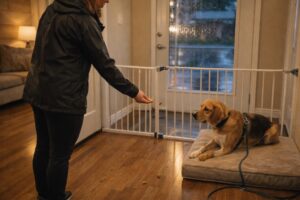
Start by managing access. If your dog guards chews, do not give chews when you cannot supervise. If your dog guards the couch, remove access for now with a baby gate or leash, and give them a comfortable, predictable rest spot elsewhere. If your dog guards the food bowl, feed in a quiet space with no traffic and no reaching in.
Then change the pattern of approach. Humans should not hover, stare, or reach. If you need to move through the space, give a wide berth. If kids are in the home, you need physical barriers and clear rules immediately. At K9 Principles, we treat kid safety as non-negotiable, and we will always tell you the safest next step, even if it is inconvenient. That is responsible dog training.
What To Do in the Moment When Your Dog Growls
When a dog growls over an item, the best move is not to argue. The best move is to de-escalate. Pause, breathe, and increase distance. Turn your body slightly sideways and soften your posture. If your dog is on a couch or in a corner, do not block exits. If your dog is guarding in a hallway, do not try to squeeze past.
Then create a clean trade instead of a confrontation. This means you calmly toss something better away from the guarded item, so your dog chooses to move. When your dog moves, you can safely pick up the guarded object without pressure, or you can simply let it go if it is safe. The goal is not “winning.” The goal is no rehearsal of conflict.
If your dog is guarding something dangerous, like medication, a sharp object, or cooked bones, you still avoid grabbing. You use distance and high-value food tossed away to move the dog, and you secure the dangerous item once the dog is out of the area. If you are unsure, this is exactly the kind of moment where in-home private training support from K9 Principles is worth it, because we can build a plan that fits your dog and your home.
What You Must Not Do (Even If Someone Told You To)
You must not alpha roll your dog, pin them, yell at them, or “make them submit.” Those methods do not build safety. They build fear and defensive behaviour, and resource guarding is already fear-based at its core.
You must not chase your dog around the house to take stolen items. That turns it into a game and it increases tension around being approached. You must not reach into the bowl, pet your dog while they eat to “teach tolerance,” or test them by taking food away repeatedly. That advice is outdated and it creates guarding in dogs who did not have it before.
You must not punish the growl. If you remove the warning, you still have the emotion underneath, and the emotion is what bites. At K9 Principles, we focus on changing that emotional response so your dog no longer feels they need to guard. That is the difference between stopping behaviour and actually fixing it through good Hamilton dog training.
The Real Goal: Changing Feelings, Not “Stopping the Growl”
Guarding is not really about the chew. It is about what your dog predicts will happen when you come close. If your dog predicts loss, conflict, or pressure, guarding makes sense to them. If your dog predicts good things, choice, and safety, guarding starts to melt away.
So the goal is not to make your dog tolerate you taking stuff. The goal is to teach your dog that your approach is a good thing. We want the dog thinking, “Oh good, people coming near my stuff means better stuff shows up,” not “Uh oh, here we go again.”
This is why trust-based dog training is so powerful with rescue dogs. You are not just installing cues. You are rebuilding the dog’s expectations about humans. When expectations change, behaviour changes.
Step One: Build a Predictable “Trade” Pattern That Your Dog Trusts
A trade is simple, but it has to be done properly. You start with low-stakes items your dog does not guard strongly. You approach from a safe distance, toss a high-value treat, and walk away. You are not reaching, you are not hovering, and you are not taking anything. You are teaching one message: your approach predicts good stuff and then space.
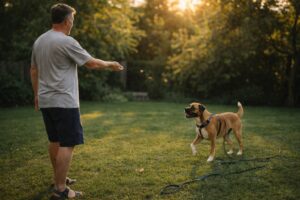
Once the dog is visibly relaxed with that pattern, you can start adding gentle progression. You approach, toss the treat, and after the dog moves to eat it, you pick up the low-stakes item and immediately give it back. Giving it back is important, because it breaks the “approach equals loss” story.
Over time, the dog learns that humans do not steal. Humans trade, humans improve things, and humans respect space. That is how you change the emotional response. If you skip this step and jump straight to taking items, you miss the point and you get stuck.
Step Two: Make Food and Chews Safe Again Without Making It a Big Deal
For food bowls, stop doing any “hands in the bowl” exercises. Instead, feed in a calm space and start building positive associations with your presence at a distance. You can walk by and gently toss something extra tasty into the bowl, then keep moving. Your dog learns you are not there to take, you are there to add.
For chews, choose the right chew and the right setup. Do not hand your dog a high-value chew in the middle of the living room and then hover nervously. Give chews in a defined spot, with space, and with management in place so nobody has to invade the dog’s bubble. Then practise your trade pattern when your dog is ready, not when you are anxious. Dogs read that tension like a billboard.
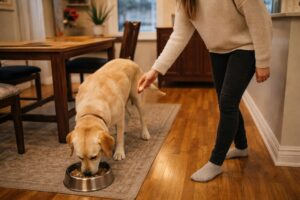
If your dog is guarding intensely around food or chews, or if there has been a snap or bite, you should not be improvising alone. This is exactly where our In-Home Private Training works best, because we can coach you inside the real setup that is triggering the guarding, and we can build a plan that keeps everyone safe while the behaviour changes.
Step Three: Fix the “Stolen Item” Problem Without Creating a Chase Game
If your dog steals socks, tissues, kids’ toys, or anything else, your home needs two things right away: prevention and a reliable “drop” and “leave it” system. Prevention means reducing opportunity so your dog practises the right habits, not the wrong ones. That sounds boring, but it is the fastest path to change.
Then you build a trade routine around stolen items without panic. When your dog has something, you do not march in. You calmly bring value, you toss or present a better option, and you create movement away from the item. Over time, your dog learns that giving things up is profitable, not dangerous.
This is also where many owners accidentally poison cues. If you say “drop it” and then you immediately grab the item and walk away every time, your dog learns that “drop it” predicts loss. At K9 Principles, we teach owners how to keep cues clean so the dog trusts them, which makes dog training smoother across the board, not just with guarding.
How to Know It’s Improving, And When You Need Help Right Now
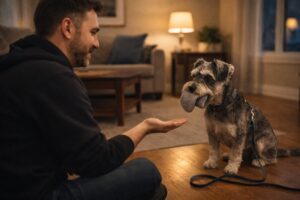
Improvement usually looks like softer body language first. You might see less freezing, less hovering, less hard staring. Your dog might lift their head when you approach instead of clamping down. You might see them pause and look to you because they expect good things. That is the emotional shift you want.
If you are seeing escalation, like faster growling, snapping with less warning, guarding more objects, or guarding space and people, do not wait. If a child is involved, or if there has been a bite, you should treat it as urgent. A bite is not a “phase,” it is a safety problem that needs a structured plan.
We are the exclusive dog trainers for the Hamilton/Burlington SPCA, and we work with a lot of rescue dogs who come with complicated behaviour. That background matters here, because guarding is not fixed by a single trick. It is fixed by a plan that is safe, consistent, and tailored to the dog in front of you. That is what strong Hamilton dog training should feel like.
How We Handle Resource Guarding With K9 Principles
When families reach out to us about resource guarding, we start with safety and clarity, not judgement. We look at exactly what the dog guards, when it happens, who is involved, and what patterns have already formed. Then we build a step-by-step plan that fits your home, your schedule, and your dog’s specific triggers.
Our In-Home Private Training is the best fit for guarding because we can work in the rooms, hallways, and daily routines where the problem actually shows up. We coach you in real time, we adjust your handling, we set up management that prevents rehearsal, and we build the trust-based training progression that changes the dog’s emotional response. You are not left guessing, and you do not have to “test” your dog to see if it worked.
If your life is packed and you want the heavy lifting done for you, our Home School Academy is also on the table, because sometimes the fastest path forward is having the training installed professionally and then transferred to you in a simple, clear way.
Conclusion
Resource guarding feels personal when it happens in your home, but it is not personal, and it is not hopeless. It is a behaviour built on emotion and prediction, which means it can be changed by rebuilding safety and trust the right way. If you want help that is practical, calm, and designed around your real life, reach out to us at K9 Principles for In-Home Private Training. We will create an individual plan, keep everyone safe, and show you how to turn “don’t come near me” into “good things happen when you show up.”
Contact us for more information:
- Name: K9 Principles
- Address: Haldimand County, Greater Hamilton Area, Burlington, and Most of Norfolk County
- Phone: 289 880-3382
- Email: k9principlesinc@gmail.com
- Website: www.k9principles.ca
FAQs
-
A1. It is common, especially in the early weeks and months when the dog is still figuring out whether resources are secure. It is not something to ignore, but it is also not a sign that your dog is “bad.” With the right management and trust-building dog training, many dogs improve dramatically.