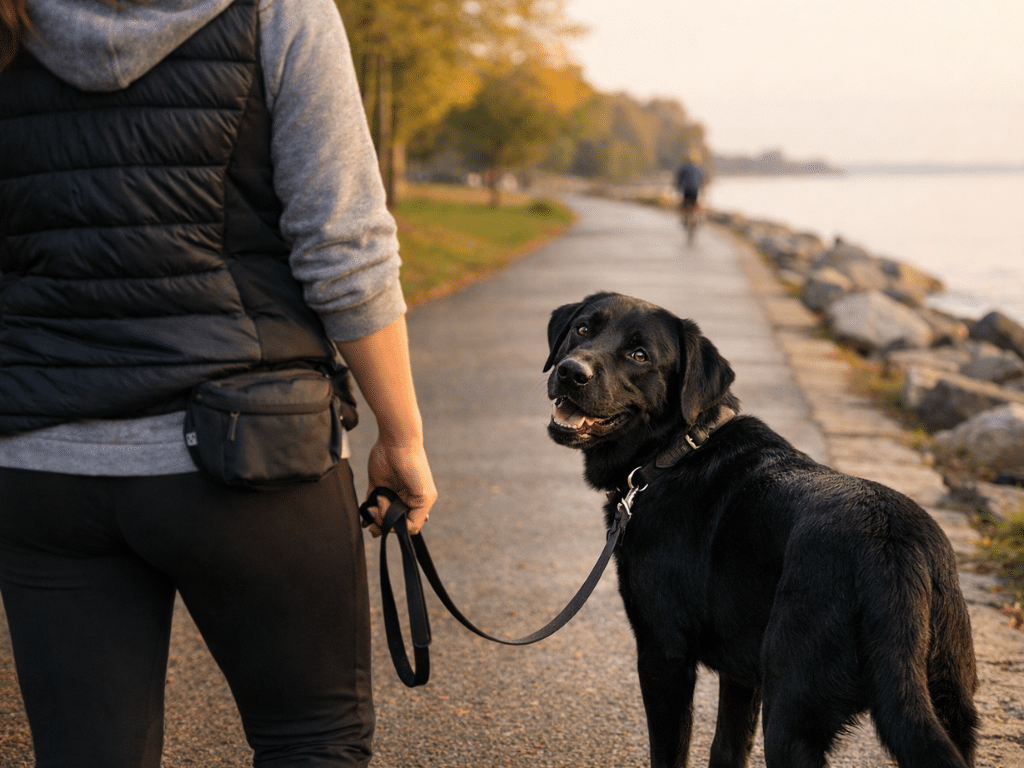




Bringing home a rescue dog can feel like a mix of excitement and “Okay… now what?” You want your dog to feel safe, to understand you, and to come when called. That last one, recall, is a big deal. It is also one of the best “trust builders” you can teach because it is not just about obedience. It is about your dog learning that paying attention to you is worth it, every single time.
At K9 Principles, we treat name conditioning and recall as the foundation of real-life reliability. It is a core part of solid dog training, and it is especially important for rescue dogs who may be unsure, distracted, or still learning what your home and your voice even mean. Let’s walk you through it step-by-step so you do not end up repeating your dog’s name 40 times while they ignore you like you are a background noise machine.
Why Name and Recall Build Trust Faster Than Almost Anything
Your dog’s name is not magic. It is a cue. It only matters if it predicts something good and if your dog has practised responding to it in a way that makes sense.
Recall is the same. “Come” is not a wish. It is a trained behaviour built through repetition, reinforcement, and smart progression. When your rescue dog learns that turning to you is safe and rewarding, you start seeing a different dog on walks. You get more check-ins. You get less wandering brain. You get that moment where your dog chooses you even when the world is loud.
That is why we love teaching this early in our Hamilton dog training. It makes everything else easier, from leash skills to polite greetings to reactivity work, because attention is the doorway to learning.
Before You Teach Anything: Set Up the Game You Want to Win
If you want your dog to succeed, you need the right environment first. Early training is not about “testing” your dog. It is about stacking the deck so responding is easy.
Start indoors. Quiet room. Minimal distractions. High-value reinforcement ready to go. Yes, food is usually your best option at first because it is fast and clear, and it lets you pay your dog the instant they make the right choice.
If your dog is nervous, shut down, or newly arrived, keep sessions short. Think of training like tossing a few coins into a trust bank, then walking away before you get greedy. A handful of tiny wins beats one long session that ends with your dog zoning out.
Also, manage your dog’s freedom. If your rescue dog can practise ignoring you all day, you are accidentally training the opposite of recall. Use baby gates, a house line when appropriate, and structured routines so your dog does not rehearse “I do what I want” as their full-time job.
How to Condition the Name: “Name = Payday” (Not “Name = Nagging”)
Here is the biggest mindset shift: your dog’s name is not a cue you use to stop them from doing something. In the beginning, your dog’s name is a promise that something good is about to happen.
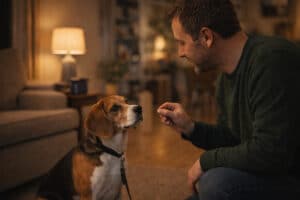
Say your dog’s name once, in a normal, friendly tone. The second your dog looks at you, mark it with a simple “Yes” (or a click if you use a clicker) and deliver a reward. Your timing matters more than your enthusiasm. You are building a clean association: name → attention → reinforcement.
If your dog does not look at you, do not repeat the name. That is how cues get poisoned. Instead, make it easier. Move closer. Make a gentle noise like a kissy sound. Shift your body. The moment your dog looks, mark and reward. Then reset.
Do ten reps. Stop. Walk away. Repeat later. This is conditioning, not a quiz.
Over a few days, your dog’s head snap to the name should start looking sharper and faster. That is your green light to move forward.
Reliable Attention Comes Before Recall
Most recall problems are not recall problems. They are attention problems.
If your dog only looks at you when you have food in your hand, you do not have attention yet. You have a bribe pattern. We want your dog thinking, “Hearing my name means I should check in,” not “Seeing a treat means I should behave.”
To build attention, practise name response in different rooms and at different times of day. Add small, realistic distractions indoors. Toss a toy on the floor and practise name response before your dog gets it. Walk past a window and practise name response when your dog notices something outside.
You are not trying to stop your dog from noticing the world. You are teaching them that noticing you is part of life too.
If you want a simple goal, aim for your dog responding to their name on the first say, with a quick head turn and eye contact, in multiple areas of your home. That is the attention you will build recall on.
Stage 1 Recall Indoors: Make “Come” a Reflex, Not a Debate
Once the name response is strong, you can introduce recall. Keep it ridiculously easy at first.
Start with short distance. Say your dog’s name, then your recall cue once, like “Riley, come.” When your dog moves toward you, mark and reward. If your dog takes one step toward you, that still counts early on. You are building a habit.
Make coming to you feel like a party, but not a chaotic one. Get low. Turn slightly sideways. Use a happy voice. Reinforce generously when they arrive. Then release them back to something they like. That release is a secret weapon because it stops recall from becoming “the fun ends now.”
If your dog reaches you and you immediately grab their collar, clip a leash, and end play every single time, your recall will start getting slower. Mix it up. Sometimes you clip the leash and feed a few treats, then unclip and release again. Sometimes you just reward and let them go. You are teaching that coming to you is safe, not a trap.
Stage 2 Recall With Movement: Use Your Body Like a Magnet
Dogs chase motion. You can use that to your advantage.
Once your dog understands the recall cue, add gentle movement. Call your dog, then take a few quick steps backwards. When your dog follows, mark and reward. This builds speed and commitment.
You can also use “hide and seek” style reps indoors. Walk into another room, call once, and reward when your dog finds you. Keep it light. Keep it winnable.
If your rescue dog is timid, avoid sudden big gestures or loud calling. Calm confidence is more effective than hype. We want your dog coming in because they trust you, not because they are startled into it.
Stage 3 Outdoors the Smart Way: Long Lines and Real Safety
Outdoor recall is a different sport. The smells are louder, the distance is bigger, and the distractions are real. That is why we use long lines so often in dog training. A long line gives your dog freedom without giving you a heart attack.
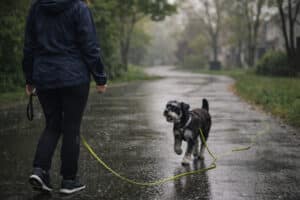
Use a properly fitted harness for long line work whenever possible. Clip the long line to the back of the harness, not the collar, especially for dogs who might hit the end of the line with speed. Your goal is safety and clean reps, not neck pressure.
Start in a low-distraction outdoor space like your backyard or a quiet open area. Let your dog explore. Then call once. If your dog turns and commits, you reward like it is the best decision they made all day.
If your dog ignores you, you do not repeat the cue. You calmly step on the long line, shorten the distance, and guide the dog in without yanking. The moment they move toward you, you mark and reward. The lesson is, “The cue still matters, and coming in still pays.” Repeating a cue your dog will not follow teaches them that your words are optional.
This is where a lot of owners accidentally poison recall by pleading. We would rather you say it once and follow through than say it ten times and hope the eleventh one works.
Proofing Recall Without Poisoning the Cue
Proofing means teaching your dog that the cue still applies when life gets interesting. This is where most people either rush or get frustrated. We prefer a simple rule: change only one variable at a time.
You can make recall harder by increasing distance, adding distraction, changing environment, or changing your own position. Pick one. If you change all of them at once, your dog fails, and then you start repeating cues, and now the cue is getting weaker instead of stronger.
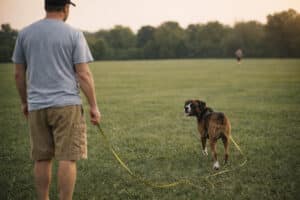
Here is what good proofing looks like. You go outside on a long line. You wait for a moment where your dog is mildly distracted, not fully obsessed. You call once. If your dog responds, you pay well. If your dog does not respond, you reduce difficulty and try again later.
Think of it like weight training. You do not walk into a gym and grab the heaviest barbell on day one. You build capacity. Recall is the same. Every successful rep is strength.
Also, protect your recall cue. If your dog is mid-sprint toward a squirrel and you know they will ignore you, do not say the cue. Go get your dog using the line and management, then set up easier reps later. Your cue should stay clean and meaningful, not something your dog learns to blow off.
Distractions in the Real World: Dogs, People, Trails, and Everything Hamilton Throws At You
Once your dog is winning in quiet outdoor areas, you start carefully bringing in real-life environments. This is where dog training in Hamilton gets real, because Hamilton has everything: busy sidewalks, waterfront paths, parks full of geese, neighbourhood dogs behind fences, and people who want to wave at your dog like they are the mayor.
Start at a distance where your dog can still think. Practise name response first. Then practise recall. Keep the long line on. Reward heavily. Leave before your dog gets tired or over-aroused.
If you want your dog to recall away from other dogs someday, you do not start by calling them away from a dog at five feet. You start at fifty feet. Then forty. Then thirty. You close the gap as your dog proves they can succeed.
At K9 Principles, we do a lot of this work in the environments that actually matter to you, because that is where recall either holds up or falls apart. This is exactly why our In-Home Private Training is so effective. We can build a plan, then practise it where your dog’s brain tends to leak out of their ears, and we can coach you through the timing and decisions that keep the cue strong.
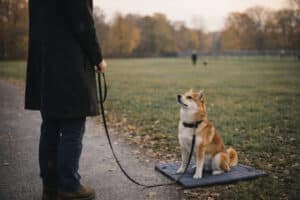
Reinforcement That Works: Food, Life Rewards, and Fading the Bribe
Yes, you will use food. No, that does not mean your dog will only listen for treats forever.
In the early stages, food is how you make the behaviour valuable. Later, you can start mixing in life rewards. Your dog comes when called, and then you release them back to sniff. Your dog recalls away from a distraction, and then you let them go investigate in a controlled way. That is powerful reinforcement because it teaches your dog they do not lose their life when they come to you.
You can also vary food rewards over time. Sometimes it is one treat. Sometimes it is three. Sometimes it is a jackpot. That variation builds durability because your dog stays hopeful that coming might pay big.
What we do not want is a dog who only responds when they see the treat first. Hide the food. Keep it in a pouch. Reward after the behaviour happens. That is how you build real reliability.
Common Mistakes That Wreck Recall and How to Fix Them
The most common mistake is repeating cues. When you say “Riley… Riley… Riley… come… come…” you are teaching your dog that the first few don’t matter. Say it once, then help your dog succeed.
Another common mistake is calling your dog for things they hate. If every recall ends with nail trims, crate time, or the end of the park, your dog is going to start dragging their feet. Balance those moments by calling, rewarding, and releasing plenty of times when nothing bad happens.
People also move too fast outdoors. Your dog is not being stubborn if they cannot recall at the waterfront when they can recall in the kitchen. They are telling you the environment is harder. That is information, not attitude.
Finally, long lines get used wrong. If the line is constantly tight, your dog is not learning recall. They are just being physically controlled. The long line should be slack most of the time, with you stepping on it only when needed to prevent rehearsal of ignoring you.
When You Want This to Be Reliable: How K9 Principles Builds Recall That Holds Up
If you are feeling stuck, it is usually not because you are doing “nothing.” It is because you are missing a few key details: timing, progression, reinforcement strategy, and the right level of distraction for your dog right now.
Our In-Home Private Training is built for exactly this. At K9 Principles, we create an individual plan, we coach you in real time, and we practise in the environments that actually challenge your dog. That might be your front step where your dog locks onto passing dogs. That might be the park where your dog forgets you exist. That might be your hallway where your dog is still unsure of you. We work where it matters so your training becomes real life, not just living room skills.
If you also want a structured foundation with distractions, accountability, and progression, our Level 1 group classes can be a strong next step after you have the basics in place. And if your life is packed and you want the results without doing all the reps yourself, our Home School Academy is there too. The point is not which option sounds nicest. The point is getting you and your dog to that calm, reliable “yes” when you call.
Conclusion
Teaching a rescue dog their name and recall is not about getting a perfect performance. It is about building a pattern where your dog hears you, understands you, and chooses you because history says you are safe and worth it. When you train it in stages, protect the cue, use reinforcement properly, and practise with a long line before you “test” freedom, you stop feeling like you are chasing your dog’s attention all day. You start feeling like you have a teammate. If you want help making this rock-solid in your real life, reach out to us at K9 Principles for In-Home Private Training and we will build the plan with you, then walk it with you, right where your dog needs it most.
Contact us for more information:
- Name: K9 Principles
- Address: Haldimand County, Greater Hamilton Area, Burlington, and Most of Norfolk County
- Phone: 289 880-3382
- Email: k9principlesinc@gmail.com
- Website: www.k9principles.ca
FAQs
-
A1. No, you usually do not need to change it. Most rescue dogs ignore their name because it has not been properly conditioned yet, or because it has been repeated so often it became background noise. At K9 Principles, we focus on rebuilding the name as a positive predictor by pairing it with reinforcement and only saying it when we can help the dog succeed.