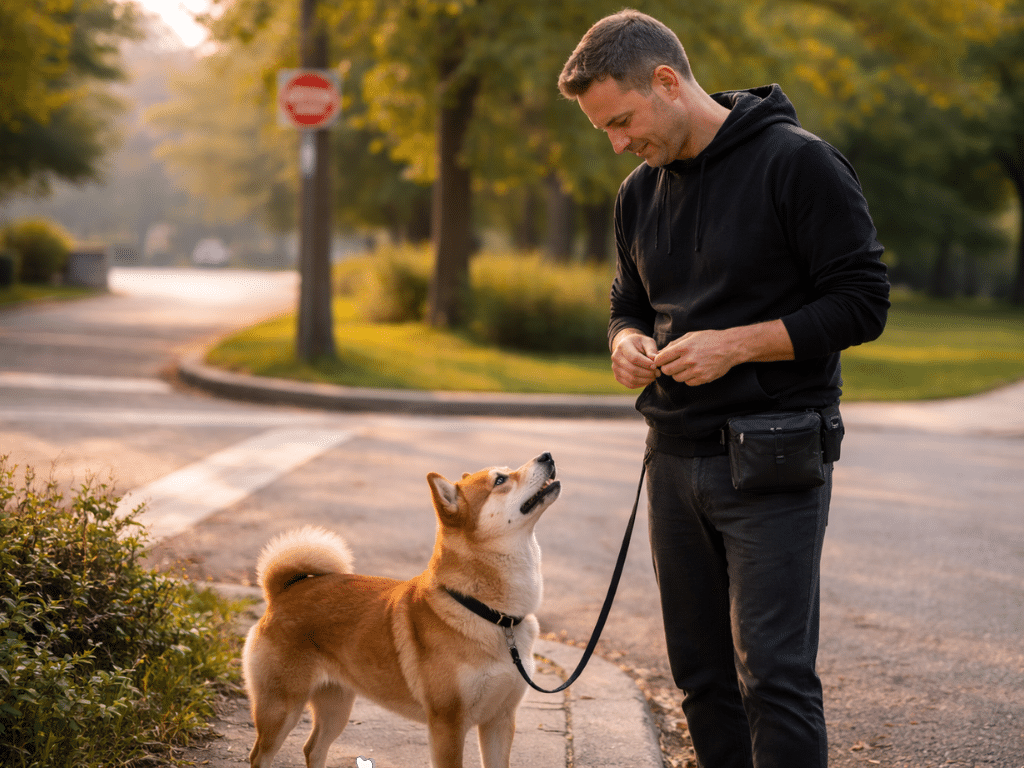




Most first-time dog owners think dog training happens in the living room, then the dog should “just know” how to behave outside. Then the first walk happens and it feels like the outdoors deletes your dog’s brain. If that is you, you are not behind, you are normal.
At K9 Principles, we build real-world results by training where real life happens, and for most people that is the walk. That is why Hamilton dog training done properly is not about doing more. It is about doing the right things during the time you already have. Your daily walk is not a break from training. It is the training.
The 20-Minute “Walk Segments” Routine That Makes Everything Simpler
The biggest mistake we see is one long, chaotic, undefined walk where your dog practises whatever behaviour shows up first. Pulling becomes the warm-up. Zig-zag sniffing becomes the main event. Reactivity becomes the surprise bonus round.
Instead, we want structure, because structure gives your dog clarity and gives you control without needing to be intense. The routine is simple: a calm start and warm-up close to home, short micro-sessions sprinkled throughout, and a decompression finish where your dog can breathe and sniff. Think of it like a playlist. The first track sets the mood, the middle builds skill, and the last one helps the nervous system settle.
Segment 1: The Calm Start Close to Home (3–5 Minutes)
If your dog explodes out the door, the walk is already “loud” before you even reach the end of the driveway. And when the start is frantic, everything after it is harder. We want the first few minutes to feel boring in the best way.
Start close to home on a quiet stretch, like your own street or a calm neighbourhood loop. At K9 Principles, we want you to move like you have all the time in the world, even if you do not. Step out, take a breath, and aim for calm, not distance. If your dog forges ahead, do not power through it. Pause, reset, and move forward when the lead slackens. You are teaching a simple lesson early: pulling does not get you anywhere, but calm movement makes the walk happen.
This is also where you sprinkle in the easiest wins. Ask for one or two quick cues you know your dog can do indoors, like a sit, a down, or a simple hand target, then move again. Keep it light. The goal is not obedience theatre. The goal is telling your dog, “Hey, we’re connected before the world gets interesting.”
Segment 2: Micro-Sessions That Take Seconds (Not “Training Time”)
A micro-session is a tiny skill burst, usually 5 to 20 seconds, that you drop into the walk like seasoning. It is so short your dog stays keen, and it is so simple you can actually do it consistently. This is how dog training in Hamilton fits into normal life without feeling like homework.
The magic is not in doing one big session perfectly. The magic is in repeating tiny reps across different streets, different corners, different smells, and different levels of distraction. That is how your dog learns that cues still matter outside, not just inside your kitchen.
What to Actually Do During Micro-Sessions (With Real Timings)
Let’s make this painfully practical, because vague advice is useless when you are holding a lead in the cold.
Check-ins can be 5 seconds. You simply wait for eye contact, mark it, reward it, and keep walking. If your dog is not offering eye contact yet, you can say their name once, then reward the moment they look back. The aim is not staring at you forever. The aim is a quick “You matter” glance that you can build into habit.
Loose lead reps can be 10 to 20 seconds. Pick a short stretch of sidewalk and walk it like it is a training lane. Reward your dog for being beside you with slack in the lead, then keep moving. If the lead tightens, you pause and reset, then carry on. It is simple, but simple is what works when you repeat it.
Quick sits and downs can be 10 seconds. You stop near a driveway or a curb, ask for one cue, reward, then release and move. This builds response speed outdoors without drilling.
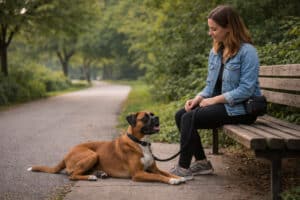
Place-like pauses can be 20 to 40 seconds. You use a bench, a curb edge, a low retaining wall, or even a flat rock along a path. You are not teaching a formal “place” from scratch mid-walk. You are simply teaching, “We can stop, settle, and then continue.” This is a huge part of calm Hamilton dog training because it prevents walks from becoming one long adrenaline sprint.
Recall games on a long line can be 20 to 60 seconds. You let your dog drift to the end of the long line, then cheerfully cue them back, reward, and release them again. The release matters, because it tells your dog coming back does not end the fun. It often starts more fun. 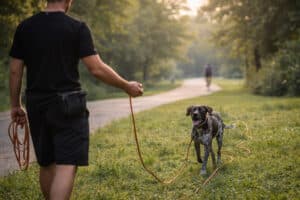
Passing people calmly can be 10 to 30 seconds. You notice the person early, create space if you need it, and feed rewards as your dog stays neutral. If your dog tends to fixate, you do not wait until you are close and hope. You start helping your dog succeed before the intensity spikes.
Sniffing as a Reward Without Getting Dragged There
Sniffing is not a problem. Uncontrolled access to sniffing is the problem. Your dog’s nose is like their social media feed, and if they can scroll whenever they want, they will. The good news is that sniffing is one of the most powerful rewards you have, and you do not need to fight it. You just need to use it properly.
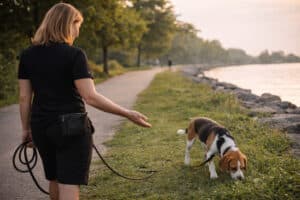
At K9 Principles, we teach sniffing as permission, not as payment your dog steals. That looks like this: you ask for a small piece of behaviour first, like a check-in, a few steps on a loose lead, or a sit at the edge of the grass. Then you release with a cue like “Go sniff” and you walk with them to the sniffing spot with the lead still loose. If the lead tightens and you get dragged, the sniff does not happen yet. You pause, reset, and try again.
This is how you flip the script. Instead of your dog dragging you to the environment, the environment becomes something you deliver. That is how dog training becomes easier, not stricter.
Making the Environment Work for You Instead of Against You
The outdoors is not one level of difficulty. It is a thousand tiny levels, and your job is to choose wisely. The best dog training in Hamilton is not about proving your dog can handle the hardest place today. It is about setting your dog up to win so you can build tomorrow.
Choose routes like you are adjusting a volume knob. Quiet streets and neighbourhood loops are low volume. The edge of a park is medium volume. A multi-use trail at peak hours can be high volume. If your dog is new to training, you do not start on high volume and get surprised when things fall apart. You start on low volume, build skills, then gradually step into harder places on purpose.
Timing matters too. If you know the trail gets busy at lunch, train earlier or later. If you know your dog struggles right after work because they are overstimulated from the day, start with a shorter loop and a longer decompression finish. Smart route choices are not “avoiding the problem.” They are building the foundation so you can face the problem successfully later.
Progress Without Stacking Distractions and Breaking Your Dog
Most people progress by accident. They do one decent walk, then they take the dog somewhere harder and hope it goes the same. Then it does not, and they think the dog is stubborn.
Progress should be boring and planned. Change one thing at a time. You can add distance, add distraction, add duration, or add complexity, but you do not add all of them at once. If your dog can do a loose lead rep on a quiet street, your next step might be doing the same rep near a slightly busier corner, not doing it outside a busy café while scooters fly by.
We also want you to keep sessions playful. If your dog is starting to fade, sniffing becomes your reward again. If your dog is getting amped, you use a place-like pause to bring the nervous system down. Training is not meant to feel like a constant test. It is meant to feel like guidance.
How This System Fixes Pulling Without You Becoming “The Lead Police”
Pulling usually has one reason: it works. It gets your dog closer to what they want. So we stop letting it work, and we start paying for what we like.
The calm start teaches your dog that tight lead equals pause. Micro loose lead reps teach your dog exactly what earns rewards. Sniffing as permission teaches your dog that they can still access what they love, but through you, not through dragging. Over time, the walk becomes less of a tug-of-war and more of a partnership. That is the whole point of Hamilton dog training that actually holds up in real life.
Zig-Zag Sniffing and “Random Steering”: Getting Your Walk Back
Zig-zag sniffing is usually your dog trying to gather information and chase novelty. It is not malicious. It is just unstructured.
When you add structure, you give your dog predictability. You build sniffing into the walk on purpose, so your dog does not have to hunt for it constantly. You also start rewarding straight-line walking and check-ins, which teaches your dog that staying with you is valuable, not restrictive. You are not banning sniffing. You are organising it. Most dogs relax when the rules are clear.
Frantic Starts, Ignoring Cues Outdoors, and “Perfect at Home but Not Outside”
If your dog listens at home but not outside, it is rarely defiance. It is context. Home is quiet, predictable, and low distraction. Outside is movement, smells, people, dogs, cars, squirrels, and a thousand little triggers.
The walk segments routine fixes this by teaching cues in the exact environment where they fail, but at a level your dog can succeed with. You practise check-ins on your street before you expect check-ins on a busy trail. You practise sits at a quiet corner before you expect sits near a playground. This is how dog training in Hamilton becomes real-world proofed, not just “good in the kitchen.”
Overreacting to Dogs and People: Building Calm Passing Skills in Real Life
Reactivity and overexcitement often look like the same thing on a lead: lunging, barking, whining, pulling, and an owner feeling embarrassed. The fix is not forcing your dog closer and hoping they “get used to it.” The fix is distance, timing, and reinforcing calm.
On walks, you want to spot triggers early and choose the passing plan before your dog gets overwhelmed. Cross the street, step onto a driveway, move behind a parked car, or turn into a quieter side path. Then reward your dog for staying with you and for making good choices. You are not teaching your dog that other dogs are scary or exciting. You are teaching your dog that other dogs are background noise, and you are the main event. That is the heart of dog training that creates neutrality.
Where This Fits in Real Hamilton Life (So You Can Actually Use It)
This routine is built for real schedules and real streets. You can do the calm start in your own neighbourhood loop in Hamilton, Dundas, Ancaster, Stoney Creek, or out toward Caledonia. You can do micro-sessions on quiet sidewalks, near school fences after hours, along park edges, or at the start of a multi-use trail before it gets busy. You can use decompression finishes in calmer green spaces where your dog can sniff without feeling like they are constantly bracing for the next trigger.
If you have been told Hamilton dog training means you need an hour a day and a pocket full of perfection, ignore that. Consistency beats intensity, and structure beats chaos. When the walk has a plan, your dog stops guessing and starts learning.
Conclusion: Turn Your “Normal Walk” Into Everyday dog training in Hamilton
If walks currently feel stressful, you do not need a stronger arm or a stricter vibe. You need a better system. When you break the walk into a calm start, short micro-sessions, and a decompression finish, you stop hoping your dog behaves and you start teaching them how. You also get your life back, because your dog starts understanding that the outdoors is not a free-for-all, it is a place where you move together.
If you want this built properly, quickly, and with coaching that fits your dog and your real routine, we can help. At K9 Principles, our Level 1can help you set an incredible foundation to start with and our In-Home Private Training are designed to turn everyday walks into reliable real-world skills, so you can enjoy your dog instead of managing chaos. If you are ready to make your walk the easiest place to train, reach out and let’s get you started.
Contact us for more information:
- Name: K9 Principles
- Address: Haldimand County, Greater Hamilton Area, Burlington, and Most of Norfolk County
- Phone: 289 880-3382
- Email: k9principlesinc@gmail.com
- Website: www.k9principles.ca
FAQs
-
A1. A training-focused walk can be short and still be powerful. For many first-time dog owners, 20 minutes with structure beats 60 minutes of chaos. When you use a calm start, sprinkle micro-sessions, and finish with decompression sniffing, you get learning, enrichment, and regulation without burning everyone out.