



If you are just starting out with dog training in Hamilton and you dream of unclipping the lead one day without your heart jumping into your throat, you are in exactly the right place. Off-leash freedom is one of the biggest goals we hear from owners, but it is also one of the most misunderstood parts of dog training. People see confident dogs cruising along beside their owners at the park, and they assume it just “happens” as the dog grows up. In reality, that level of trust and reliability comes from deliberate practice, clear structure, and a step-by-step plan. In this article, we are going to walk you through the exact process we use in our own Hamilton dog training work at K9 Principles to transition dogs safely from on-leash to off-leash. We will break it down into clear phases so that if you are brand new to dog training, you still feel like you know what to do today, what to do next week, and how to protect both your dog and everyone around you while you learn together. Think of this as your roadmap to off-leash freedom, built specifically for everyday families looking for reliable, realistic results from dog training in Hamilton rather than social media fantasy.
Understanding What “Off-Leash” Really Means
Before we talk about long lines, recalls, and off-leash adventures, we need to clear up a huge misconception. Off-leash does not mean “my dog is loose and I hope for the best.” True off-leash reliability means your dog is still under control even when there is no physical lead attached. Your dog should respond when you give a cue, stay close enough that you can keep them safe, and be able to disengage from distractions when you ask. When we work with families who are brand new to dog training in Hamilton, we often explain off-leash behaviour like invisible Wi-Fi between you and your dog. The physical lead is gone, but the connection between you is strong, constant, and reliable. Your dog checks in with you, you check in with your dog, and you both understand what is expected. That is the standard we are aiming for with good dog training, not “my dog sprints to the horizon and I yell their name on repeat.” Off-leash training is not a personality trait; it is a trained skill, just like learning to drive. You would never throw a learner driver onto a highway on their first day and “see what happens.” Yet many owners metaphorically do exactly that when they unclip the lead too soon. When you shift your mindset and see off-leash freedom as a structured skill that you build step by step, the whole thing becomes less scary and a lot more achievable through thoughtful Hamilton dog training.
Why a Strong Foundation Matters Before You Ever Unclip the Lead
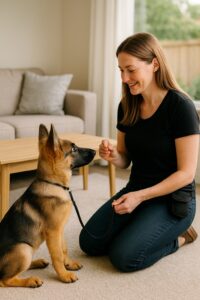
Here is the truth that a lot of people skip: off-leash training does not start at the park. It starts in your living room, your back yard, and on quiet streets while your dog is still fully on-leash. If the basics are shaky on a short lead, they will absolutely fall apart when you try to move towards off-leash freedom. In our work with dog training in Hamilton, we treat the foundation like the concrete under a house. You do not see it once the house is built, but if it is weak or uneven, everything on top cracks under pressure. Before you think about unclipping the lead, your dog should understand their name, offer eye contact to you regularly, respond to simple cues like sit, down, stay, and come in low-distraction environments, and be able to walk with some level of focus instead of dragging you like a sled. You should already have a reward system your dog cares about and understands: food, toys, praise, or a combination. If your dog does not think you are worth paying attention to when nothing interesting is happening, they definitely will not care what you say when there is a squirrel, a bird, or another dog nearby. The best dog training always comes back to relationship and clarity. You are not just teaching words; you are building a pattern where your dog learns that listening to you consistently leads to good things. That pattern is what allows Hamilton dog training to move from basic obedience to real-world control.
Safety First: Rules, Risks, and Responsible Freedom in Hamilton
Now we need to talk about safety, because this is where many off-leash dreams collide with reality. When we support families with dog training in Hamilton, one of the first conversations we have about off-leash work is not about cues at all. It is about laws, risks, and responsibility. Hamilton, like most cities, has bylaws and rules about where dogs must be on-leash and how they must behave in public. On top of that, you have everyday hazards: traffic, cyclists, children who may be nervous around dogs, reactive dogs that do not want to be approached, and wildlife that can trigger your dog’s chase instinct. Off-leash work must always be layered with good risk management. We encourage owners to treat off-leash training as a privilege their dog earns, not an automatic right. If an area is busy, near a road, or full of other dogs on-leash, that is not the time to experiment. Closer to home, good Hamilton dog training also means considering the weather, the visibility, and the time of day. If it is dark, icy, or crowded, stick with your lead or long line. Real leadership in dog training means making the safe choice even when your heart really wants to “see how they do” off-leash. Your dog does not understand bylaws or traffic lights. They only understand what you have taught and practised with them. It is your job to protect them from situations they are not trained or mature enough to handle yet.
Essential Tools for a Smooth On-Leash to Off-Leash Transition
Let us get practical. When you move from on-leash work towards off-leash reliability, your equipment becomes part of your training plan. In our dog training in Hamilton, we almost always use a progression of tools rather than jumping straight from a short lead to nothing. Start with a comfortable flat collar or well-fitted harness that your dog can move easily in. Add a standard lead for close work, then introduce a long line as your “bridge” between on and off-leash. A long line is simply a very long lead, often ten to fifteen metres, that allows your dog more freedom to move while still keeping a physical safety line attached. For many families starting dog training, the long line feels like a magic compromise: your dog gets to explore, you still have backup if they make a poor decision. We also strongly recommend a treat pouch and high-value rewards for this phase of Hamilton dog training, because you want to be able to mark and reinforce good choices instantly. Over time, some owners also choose to add tools like a bright collar with clear ID tags or even a GPS tracker for extra peace of mind. No piece of equipment replaces training, but good tools support smart dog training in Hamilton by giving you safe options as you test your dog’s skills in the real world.
Step 1: Mastering Engagement and Basics On-Leash
Your first real training step in this journey is not glamorous, but it is absolutely essential: build engagement on-leash. Engagement simply means your dog is mentally “with you” instead of being tuned out and running the world on their own. When we are coaching families through dog training in Hamilton, we often say that engagement is the glue that holds everything else together. Start in the quietest environments you can find: your living room, your hallway, your yard. With your dog on a regular lead, practise things like your dog’s name, offering eye contact, and simple positional cues like sit and down. Every time your dog chooses to check in with you, reward them. You are teaching them that looking to you, listening to you, and responding to you is always worth their time. Then start taking that same engagement out onto calm streets. Do not worry about perfect heelwork yet. Focus on the habit of checking in. You want your dog to glance up at you regularly, not just drag you from smell to smell. In this stage of dog training, you are building language and habits, not chasing perfection. When your dog can do an easy recall, sit, down, and brief stay with a loose lead in familiar places, you have laid the groundwork that allows your Hamilton dog training to safely move into the next phase.
Step 2: Using the Long Line as Your Safety Net
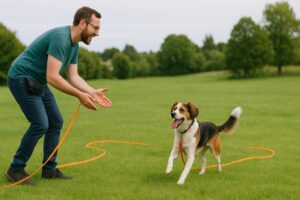
Once on-leash basics feel consistent, it is time to introduce the long line. This is where many Hamilton dog training owners really start to see the potential for off-leash freedom, because the long line gives your dog a taste of that freedom while still keeping everyone safe. Choose an open, low-distraction area first. Clip the long line to your dog and let them wander a bit further than usual, but keep the handle firmly in your hand. The goal here is not to let your dog drag you in big circles. The goal is to step into a new bubble of space while maintaining the same rules and structure you had on the shorter lead. This is the perfect time to strengthen recall. Call your dog back using a cheerful tone, use a clear recall cue, and reward generously when they race back to you. If your dog ignores you, you still have the line as backup. You can gently reel them in instead of chasing them around. Over a series of sessions, you can let more of the line trail on the ground, holding it loosely, then eventually allow the dog to drag the full length while you walk behind. You are steadily testing the reliability of your dog training while still having an emergency brake. In our Hamilton dog training sessions, this phase is where owners really start to trust their dog’s skills, because they see their dog choosing to come back even when they could physically keep going. That choice is gold, and it is exactly what we need for safe off-leash work.
Step 3: Drag-Line Training and Testing Real Obedience
Drag-line training is the halfway house between long line and completely off-leash. At this stage, your dog wears a shorter line or part of the long line that is allowed to drag behind them while you move around together. You do not hold the line all the time, but you can step on it in a split second if something goes wrong. This is a powerful step in dog training in Hamilton, because it forces you to test what your dog will do when they feel like they have full freedom, but you still have one last layer of safety. In this phase, keep practising your recall and other cues in slightly more distracting environments, but do not throw your dog into chaos. Think quiet fields, quiet corners of a park, or quiet walking paths at off-peak times. Every time your dog responds to you while on a drag line, you are proving that your previous dog training is really sinking in. You are also teaching your dog that they still have to listen to you even when they cannot feel the lead in your hand. If they ignore you and try to bolt towards something exciting, you can calmly step on the line, regain control, and try again at an easier level. Because we work directly with families through Hamilton dog training, we see how much confidence this gives owners. It changes the energy from “If I let go, everything will fall apart” to “I can test this and still keep my dog safe.” That shift in your mindset will massively improve the quality and calmness of your Hamilton dog training going forward.
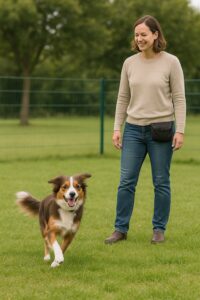
Step 4: First True Off-Leash Sessions in Secure Areas
Now we arrive at the moment everyone has been waiting for: unclipping the lead. But notice where it happens in the process. It is step four, not step one. By the time we encourage Hamilton dog training owners to let their dog off-leash for the first time, we have already built strong engagement, consistent responses to cues, and successful long-line and drag-line sessions. The first off-leash experiences should happen in secure, fenced, or very low-risk environments. This is not the time to experiment near a busy path, a car park, or a playground. When you first unclip, do not make a big dramatic moment out of it. Stay relaxed. Let your dog move around, then call them back for short, easy recalls and reward them. Keep the session short and structured. Off-leash does not mean the rules disappear; it just means the equipment looks different. A common mistake we see when people try dog training on their own is that they equate off-leash time with “do whatever you want now.” The dog starts to learn that there are two modes: on-leash obedience and off-leash chaos. Instead, we want your dog to understand that listening to you is the same whether there is a lead on or not. The reward for good listening can absolutely be more freedom and exploring, but it is still freedom within a set of boundaries. When handled this way, these early off-leash sessions create a powerful foundation for future Hamilton dog training in more exciting environments.
Distraction-Proofing: Training Your Dog to Listen in the Real World
Distraction-proofing is where real life hits your training plan. You can have the most beautiful recall in your yard and still feel like nothing works when your dog sees another dog at the park. This is not a failure of your dog training in Hamilton; it just means you have found the edges of what your dog can cope with right now. In our own work, we think of distractions as a ladder. At the bottom, you have mild distractions like smells or a person walking at a distance. Higher up, you have other dogs, wildlife, or fast-moving bikes. At the very top, you have your dog’s absolute top triggers, such as squirrels, open water, or a favourite playmate. You should climb that ladder slowly. Start by practising recalls and focus cues at a distance from distractions rather than right next to them. Gradually reduce the distance as your dog proves they can cope. If your dog ignores you completely in a certain situation, that is feedback: the distraction is too intense for their current level of dog training, and you need to step down a rung or two. This is also where Hamilton dog training really benefits from structure and honest self-assessment. Ask yourself: did my dog understand the cue? Was I consistent with my rewards? Did I move too fast? When you adjust your training instead of blaming the dog, you create a cleaner path forward and a dog that genuinely learns to choose you over chaos.
What to Do When Things Go Wrong (Because Sometimes They Will)
Even with the best dog training in Hamilton, things will not always go perfectly. Your dog might chase something, ignore a cue, or get overexcited and run a little too far. The way you respond in those moments can either strengthen your future dog training or damage it. If your dog does not come when called once, avoid falling into the trap of shouting their name again and again with rising panic. That simply teaches your dog that your recall cue is background noise. Instead, try changing your body language: move away from your dog, make yourself interesting, use a playful tone, and give them a reason to choose you. If things really go sideways and you need to get your dog back urgently, and you still have a long line or drag line attached, use it calmly. Do not punish your dog when they finally return; if you turn coming back to you into something unpleasant, you are sabotaging every recall in the future. In our Hamilton dog training work, we help owners create clear “emergency plans” so they know exactly what to do if their dog bolts, freezes, or gets stuck staring at a distraction. Having a plan stops you from panicking, and calm energy is one of the strongest tools you have in dog training in Hamilton. Afterward, step back and look at why it went wrong. Was the environment too hard? Did you skip a stage? That information is gold if you use it to refine your training rather than beat yourself up.
Off-Leash Etiquette: Sharing Spaces With Other People and Dogs
Off-leash is not just about what your dog can physically do. It is also about how your choices affect the people and animals around you. Responsible off-leash behaviour is a crucial piece of dog training in Hamilton, because we are sharing parks, trails, and paths with others who may not love dogs as much as you do. Good etiquette means not allowing your dog to run up to every other dog or person “to say hi,” even if your dog is friendly. You do not know whether the other dog is nervous, recovering from surgery, in training, or simply does not want company. A strong recall and a habit of checking in with you allows you to call your dog back and move aside politely. It also means paying attention to your environment. If you see children playing, people having a picnic, or other dogs on-leash, that is often your cue to pop your lead back on out of courtesy. Part of high-quality dog training is teaching your dog that being recalled and leashed up does not always mean the fun is over; sometimes it just means a short pause before they get to go free again in a better spot. When we support families through Hamilton dog training, we emphasise that your behaviour as an owner shapes how welcome dogs are in local spaces. The more considerate we are, the more likely we are to keep access to beautiful places where off-leash training and exercise can happen safely.

Conclusion: Off-Leash Freedom Is Not Magic – It Is a Method
Transitioning from on-leash to off-leash is not a leap of faith; it is a series of small, well-planned steps stacked on top of each other. You start with engagement and basics on a regular lead, add a long line as your safety net, move through drag-line practice, and only then experiment with true off-leash in secure spaces. Along the way, you keep safety, etiquette, and distraction-proofing at the centre of everything you do. That is the path we follow every day in our own dog training in Hamilton, and it is the same path we teach to families who want real-world reliability, not just tricks for a social media clip. The good news is that you do not need to be a professional to follow this method. You just need patience, consistency, and a willingness to treat off-leash freedom as a skill you and your dog are learning together. When you do that, dog training stops feeling like a fight and starts feeling like a partnership. And if you want guidance, feedback, and a customised plan, we am here to help you with structured, supportive Hamilton dog training at K9 Principles so you and your dog can enjoy off-leash confidence without sacrificing safety.
Contact us for more information:
- Name: K9 Principles
- Address: Haldimand County, Greater Hamilton Area, Burlington, and Most of Norfolk County
- Phone: 289 880-3382
- Email: k9principlesinc@gmail.com
- Website: www.k9principles.ca
FAQs: Costs, Packages, Guarantees, and Results
-
A1.You can start laying the groundwork for off-leash skills from the moment you bring your puppy or new dog home. Early dog training in Hamilton should focus on engagement, name recognition, and simple cues in very calm environments. True off-leash sessions in open spaces should wait until your dog has gone through the steps of on-leash basics, long line work, and drag-line training. For many dogs, that means you are looking at months of structured dog training rather than a couple of weeks. There is no magic age where every dog is suddenly ready; it depends on your individual dog’s maturity, temperament, and how much quality Hamilton dog training you have already put in.