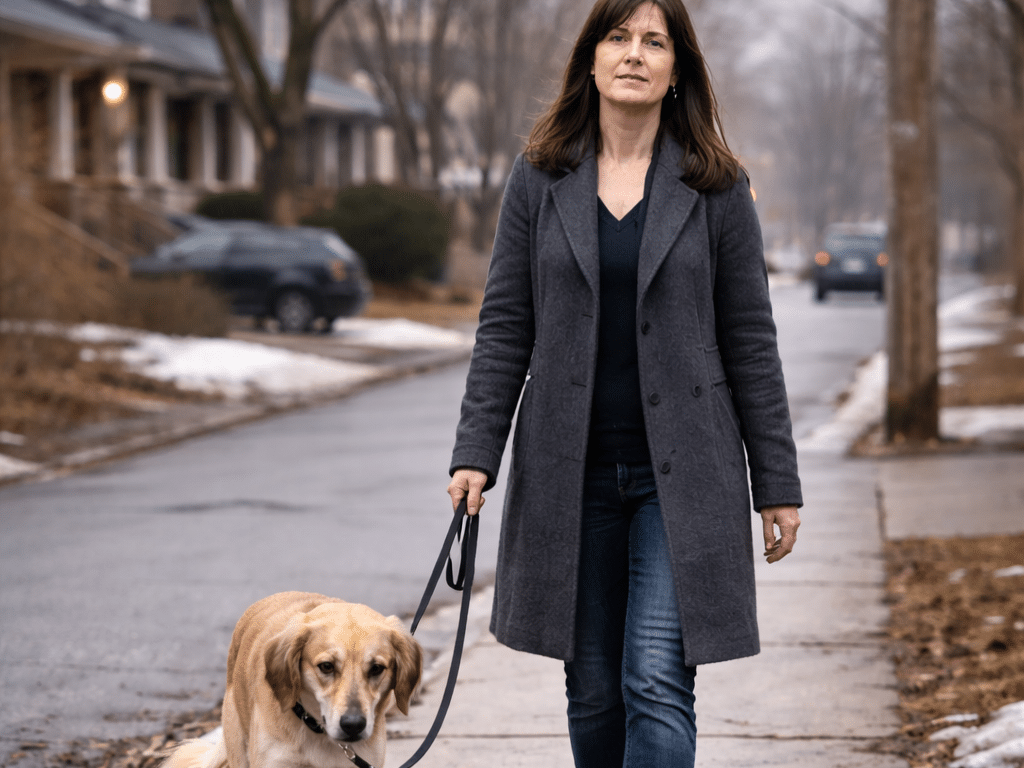



If you’ve just brought home a rescue dog and they seem “easy”, quiet, or almost too good to be true, you’re not alone. Around dog training in Hamilton, we hear it all the time: “They’re so calm!” “They don’t even move much.” “They’re perfect… right?” And sometimes, yes, you got lucky with a naturally settled dog. But other times, what you’re seeing isn’t calm. It’s shutdown.
Shutdown is one of the most misunderstood early rescue behaviours, especially for first-time owners. It can look like good manners on the outside, while the dog is actually overwhelmed on the inside. The good news is you can respond in a way that helps your dog feel safe, recover steadily, and build real confidence. That’s what we’ll walk you through here, using practical steps we use every day with our Hamilton dog training and in-home private training work.
This article is meant to make things click. You’ll learn what shutdown is, the subtle signs owners miss, why it happens, what to do in the first days and weeks, and when it’s time to bring in professional dog training support so you don’t accidentally push your dog past what they can handle.
What Shutdown Actually Is (And What It Isn’t)
Shutdown is a stress response. When a dog feels unsafe, flooded, or unsure how to cope, their nervous system can shift into a “freeze” state. Instead of barking, pacing, or reacting, the dog goes quiet. They may move less, show fewer behaviours, and look unusually compliant. It can feel like the dog is “being good”, but really they’re trying to disappear.
This matters because shutdown isn’t the same thing as being settled. A settled dog can rest and still re-engage with the world easily. A shutdown dog often looks flat, disconnected, or hesitant, and their behaviour can change suddenly once they start feeling safer. That’s why some owners feel blindsided a week or two in, when the “perfect” dog suddenly starts refusing walks, guarding the couch, reacting to visitors, or melting down when left alone.
At K9 Principles, we treat shutdown like a message: “I’m not okay yet.” Your job isn’t to snap them out of it. Your job is to make life predictable, safe, and slow enough that their system can recover.
Why Shutdown Happens in Rescue Dogs
Rescue dogs don’t just change homes. They often change everything at once. New smells, new humans, new rules, new routines, new neighbourhood noises, new expectations, new handling, and sometimes new health issues. Even if the dog came from a loving foster, the transition itself can be a lot.
Some dogs have also learned that showing normal dog behaviour gets them in trouble. If a dog was punished for barking, whining, growling, or moving away, they may stop “communicating” because it didn’t work or it made things worse. That kind of learning can create a dog who looks quiet and easy, but is actually holding a lot inside.
There’s also simple survival stress. If a dog has been in a shelter environment, transported, bounced between homes, or experienced unpredictable handling, shutdown can be their safest option. It’s not stubbornness. It’s not “dominance”. It’s a nervous system trying to protect itself.
The Signs of Shutdown Owners Miss (Because They Look Like “Good Behaviour”)
A shutdown dog often isn’t dramatic. That’s the trap. Many of the signs are quiet, and that’s exactly why people miss them.
One common sign is a dog who follows you around but doesn’t really engage. They might trail behind you, sit when you stop, and lie down a lot, but their body looks a bit tight or their face looks “blank”. Another sign is a dog who doesn’t explore. They stay in one spot, pick one safe corner, or move only when they have to.
You might also see a dog who eats inconsistently, takes treats gently but without enthusiasm, or only eats at night. Some dogs won’t drink much at first. Some won’t toilet for longer than you’d expect because they don’t feel safe enough to be that vulnerable.
And then there are the “polite” behaviours that are actually avoidance. A dog who won’t come close, won’t approach visitors, won’t play, won’t sniff on walks, won’t look around, or won’t take initiative may not be “well trained”. They may be shut down.
At K9 Principles, we also pay attention to the tiny stress tells: slow movement, sudden stillness when you reach for them, tucked posture, ears held back, yawning in quiet moments, lip licking when nothing is happening, or a dog who startles easily and then freezes.
Shutdown vs Calm: How To Tell the Difference Without Guessing
Here’s a simple way to think about it. Calm has flexibility. Shutdown has stiffness.
A calm dog can rest, then perk up when something good happens. If you grab the lead, they brighten a bit. If you say their name, you get a soft response. If a noise happens, they notice and recover. A calm dog can show curiosity and then choose to relax again.
A shutdown dog often looks like they’re coping by going small. They may avoid eye contact, move slowly, or seem almost robotic. They might comply, but it doesn’t feel connected. If something changes, they don’t adapt smoothly. They either freeze harder, or they suddenly flip into fight-or-flight once they can’t hold it in anymore.
You don’t need to be perfect at reading behaviour to do the right thing. The safest approach in the first couple of weeks is to assume your dog is more stressed than they look and give them time to settle properly. In dog training, slower is almost always faster in the long run.
What Shutdown Can Turn Into (If We Rush the Process)
Shutdown often shifts as the dog gains safety. That’s not a setback. That’s the dog finally having enough security to show you what they actually feel.
Sometimes shutdown turns into anxiety behaviours like pacing, whining, separation distress, or clinginess. Sometimes it turns into avoidance like hiding, refusing the lead, refusing walks, or backing away from touch. And sometimes it turns into defensive behaviours like growling when handled, snapping when cornered, guarding beds or food, or reacting to strangers.
This is where owners often panic: “They changed!” But the truth is the dog didn’t become worse. The dog became more honest.
At K9 Principles, we’d rather meet the real dog early and build a plan than accidentally “wake up” big behaviours by pushing too hard. This is a major reason our Hamilton in-home private dog training can be so powerful, because we can help you read what’s happening in your actual environment, not in a staged situation.
The First 72 Hours: Your Only Job Is Safety and Predictability
In the first three days, the goal is not training. The goal is stabilising the dog’s nervous system. Think of it like landing a plane in bad weather. You don’t start redecorating the cabin mid-landing. You get everyone safely on the ground first.
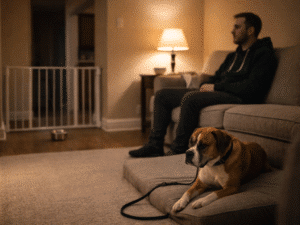
Set up one main safe area. Keep the layout simple. Use baby gates, a crate if your dog is crate-comfortable, or a defined rest spot so your dog doesn’t feel they have to patrol the whole house. Keep your energy calm and your expectations low.
Limit handling. Let your dog choose contact. Feed simple meals, keep routines predictable, and avoid the urge to “introduce them to everything” because you’re excited. Excitement is normal on the human side, but for a shutdown dog, too much input can feel like pressure.
And yes, take them out to toilet, but keep it boring and easy. Short lead, quiet area, no greetings, no wandering around the neighbourhood “for enrichment”. Right now, safety is enrichment.
The First Two Weeks: Decompression Done Properly (Not Just “Doing Nothing”)
Decompression doesn’t mean ignoring your dog. It means protecting your dog from overload while slowly building trust through consistent routines.
Keep days predictable. Same wake-up rhythm, same meal times, same toilet breaks, same quiet rest periods. Give your dog lots of sleep. Many rescue dogs are running on adrenaline, and sleep is where the system finally starts to recover.
Use gentle structure. That might mean a lead in the house for smooth guidance (not dragging), gates to reduce chaos, and clear rest times where your dog doesn’t have to make choices. Structure is not harsh. For a shut down dog, structure is relief.
If your dog wants to engage, keep it short and easy. A tiny game. A scatter of kibble in the grass. A simple name response cue. Then stop while it’s still going well. In early dog training, we want “that was easy” to be the feeling that ends the session.
Pacing Rules That Prevent Setbacks (Because Shutdown Dogs Are Quiet Until They’re Not)
The biggest pacing mistake we see is stacking stress. That’s when a dog is exposed to too many new things too quickly, even if each thing seems small on its own.
A shut down dog might handle a short walk and seem fine. Then you add visitors. Then you take them to a pet store “to socialise”. Then you bring them to a family dinner. And suddenly the dog shuts down harder, or flips into reactivity, or refuses to leave the house. That’s not the dog being difficult. That’s the dog finally saying, “I’m over my limit.”
Use a simple rhythm: one new thing, then recovery time. If you do a slightly bigger outing, the next day should be lighter. If your dog had a stressful moment, the rest of the day should be calm and boring so their system can come back down.
With dog training in Hamilton, we often remind owners that confidence isn’t built by surviving hard stuff. Confidence is built by succeeding at easy stuff, repeatedly, until it becomes normal.
Confidence Building Without Flooding (The “Small Wins” Approach)
Confidence for rescue dogs should feel almost too simple at first. If you’re thinking, “Shouldn’t we be doing more?”, you’re probably right on track.
Start with choice-based engagement. Invite, don’t insist. Let your dog approach you, then reward with food, gentle praise, or space, depending on what your dog finds safe. Use food as information, not bribery. Food says, “This moment is safe.”
Teach a few helpful cues that reduce pressure. A name response cue helps your dog check in. A “place” cue gives them a job when they’re unsure. A simple hand target can help guide movement without reaching over their head. Keep sessions short, upbeat, and ridiculously easy.
Also, let the environment work for you. Sniffing is powerful decompression. Chewing is calming. Licking is regulating. Those aren’t just “cute behaviours”. They’re nervous system tools. At K9 Principles, we build early dog training plans around these natural regulators so the dog starts to feel better, not just behave better.
Visitors, Walks, and the Outside World: How To Protect a Shutdown Dog From Pressure
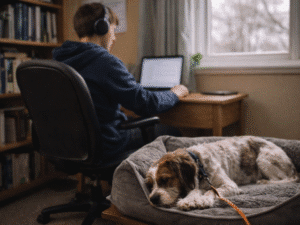
A shut down dog doesn’t need a social calendar. They need space and predictable exposure.
For visitors, your dog should never be forced to greet. Set up distance. Use a gate or a separate room if needed. Ask visitors to ignore the dog completely. No eye contact, no reaching, no leaning over, no baby talk. If your dog chooses to approach, great. If they don’t, also great. The win is the dog feeling safe while people exist.
For walks, think “sniffari”, not march. Short, quiet routes. Lots of sniffing. No greetings. No dog parks. No busy trails at peak times. If your dog freezes, pulls home, or refuses to move, that’s information. It means the world is too big right now. Shrink the world and build gradually.
This is where Hamilton dog training needs to be realistic. Hamilton is full of sudden noise, tight sidewalks, busy parks, and surprise dogs. A shut down rescue dog doesn’t need to “get used to it” by being thrown into it. They need a step-by-step plan that keeps them under threshold while their confidence grows.
Common Mistakes That Make Shutdown Worse (Even When You Mean Well)
One mistake is too much affection too soon. We love cuddly dogs. We get it. But a shut down dog may tolerate touch while feeling trapped. Instead of assuming consent, look for active participation. Is your dog leaning in, soft-bodied, choosing contact? Or are they still, wide-eyed, and letting it happen?
Another mistake is too much freedom too soon. A new rescue with full run of the house can feel like they’re living in a job they didn’t apply for. Patrol this room, guard that window, monitor that hallway, react to every noise. Structure helps prevent anxiety from turning into behaviour.
A third mistake is accidental pressure during “training”. Repeating cues, luring a dog into situations they don’t want, or trying to “build confidence” by pushing them closer to scary things usually backfires. Confidence comes from control and success, not from being overwhelmed and surviving.
If you’re not sure what’s helping or hurting, that’s not a personal failure. It’s normal. Shutdown is subtle, and most people weren’t taught how to read it. That’s exactly why professional dog training support from K9 Principles can save you weeks of second-guessing.
When It’s Time to Bring in Professional Help (And What That Help Should Look Like)
If your dog’s shutdown is deep, persistent, or starting to shift into defensive behaviour, don’t wait until it becomes a full-blown crisis. Early support is easier on you and kinder for the dog.
Red flags include a dog who won’t eat for more than a day or two, won’t toilet, hides constantly, freezes when approached, reacts strongly to handling, growls or snaps when cornered, or becomes panicky when left alone. Another big one is the “flip” after the first week or two, where the dog suddenly starts reacting to everyday life in ways that feel intense or unpredictable.
This is where our In-Home Private Training shines. At K9 Principles, our professional dog trainers come to you and build an individual plan based on what your dog is doing in the exact environments where the concerns show up. That means we can coach you on pacing, safety set-ups, handling, routines, and the right next steps without guessing. In-home private training is often the fastest way to turn confusion into a clear, practical plan, especially for shutdown and rescue transitions within dog training in Hamilton.
What the Next Stage Can Look Like: Foundation Training That Builds a Real Life Dog
Once your dog is settling and showing more normal behaviour, you can start building skills that make life easier for both of you. The goal isn’t to create a “perfect dog”. The goal is a dog who feels safe, understands the house rules, and can handle the real world.
That’s where solid foundation dog training matters. For many dogs, our Level 1 group classes are a great next step once they’re ready, because they build engagement, focus, basic cues, and confidence around mild distractions in a structured way. We keep it clear and achievable, so you don’t feel like you’re drowning in advice.
And if your life is already maxed out, we also offer our Home School Academy, where we do the training for you and hand you back a dog with a strong base and a clear transfer plan. It’s a great fit for owners who want results but don’t want to spend months wondering if they’re doing it right.
The point is this: shutdown isn’t the end of the story. With the right pacing and the right plan, it’s often the beginning of the dog finally learning what safety feels like.
Conclusion: Turning Shutdown Into Safety, and Safety Into Confidence
If your rescue dog is shut down, it doesn’t mean you adopted the “wrong dog” or that you’re already behind. It means your dog’s system is overwhelmed, and they need you to be the steady, predictable guide while they find their footing. When you slow things down, reduce pressure, and build tiny wins, you give your dog the one thing they’ve been missing: the ability to cope.
If you want support that’s practical and tailored, we’re here. At K9 Principles, our In-Home Private Training is built for exactly this kind of situation, because we can walk into your real life, read what your dog is actually telling you, and map out a plan that fits your home, your schedule, and your dog. That’s how shutdown becomes trust, and trust becomes the confident, stable dog you were hoping for when you started this journey.
Contact us for more information:
- Name: K9 Principles
- Address: Haldimand County, Greater Hamilton Area, Burlington, and Most of Norfolk County
- Phone: 289 880-3382
- Email: k9principlesinc@gmail.com
- Website: www.k9principles.ca
FAQs
-
A1. Shutdown can last a few days, a few weeks, or longer, depending on the dog’s history, the stress in the environment, and how fast life moves after adoption. At K9 Principles, we focus less on the calendar and more on the trend. If your dog is slowly eating more consistently, exploring a bit more, sleeping better, and recovering faster after small stressors, you’re moving in the right direction.