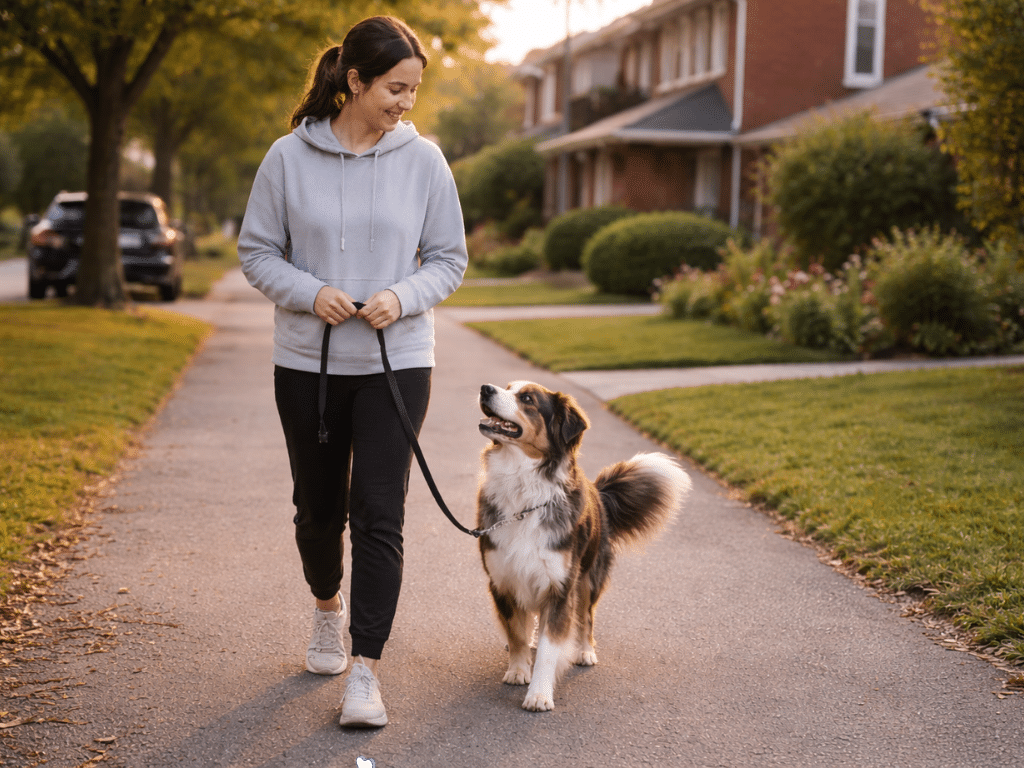


There is a moment almost every first-time dog owner hits, and it usually happens outside. Inside the house, everything looks promising. Your dog can sit, come, and even hold a cue for a few seconds. Then you step onto the pavement in Hamilton, and suddenly the world turns into a giant slot machine that pays out in smells, squirrels, greetings, and freedom. It feels personal, but it is not. It is just motivation at work, and the environment is often the highest-paying employer your dog has ever met.
At K9 Principles, this is where dog training stops being “teach the cue” and starts being “make the cue worth listening to in real life”. Proofing, generalisation, and reinforcement get you the foundation. Competing rewards explain why that foundation cracks the second you hit a trail, a park, or a busy neighbourhood walk. The good news is that this is fixable, and it is fixable without nagging, yanking, or repeating yourself until your voice goes hoarse.
This guide is built to give you a clear, mistake-proof plan for dog training in Hamilton when the environment keeps “winning”. It will explain what your dog is actually choosing, why treats suddenly look boring, how accidental self-reinforcement gets created, and exactly how to rebuild outdoor focus so listening becomes the profitable choice again.
Why Your Dog “Knows It” But Still Does Not Do It Outside
Dogs do not practise behaviours because they understand “good manners”. Dogs practise behaviours because those behaviours work for them. When you ask for a recall at Bayfront Park and your dog ignores you, it does not mean your dog is stubborn or disrespectful. It means something else is paying better in that moment, and your recall cue is currently the cheaper option.
This is the part many owners miss, especially if they are new to dog training. A cue is not a remote control. A cue is more like an invitation. Your dog’s brain still runs a lightning-fast calculation: “What do I get if I listen, and what do I get if I do not?” The choice that has paid most reliably, most intensely, and most recently is usually the one your dog will pick.
Hamilton dog training gets dramatically easier when you stop thinking in terms of “will he obey” and start thinking in terms of “what is paying him right now”. That shift is not fluffy mindset advice. It is the difference between chasing behaviour and building behaviour.
What Competing Reinforcers Really Are, And Why They Are So Powerful
A competing reinforcer is anything in the environment your dog finds rewarding that competes with what you are offering. Outdoors, these reinforcers stack on top of each other. Smells are a huge one, because sniffing is not just “interest”, it is information, it is self-soothing, it is dopamine. Movement is another big one, because moving things activate chase and prey patterns. People, dogs, squirrels, birds, crunchy leaves, puddles, and even the wind can be rewarding in ways that food cannot touch.
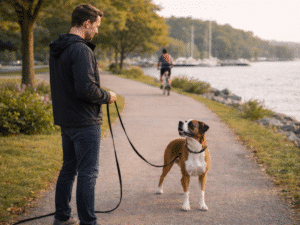
Think of it like this. Inside your living room, you are the most interesting channel on the TV. Outside on the Waterfront Trail, your dog is standing in the middle of a thousand channels, all playing at once, and many of them are broadcasting in HD. If your reward is a dry biscuit, and the environment is offering a fresh rabbit trail, the choice is obvious.
This is why Hamilton dog training has to be trained in Hamilton. The dog you have indoors is not the dog you have at the park, because the pay structure has changed. The cue did not fail. The environment simply outbid you.
How Accidental Self-Reinforcement Gets Built Without You Noticing
Most “bad behaviour” is not your dog being bad. It is your dog discovering that certain choices reliably improve their situation. That is self-reinforcement, and it is one of the biggest reasons dog training stalls.
Pulling is a perfect example. If pulling gets your dog to the smell faster, pulling works. Barking and lunging can work too. If barking makes a dog or person move away, your dog just learned that barking controls space. Ignoring recall can become a habit if it leads to more freedom, more sniffing, more chase, and more play. Even “he is just excited” can hide a rehearsal loop where your dog practises blowing you off and gets paid every time.
This is why we talk so much at K9 Principles about preventing rehearsals. Every rehearsal is a deposit into the wrong savings account. If the environment keeps paying your dog for ignoring you, that behaviour becomes the default because it is the richest history in your dog’s brain.
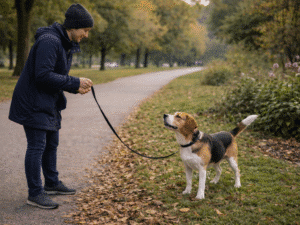
Why “He Doesn’t Care About Treats Outside” Happens
It is tempting to assume your dog has suddenly become picky. In reality, what usually changes is arousal, focus, and emotional state. When your dog is highly aroused, food can physically feel less relevant, even if it is normally a favourite. It is not stubbornness. It is biology.
Outside, your dog’s brain can swing into scanning mode. Their senses are busy reading the world, and their body is primed for action. This is especially common in places like Gage Park, Dundas Valley trails, or any multi-use path where bikes and runners appear quickly. When your dog is over-threshold, your timing gets harder, your dog’s thinking gets fuzzier, and even great treats can lose their power.
This is also why people say, “He will take treats but still won’t listen”. Taking treats is not the same as being in a learning state. Some dogs can grab food while still staying locked onto the environment. They are eating and ignoring you at the same time, which is a humbling talent.
The Rule That Changes Everything: Dogs Repeat What Pays
Dog training gets clean when you accept one core rule: dogs repeat what pays, and they repeat it where it pays. If sniffing pays more than you, your dog will sniff. If greeting pays more than you, your dog will pull to greet. If chasing pays more than you, your dog will chase.
That is not a lecture. It is freedom, because it gives you something you can actually control. You can control access. You can control set-ups. You can control reinforcement history. You can control distance. You can control what your dog rehearses. You can also control your own consistency, which is a bigger lever than most people realise.
Dog training in Hamilton becomes less stressful when you stop trying to “win” with intensity and start winning with smart rules and better pay.
Winning Back Value Starts With Threshold, Not Willpower
If there is one mistake that keeps owners stuck, it is asking for focus when the dog is already over-threshold. Threshold is the line where your dog can still think, respond, and learn. Past that line, your dog is mostly running on instinct.
At K9 Principles, we start under threshold on purpose. That might mean walking further from the path edge. That might mean training in a quieter side street before heading towards the park. That might mean working in a parking lot far from the action. That might mean avoiding peak times. This is not avoidance forever. This is how you build success without the dog practising failure.
If your dog training plan relies on your dog having willpower around chaos, it is not a plan. It is a gamble. The goal is not to test your dog. The goal is to teach your dog how to win.
The Mistake-Proof Plan: How To Rebuild Outdoor Engagement Step By Step
At K9 Principles, the goal is simple: make the right choice more profitable than the wrong choice, then practise that until it is normal. That is the whole game. Here is how to do it in a way that actually works outside.
Start with a location where your dog can succeed. That could be a calm residential loop, the quiet edge of a park, or a low-traffic section of a trail. Begin with distance from distractions that feels almost too easy. If your dog can respond to their name and orient back to you without hesitation, you are in the right place.
Use higher-value rewards than you think you need. Outdoor rewards have to compete with outdoor pay, so do not try to win a bidding war with boring currency. Use food your dog does not get at home. Use a tug if your dog loves play. Use movement, because movement can match movement. Then deliver the reward with timing that makes sense to your dog. The reward should land right after the choice you want repeated, not ten seconds later after you have fumbled for it.
Layer distractions like levels in a game. Add one challenge at a time. Reduce distance slightly, then build a short win, then leave. Increase duration only after your dog is choosing you quickly. Increase difficulty only after the current level is boring. When you do this right, your dog starts treating you like the best option because you become the gateway to everything good.
Finally, use life rewards intentionally. If your dog wants to sniff, make sniffing a reward for checking in. If your dog wants to greet, make greetings a reward for walking nicely. If your dog wants freedom, make freedom a reward for responding to your recall cue. This is not bribery. This is behaviour economics, and it is how great dog training is built in the real world.
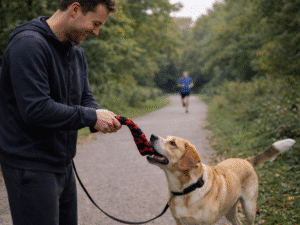
How To Use Real Hamilton Distractions Without Getting Wrecked By Them
Hamilton is full of brilliant training opportunities, but only if you set them up properly. Bayfront Park is fantastic for distance work because you can often control how close you get to bikes and foot traffic. Gage Park can be great for pattern training, but it can also be too busy at peak times, so timing matters. Multi-use trails are perfect for teaching your dog that moving things are background noise, but only when you start far enough away that your dog can still think.
Neighbourhood walks are underrated. A calm street in the evening can be the perfect place to rebuild your dog’s “listen first” habit before you ever head towards a high-distraction area. Driveways, lawns, and lampposts become controlled sniffing rewards. Intersections become check-in points. You build structure, then you bring that structure into harder places.
Hamilton dog training is not about finding the hardest environment and surviving it. It is about building a dog who can move through Hamilton comfortably because the training was layered with intelligence instead of hope.
Troubleshooting: “He’ll Take Treats But Still Won’t Listen”
If your dog will take treats but still ignores cues, the environment is still beating you. That usually means one of three things: the dog is too close to the distraction, the reward is not valuable enough for that level, or the reinforcement timing is not landing on the exact decision you want repeated.
Distance is the fastest fix. Move away until your dog’s response is crisp. Then train there long enough that the dog is choosing you without hesitation. Reward value is the second lever. If you are using the same treats you use in the kitchen, it is time to upgrade. Timing is the third lever. Your reward has to arrive the moment your dog chooses you, not after they have already drifted back into sniffing or scanning.
This is not about becoming a treat dispenser. This is about building a reinforcement history that makes listening the default. Once the history is strong, the dog starts listening because it is normal, not because you are holding food.
Troubleshooting: “He’s Obsessed With Sniffing”
Sniffing is not the enemy. Unstructured sniffing that replaces engagement is the problem. If sniffing is the only thing your dog gets to do outside, it becomes the strongest reinforcer on the planet.
The fix is to put sniffing on purpose. At K9 Principles, sniffing becomes a life reward that your dog can earn. That means you ask for a simple behaviour first, like a check-in or a loose lead step, then you release your dog to sniff. Over time, your dog learns a powerful pattern: choosing you is the fastest way to get what they want.
If your dog is so locked into sniffing that they cannot respond, the training session is happening too close to the scent buffet. Move to a less intense area, shorten the session, and rebuild the habit where the dog can succeed. Dog training in Hamilton works best when you treat sniffing as currency and you control when it gets spent.
Troubleshooting: “He Only Wants Other Dogs” And “He Bolts When Off-Lead”
If your dog only wants other dogs, you are dealing with a social reinforcer that is massive. Pulling to greet works because it often gets the dog what they want. The solution is not yelling “leave it” louder. The solution is changing the system so pulling never pays and calm choices do.
That means you manage distance so your dog can actually think. You reward attention before your dog fixates. You practise being near dogs without greeting. You use controlled greetings only when your dog has earned them. Your dog starts learning that other dogs exist, but they are not the main event.
If your dog bolts when off-lead, the issue is nearly always reinforcement history and rehearsal. Freedom is a powerful reinforcer, and if your dog has practised “run off and have the best time” enough times, that behaviour becomes sticky. Off-lead reliability is not built by hoping your dog will be good. It is built by protecting the recall cue, preventing failures, and paying recalls heavily in easy environments before adding difficulty.
This is why we are big on long lines and structured off-lead transitions during Hamilton dog training. The long line is not a punishment. It is an insurance policy that prevents rehearsals while you build the kind of recall that holds up when the environment gets loud.
How To Know You Are Progressing, Even If It Feels Slow
Progress in dog training does not always look like perfection. It often looks like faster recovery. Your dog notices a distraction, then looks back sooner. Your dog starts choosing you without being asked. Your dog can walk past a smell without diving into it. Your dog can hear a recall cue and turn before their feet take off.
You will also notice that your own behaviour changes. You will stop repeating cues. You will stop bargaining. You will start setting up wins without feeling like you are “avoiding life”. That is not you giving in. That is you training with a plan.
Hamilton dog training gets easier when you treat every session like building a habit, not proving a point. Dogs learn through repetition and pay. When you control both, you get reliability.
How K9 Principles Makes Outdoor Reliability Feel Doable
This is exactly the type of problem we love solving at K9 Principles, because it is where most owners feel stuck and where most generic advice falls apart. Dog training in Hamilton has to account for the real world, not just the living room. That means we build engagement, teach clear cues, then proof them through smart setups so your dog learns that listening works everywhere.
Our Level 1 is the place to build the foundation properly, especially if you are dealing with pulling, sniffing battles, or a dog who is “great at home and chaotic outside”. Level 2 is where the behaviours get stronger, cleaner, and more reliable around real distractions. In-Home Private training is for owners who want structure, coaching, and a step-by-step path that removes guesswork and accelerates progress in the environments you actually live in.
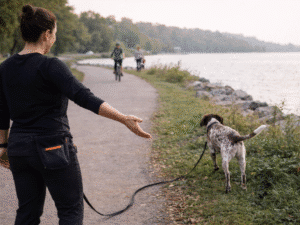
If you are tired of feeling like the environment owns your dog, that is not a character flaw in you or your dog. It is a training gap, and it can be closed with the right plan.
Conclusion:
If dog training feels like it falls apart the moment you step outside, it is not because your dog is trying to ruin your walk. It is because the environment is paying your dog better than you are right now, and dogs repeat what pays. The fix is not louder cues or more frustration. The fix is smarter set-ups, better timing, stronger reinforcement history, and a plan that prevents the wrong choices from being rehearsed. At K9 Principles, this is exactly what dog training in Hamilton is built for, and the fastest way to stop feeling stuck is to train with structure. When you are ready, Level 1, Level 2, and In-Home Private training are the clearest next steps to rebuild focus, motivation, and reliability in the real world, so walks stop feeling like a battle and start feeling like the life you wanted with your dog.
Contact us for more information:
- Name: K9 Principles
- Address: Haldimand County, Greater Hamilton Area, Burlington, and Most of Norfolk County
- Phone: 289 880-3382
- Email: k9principlesinc@gmail.com
- Website: www.k9principles.ca
FAQs
-
A1. Your dog is not forgetting cues outside, because the outside environment has stronger competing rewards, and the cue does not yet have enough reinforcement history in those places to beat smells, movement, and social distractions.