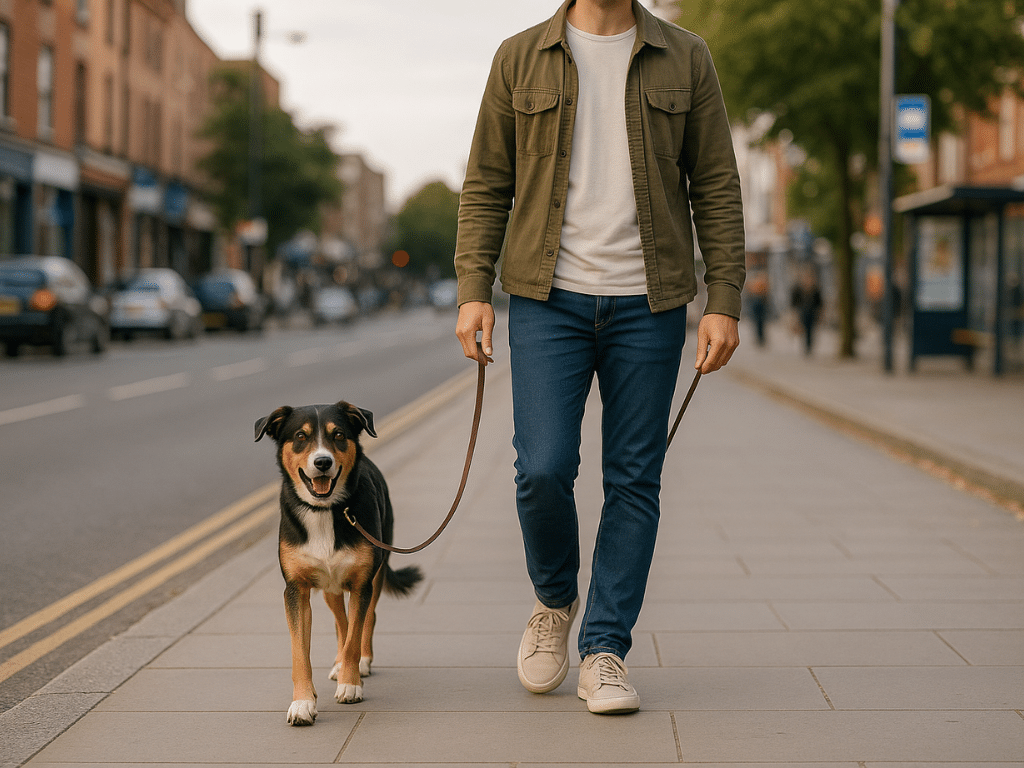



If you live in a city, you already know it feels busy from the moment you step outside your front door. Cars, buses, cyclists, stroller’s, children, other dogs, people in hoodies, people carrying shopping bags – it is never quiet. Now imagine all of that from your dog’s point of view. The world is louder, closer, and much more intense than it is for us. That is why dog training in Hamilton is not just a nice extra for city owners; it is the foundation of a safe, calm, enjoyable life for both you and your dog. When we talk about dog training in an urban setting, we are not talking about teaching a party trick or a few basic cues in the living room. We are talking about helping your dog feel safe and confident in a world that can easily overwhelm them. We are also talking about giving you the skills to walk down a busy pavement without being dragged into the road, to sit outside a café without constant barking, and to have a dog that can actually relax at home instead of pacing and whining at every noise. As K9 Principles, we specialise in Hamilton dog training that works in the real streets, real parks, and real homes you live in. Our goal is simple: to help first-time owners understand that with the right approach, urban life can be one of the best training opportunities you will ever have.
What Makes Urban Life So Different for Dogs?
Urban life is intense. There is more of everything: more sound, more movement, more people, more dogs, more unpredictability. For a dog that has not had structured dog training in Hamilton, the result is often a brain that is constantly “switched on” and over-stimulated. You might see this as pulling on lead, lunging at passing dogs, barking at every noise in the hallway, or becoming fixated on cyclists and cars. City pavements are narrow and often crowded. Your dog may have to pass other dogs less than a metre away. In a quiet town this might happen once in a while, but in Hamilton’s busier areas, it can happen several times on a single walk. Without proper dog training, that constant pressure can build into frustration or anxiety. There is also the issue of space. Many urban dogs live in condos, semis, or town houses with limited outdoor access. That is absolutely workable, but it means exercise and enrichment have to be planned more thoughtfully. When we work on Hamilton dog training, we do not assume you have acres of land. We assume you have normal city life: a condo or house, some nearby pavements, some local parks and green spaces, and a schedule that looks like real life. That is exactly why an urban-focused approach to dog training in Hamilton makes such a difference.
Why Urban Owners in Hamilton Need Focused Dog Training in Hamilton
If you are a first-time owner, it is easy to assume that your dog will “just get used to” the city. In reality, many dogs do not adapt smoothly without help. The city does not get quieter, and your dog does not automatically learn how to cope. We see a lot of dogs that started out fine as puppies, but as they hit adolescence, all the built-up excitement, anxiety, and lack of structure suddenly show up as reactivity, over-arousal, and pulling that feels impossible to control. This is where focused dog training in Hamilton comes in. When we say focused, we mean training that is geared around exactly what your dog experiences here: busy pavements downtown, parks with off-lead dogs, shared hallways, narrow paths by roads, and constant changes in the environment. As K9 Principles, we know that Hamilton dog training has to be practical. It has to help you manage your dog in the city you actually live in, not in a perfect training hall with no distractions. That is why, when we work on in-home private dog training, we design plans that move from your living room to your front door, then to your street, then to local parks, and then into more demanding spaces like café patios or busier high streets.
How Hamilton dog training Differs from Suburban Work
It is not that suburban or rural dogs do not need dog training; of course they do. But Hamilton dog training for urban environments places a much heavier focus on distraction, space-sharing, and environmental confidence. In a rural area, you might work more on long-distance recalls in open fields and calmness around livestock or wildlife. In the city, we still build recall, but we spend more time on controlling arousal around people, dogs, and vehicles that are very close by. Urban dog training in Hamilton also needs more emphasis on neutral behaviour. Your dog cannot greet everyone on the street. They cannot rush up to every dog. They cannot bark at every passer-by. We help you teach your dog that most of the world is just “background noise” and that their real job is to check in with you and respond to your cues. When we build training plans at K9 Principles, we base our dog training sessions on actual Hamilton life. That might mean practising controlled walking near busier roads, working on focus near children’s play areas, or teaching calmness in crowded park spaces. This is Hamilton dog training as you really live it, not as it looks in a textbook.
Common Urban Behaviour Problems We See at K9 Principles
When owners first come to us for dog training in Hamilton, they often describe the same set of problems. The most common one is pulling so hard on the lead that walks feel like a struggle. This is usually a mix of excitement, lack of clear cues, and never having been shown how to walk calmly in such a stimulating environment. We also see reactivity: barking, lunging, or spinning when another dog or person appears. In a busy city, triggers can appear suddenly and at close range, which makes this especially challenging if you have never done structured dog training before. Another big issue for urban dogs is over-arousal. This looks like a dog that simply cannot relax. They pace, whine, startle at hallway noises, jump up at windows, and seem to be “on duty” all the time. We also see frustration from dogs that want to greet everything, but are constantly held back. Without a proper plan from an experienced Hamilton dog training professional, that frustration can spill over into barking and pulling that feels out of control. Our role at K9 Principles is to take all of this and translate it into a clear, calm dog training in Hamilton plan that you can follow step by step.
Foundations First: Core Skills Every City Dog Needs
No matter how busy the city is, every successful dog training in Hamilton journey starts with the same foundation skills. These are engagement, loose lead walking, recall, impulse control, and calmness. If that sounds like a lot, do not worry. We break it down into simple pieces that even a complete beginner can follow. Engagement simply means your dog chooses you over the environment. If your dog will not look at you or respond to their name, everything else becomes much harder. That is why engagement is one of the first things we work on in our Hamilton dog training programs. We use markers, rewards, and simple, clear cues to teach your dog that paying attention to you is always worth it. Loose lead walking is another core skill. In a city, tight spaces and busy pavements make pulling not just annoying but unsafe. When we teach loose lead work as part of your dog training, we start in calm, low-distraction spaces, then build up gradually until your dog can walk calmly even when there is a lot going on. Recall is vital even in urban areas. You may think you will never have your dog off lead, but accidents happen. Gates get left open, leads slip, or you may want to use long lines in parks. As K9 Principles, we use structured dog training in Hamilton sessions to build a recall cue that your dog recognises as “drop everything and come back now”. We also work heavily on impulse control – teaching your dog that they can pause, think, and choose the right response instead of reacting automatically to every movement around them.
Engagement: Getting Your Dog to Tune Into You

A lot of people jump straight to walking cues or “heel” work and skip engagement, but in dog training in Hamilton, engagement is the key that makes everything else possible. If your dog is more interested in a crisp packet blowing down the street than in you, walks will always feel out of control. At K9 Principles, we start by teaching your dog that their name is a promise: when they hear it and look at you, something good follows. This is not about bribery; it is about building a solid habit. We show you how to call your dog’s name, mark the moment they look at you, and then reward. Practised correctly, this simple pattern becomes the backbone of your dog training. Over time, your dog learns that checking in with you is the default, even when there are distractions around. In urban Hamilton dog training, we then layer this into real-world situations: in your hallway, outside your front door, on the pavement, and in local parks. We do not leap straight into the busiest area; we build your dog’s confidence and focus step by step so that dog training in Hamilton feels achievable, not overwhelming.
Loose Lead Walking on Busy Streets
Loose lead walking is one of the most life-changing skills you can teach your dog, especially in a city. It completely changes how you feel about walks. Instead of dreading being dragged, you start to enjoy the time together. For effective dog training in Hamilton, we never start loose lead work in the most distracting place. We begin somewhere quiet where your dog can actually succeed. We show you how to reward your dog for being by your side on a slack lead and how to respond calmly when they surge ahead. There is no need for harsh corrections when you have a clear plan. As we progress, we add more of the real Hamilton environment: busier streets, narrow pavements, and small “bottle-neck” areas where you regularly have to pass people or dogs at close range. Our Hamilton dog training approach focuses on teaching your dog that walking beside you is their job, even when a bus goes past or another dog appears suddenly. This is not a quick fix, but with consistent dog training, you will see your dog learn to think before they rush, which makes every walk safer and more enjoyable.
Recall for Parks, Pavements, and Emergencies
You might think recall is mainly for countryside dogs racing through fields, but in dog training in Hamilton, recall is just as important. You might use long lines in parks, visit more open spaces, or simply want a safety net if something goes wrong. A strong recall gives you that safety net. When we teach recall at K9 Principles, we are not just shouting a name and hoping. We build a clear, powerful cue that your dog learns to associate with brilliant outcomes. In our dog training plans, we start recall work in low-distraction areas, then slowly add the real Hamilton challenges: other dogs, people playing ball, children running, cyclists, and general park chaos. The goal of our Hamilton dog training is that, if your dog slips a lead or a gate is left open, you have a cue that cuts through their panic or excitement and brings them back to you. That single skill can prevent accidents and give you much more confidence as an owner in an urban environment.
Calmness in the City: Teaching Your Dog to Switch Off
Urban dogs are exposed to far more stimulation than most people realise. If you do not build calmness deliberately into your dog training in Hamilton, your dog can easily end up stuck in a cycle of constant alertness. At K9 Principles, we treat calmness as a trained skill, not something that “just happens when they are tired”. We show you how to teach a settle on a mat, so your dog learns that this is their “off switch”. We can use this settle skill in your home, at the vet, at a café, or in a park. It becomes a predictable routine: when the mat comes out, it is time to relax. As part of our dog training approach, we also work on door manners, lift manners, and hallway manners. In condos or shared spaces, a lot of dogs become fixated on every sound outside the door. Through structured Hamilton dog training, we help your dog understand that every footstep is not a reason to explode into barking. Calmness training also includes how you structure your dog’s day. Too much high-adrenaline play and constant over-stimulation can keep your dog’s nervous system in “fight or flight” mode. We teach you how to balance activity with rest so that dog training in Hamilton supports a calmer, more stable mindset.
Social Skills in an Urban Environment
Many people think socialisation means letting their dog greet every person and dog they meet. In an urban setting, that idea quickly backfires. You physically cannot allow your dog to say hello to everyone in the city, and if they think they should, frustration is guaranteed. In our dog training in Hamilton, we define real social skills differently. A well-socialised city dog can walk past people and dogs calmly, without needing to interact. They can cope with children running past, people carrying bags, someone in a hat, or a dog barking behind a fence, all without losing their minds. At K9 Principles, we focus on building neutrality. That means your dog learns that most of the world is simply “there” and that their job is still to stay connected with you. Through clear cues, structured rewards, and gradual exposure, our Hamilton dog training programs teach your dog that they do not always get to greet and they do not need to worry about every little thing that moves. This kind of dog training is especially important for urban life because you will encounter far more triggers in a shorter space of time than you would in a quieter area.
Coping With Traffic, Sirens, and Urban Chaos
City sounds can be intense: sirens, reversing beeps, loud exhausts, motorbikes, skateboards, and even street works. Without proper dog training in Hamilton, your dog might find these things terrifying, or they might become so over-excited that they cannot think straight. We help you introduce these sounds and sights gradually and at a distance your dog can handle. In early dog training sessions, we might start with recorded sounds at a comfortable volume, paired with calm activity and rewards. Then we move into real-life exposure carefully, choosing locations where you can control distance and intensity. As your dog gains confidence, our Hamilton dog training focus shifts to helping them maintain engagement with you even when a siren passes or a bus pulls away. This is never about “flooding” your dog and hoping they get used to it. It is about building genuine coping skills so that the chaos of urban life stops feeling like a threat.
Home Life in Condos, Semis, and Detached Houses

Your dog’s behaviour at home is just as much a part of dog training in Hamilton as what happens on walks. Urban homes often mean shared walls, stairwells, lifts, and regular foot traffic past your door. This can trigger barking, pacing, and constant alert behaviour. At K9 Principles, we help you put structure into your home life. That might mean teaching a “go to bed” cue, creating a calm resting spot away from windows, and using a combination of management and training to reduce rehearsed barking patterns. Our dog training plans for urban homes also cover alone-time training. Many first-time owners underestimate how hard it can be for a young dog to be left alone in a condo with so many noises outside. Through gradual, well-planned sessions, we help you teach your dog that being alone for short periods is safe and predictable. This is a crucial part of Hamilton dog training, because urban life often means neighbours above, below, and beside you. A dog that panics when left can quickly become a problem for everyone in the building.
Indoor Enrichment When Outdoor Time Is Short
Urban life can be busy. You will not always have time for long hikes, and that is okay. With the right dog training in Hamilton, you can make shorter walks and indoor enrichment go a long way. Mental work can be just as tiring as physical activity. At K9 Principles, we teach you how to build simple scent games, puzzle feeding, and short training sessions into your daily routine. Even five to ten minutes of focused dog training can make a huge difference to your dog’s overall behaviour. Instead of spinning circles of frustration, they get a safe outlet for their brain. Our Hamilton dog training programs show you how to rotate activities so your dog has variety without overstimulation. The goal is not to exhaust your dog physically every single day, but to give them a balanced mix of movement, mental work, and rest.
Real-World Urban Training: Taking Skills to the Streets of Hamilton
The real test of dog training in Hamilton is not what your dog can do in your living room; it is what they can do when a jogger runs past, a bus pulls up, and another dog appears at the same time. That is why we put so much emphasis on proofing skills in real-world environments. Once your dog understands a cue in a quiet space, we gradually move into more challenging areas: local streets, car parks, busier parks, and finally the kind of places you actually go, like café patios or family-friendly spaces. In our in-home private Hamilton dog training sessions, we practise walking past other dogs politely, settling under a table, waiting calmly in a car park, and ignoring food on the ground. We never throw your dog into the deep end without preparation. We build up their skills over time so that each new level feels achievable. This is dog training designed to fit real Hamilton life.
Café, Pub, and Patio Manners for City Dogs

One of the pleasures of city life is being able to take your dog out with you, but without the right dog training in Hamilton, this can quickly turn into a disaster. A dog that barks at every person, begs for food, or tries to greet every dog walking past is stressful for you and everyone around you. At K9 Principles, we teach you how to prepare for these situations long before you sit down at a café. That includes building a solid settle cue, teaching your dog to relax on a mat, and practising in gradually busier environments. As part of our dog training, we help your dog learn that when you are sitting down, it is time to switch off. We practise this first at home, then in quiet outdoor spaces, and then finally at real venues. With our Hamilton dog training approach, cafés stop being a battle and start becoming a normal part of life with your dog.
Car and Public Transport Skills
Even if you do not use public transport often, safe travel is a vital part of dog training in Hamilton. Getting in and out of the car calmly, waiting when doors open, and staying settled during journeys are all important skills. We also help owners who do need to use buses or trains. For some dogs, moving vehicles and crowds can be frightening. Through careful dog training, we help your dog get used to the feeling and sounds of travel in a controlled way. Our Hamilton dog training sessions might include practising waiting at curbs, stepping into and out of vehicles politely, and remaining settled while you travel. These skills all tie back into the same foundation principles: engagement, impulse control, and calmness.
Safety First: Keeping Your Dog Safe in the City
Safety is at the heart of all good dog training in Hamilton. In the city, there is less room for error. Roads are closer, people are nearer, and there is less space to “get it wrong”. That is why we place such a strong focus on curb manners, doorway control, and emergency skills. We teach your dog to pause at curbs instead of rushing into the road, to wait when doors and gates open, and to respond promptly to cues that can help you keep them safe. Our dog training plans include practise with real doorways, real gates, and real pavements, not just artificial set-ups. Equipment also matters. As part of our Hamilton dog training support, we help you choose leads, harnesses, and other essentials that suit your dog and your lifestyle. We want you to feel confident that both your training and your set-up are working for you, not against you.
Exercise and Enrichment for the Urban Dog
It is easy to assume that more exercise is always better, but in dog training in Hamilton, we often see the opposite. Dogs that get constant, intense physical exercise without enough calmness and mental work can actually become more wired, not less. As K9 Principles, we help you find the right balance. We look at the parks and green spaces you actually use and design dog training and exercise routines that fit your reality. Some days might involve a longer, structured walk with loose lead work and recall practise. Other days might focus more on enrichment at home, shorter walks, and training games. It is not about chasing exhaustion; it is about building a stable, balanced dog that can handle city life day after day.
How K9 Principles Approach Urban dog training in Hamilton
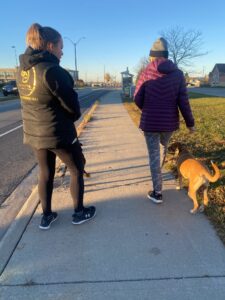
When we talk about dog training in Hamilton, we are talking about real homes, real streets, and real lives. As K9 Principles, we do not just teach generic obedience. We look at your daily routine, your neighbourhood, the routes you actually walk, and the challenges you personally face. Then we build a personalised dog training plan around that. Because we work in this area every day, we understand the specific pressures of Hamilton dog training: the busy parks, the shared spaces, the seasonal changes, and the way urban life feels for both you and your dog. Our role is to guide you through this step by step. We show you exactly what to practise first, where to do it, and how to know when your dog is ready for the next level. Every time we work on dog training in Hamilton, our aim is to give you more confidence and clarity, not just more information.
Your First Steps: How to Get Started With Urban Dog Training in Hamilton
If you are new to all of this, it might feel like a lot. The good news is you do not have to do everything at once. The first step in dog training in Hamilton is often as simple as creating a small amount of structure in your day. That might mean setting aside ten minutes to work on engagement and name response, or practising a short settle on a mat after a walk. As K9 Principles, we help you choose the first one or two changes that will make the biggest difference. Then we build from there. Our dog training programs are designed to support first-time owners, so we explain every exercise clearly, show you how to spot progress, and adjust the plan as your dog learns. When you work with us for Hamilton dog training, you are not just buying sessions; you are gaining a clear roadmap for living with a dog in a busy city. That roadmap is what turns chaos into calm and worry into confidence.
Conclusion: Building a Calm, Confident City Dog for Life
Urban life does not have to mean chaos on the lead, barking at every noise, or dreading walks. With the right dog training in Hamilton, you can raise a dog that moves through the city with confidence, responds to your cues even when the world is busy, and can switch off and relax at home. As K9 Principles, we bring real local experience in dog training to every home and street we work in. We understand the pressures of Hamilton dog training, and we know how to turn them into opportunities to build stronger skills, better communication, and a deeper relationship with your dog. If you are a first-time owner feeling overwhelmed, you are exactly the person we have written this for. You do not need to be perfect. You just need a clear, kind, structured approach and someone to guide you. That is what we do every day through our in-home private dog training in Hamilton, helping owners and dogs navigate urban life together with more calm, more confidence, and more joy.
Contact us for more information:
- Name: K9 Principles
- Address: Haldimand County, Greater Hamilton Area, Burlington, and Most of Norfolk County
- Phone: 289 880-3382
- Email: k9principlesinc@gmail.com
- Website: www.k9principles.ca
FAQs: Costs, Packages, Guarantees, and Results
-
A1. Yes, dog training in Hamilton is different because the environment is busier, louder, and more crowded. Your dog has to cope with closer traffic, more people, and more dogs in a smaller space. As K9 Principles, we design dog training plans that reflect those real conditions so your dog learns to cope with the actual streets and parks you use every day.